とても面白い人・催し
noun 名詞くだけた表現で、人や催しなどが非常に面白く、大笑いさせることを指します。通例a riotの形で使われ、暴力的な「暴動」とは関係なく、にぎやかで愉快だったという強い評価を伝えます。
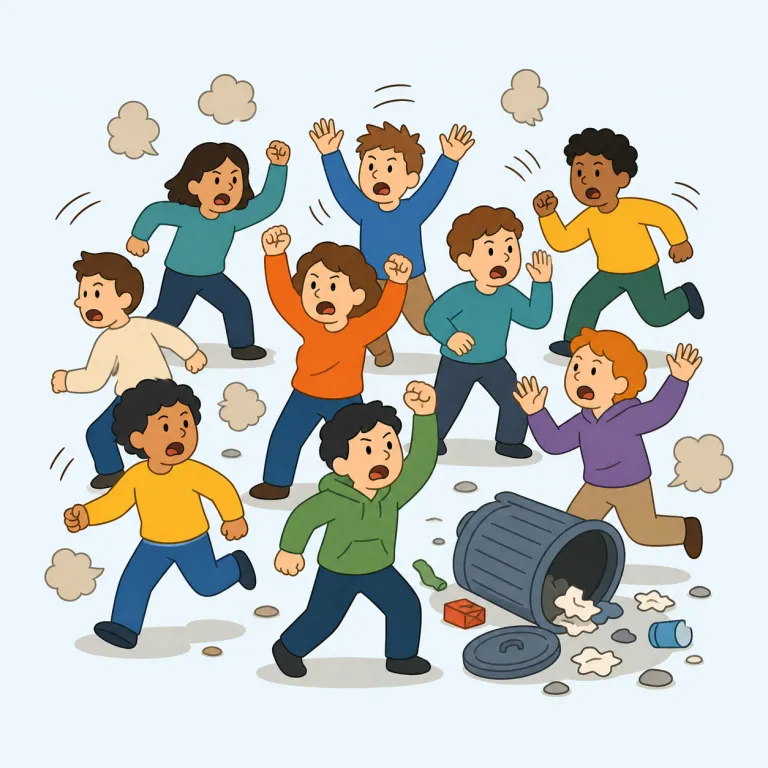
riot は英検2級・TOEFL 100・IELTS 7.5レベルの英単語で、「暴動」という意味があります。発音記号は /ˈraɪət/ です。
多くの人が集まって行う暴力的で秩序を乱す行動。社会不安や不満が爆発して起こる集団的な混乱です。
A riot is a violent public disturbance caused by a large group of people. It often involves shouting, fighting, damage, or conflict with police. The word is usually used for serious social or political disorder.
riot は「ただの抗議」ではなく、群衆が暴れて秩序が壊れた段階として覚えるとよいです。protest / demonstration が主張や行進中心なのに対し、riot は石を投げる、店を壊す、火をつけるなど、制御不能な暴力の含みが強い語です。ニュースでは a riot broke out, prison riot, riot police をまとめて覚えると定着しやすいです。「怒った群衆で街が荒れ、警官隊が出る場面」を一枚の映像で結びつけると忘れにくくなります。
Remember `riot` as stronger than a normal `protest`. In news English, common patterns are `a riot broke out`, `riot police`, and `prison riot`. Picture an angry crowd, broken order, and police in helmets. That scene makes the word stick.
The riot broke out in the city center.
その暴動は街中で勃発しました。
Police controlled the riot with force.
警察は武力を使って暴動を制圧しました。
The riot caused significant damage to buildings.
その暴動は建物に大きな被害をもたらしました。
この語をはじめて出題された 31人 のうち 23人 が正解しました(74%)。
えいたんごクイズの回答から集計した独自データです。1人につき最初に出題されたときの1回だけを数えており、復習や2回目以降の回答、「わからない」と時間切れは含みません。 集計時点は 2026年9月19日 です。
文脈によって、次の意味でも使われます。
くだけた表現で、人や催しなどが非常に面白く、大笑いさせることを指します。通例a riotの形で使われ、暴力的な「暴動」とは関係なく、にぎやかで愉快だったという強い評価を伝えます。
色・花・音などが多彩かつ豊富にあふれている様子を表します。a riot of colorのようにa riot of ...の形で使われ、無秩序さよりも、目や感覚を圧倒する鮮やかな広がりを強調します。
古フランス語 riote(議論・口論・騒ぎ)に由来し、さらにラテン語 rugire(吠える)との関連が指摘される。元は「騒々しい宴会・放蕩」の意味で、そこから「集団による暴力的な騒乱」へと意味が強まった。関連語: riotous(騒々しい)、riot act(暴動鎮圧令=1714年英国の法律に由来)。
Riot comes from Old French riote, which meant a quarrel, dispute, or noisy disturbance. It may also be linked to Latin rugire, "to roar." The word first referred to noisy disorder or wild behavior, and later became more specific, meaning violent public unrest by a crowd.
この英単語をクイズで覚えよう