skull
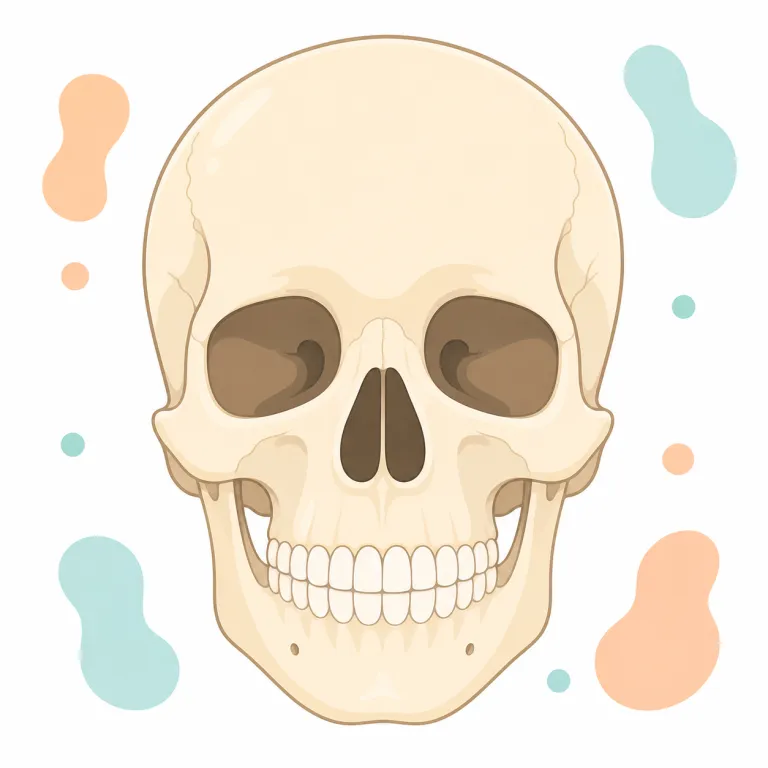
skull は英検2級レベルの英単語で、「頭蓋骨」という意味があります。発音記号は /skʌl/ です。
頭蓋骨
解説 Definition
動物や人間の頭を覆う骨の構造。脳を保護する硬い骨格で構成されています。
A skull is the hard bone structure of the head that protects the brain. It also forms the shape of the face and head. The word is often used in medicine, biology, and descriptions of the body.
覚え方のコツ Memory Tip
head 全体ではなく、外側の硬い骨だけを指す名詞だと押さえると覚えやすい。brain は中身の脳、scalp は頭皮、face は顔で、skull はそれらを支える「骨のヘルメット」。skeleton の一部として結びつけると定着しやすい。X線・医学・事故の文脈でよく出て、skull fracture(頭蓋骨骨折)、human skull などが頻出。海賊の印の skull and crossbones も強い記憶フック。単に頭そのものと言うなら head なので混同しない。
Do not think of the whole `head`; think of the hard bone around it. A useful image is a "bone helmet" that protects the brain. Strong word partners like `human skull`, `skull fracture`, and `skull and crossbones` make it easier to remember. Keep it separate from `brain`, `face`, and `scalp`.
例文
The skull protects the brain from injury.
頭蓋骨は脳を損傷から保護する。
We found an old skull in the ground.
私たちは地面の中から古い頭蓋骨を見つけました。
Your skull is made of hard bones around your brain.
頭蓋骨は脳を囲む硬い骨でできています。
skull の類義語・関連語
類義語
skull の語源・成り立ち Etymology
古ノルド語 skúli(頭蓋骨)に由来し、中英語で skulle となった。「殻・椀」を意味するゲルマン祖語 *skullō に遡り、頭蓋骨を「脳を覆う殻」と捉えた比喩的命名。関連語: shell(殻=同じ「覆い」の概念)、scalp(頭皮)。海賊旗の骸骨マーク skull and crossbones でもおなじみ。
Skull comes from Old Norse skuli, which became Middle English skulle. It goes back to a Germanic root meaning something like a shell or bowl, showing the idea of the skull as a hard covering around the brain. This is why it is sometimes compared with words like shell, which share the sense of an outer covering.
同じレベルの語彙をもっと
英検2級の一覧へ →外部辞書で調べる
この英単語をクイズで覚えよう