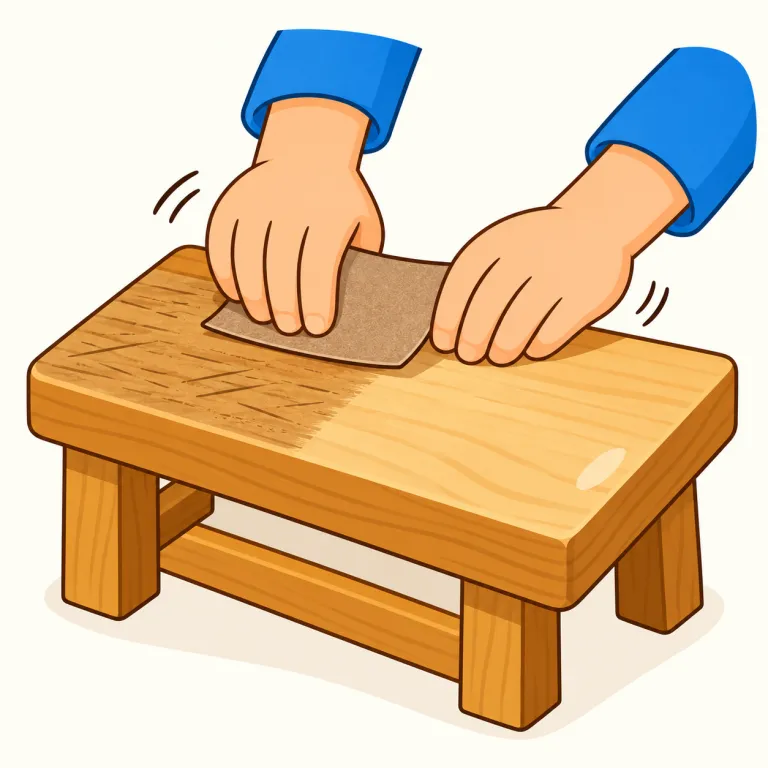
やすりがけ
解説 Definition
sanding は、紙やすりや研磨工具で木材・金属などの表面を滑らかにする「やすりがけ」という作業です。sand「やすりをかける」の -ing 形で、この見出しでは名詞として使われます。
Sanding is the process of rubbing wood, metal, or another material with sandpaper or a powered abrasive tool in order to remove roughness, old finishes, or small imperfections and make the surface smoother.
使い方 Usage
覚え方のコツ Memory Tip
sandpaper「紙やすり」と smooth「滑らかな」を結び付け、表面を磨く作業を思い浮かべましょう。sand にそのまま -ing を付けて sanding と綴り、発音は /ˈsændɪŋ/ です。
Connect sanding with sandpaper and smooth, and picture rubbing a surface to make it smoother. Add -ing directly to sand without doubling a consonant. The pronunciation is /ˈsændɪŋ/.
例文
Sanding made the table smooth.
やすりがけでテーブルは滑らかになりました。
The sanding took an hour.
そのやすりがけには1時間かかりました。
sanding の類義語・関連語
類義語
対義語
紛らわしい語
sanding の語源・成り立ち Etymology
古英語 sand(砂)に動名詞接尾辞 -ing がついた語。ゲルマン祖語 *sandam に由来し、砂で表面を磨く作業を指す。紙やすりで削る行為は砂の研磨力に基づく。関連語: sandpaper(紙やすり)、sandstone(砂岩)。
Sanding is formed from the verb sand plus the suffix -ing. Sand comes from Old English sand and ultimately from a Germanic source. Because loose sand is abrasive, the noun developed a verb use meaning “to smooth or polish with sand or an abrasive material.” Modern sanding is usually done with sandpaper or powered equipment rather than with loose sand itself.
同じレベルの語彙をもっと
外部辞書で調べる
この英単語をクイズで覚えよう