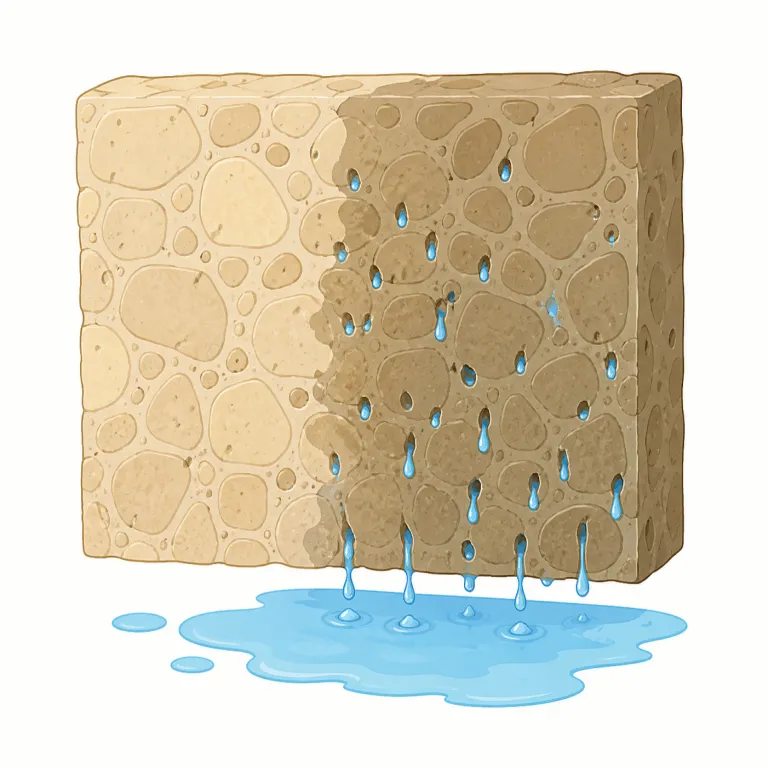
徐々に漏れる、広がる
verb 動詞情報や感情、考えなどが、気づかれにくい形で少しずつ漏れたり広がったりすることです。seep into、seep through、seep out などの形で、境界を越えて徐々に影響が及ぶ含みがあります。
液体がゆっくりと、または徐々に染み出す、またはしみ込むことです。大量ではなく、少しずつ液体が流出する様子を表します。
To seep means to flow or pass through something slowly, especially through small holes or spaces. It is often used for liquids like water or oil. The word emphasizes slow, gradual movement.
seep は leak より静かで遅い動きを思い浮かべると残りやすい。pipe が壊れて勢いよく漏れるのは leak、壁・土・布の細いすき間を water や oil がじわじわ通るのが seep。よく seep into, seep through, seep out の形で出るので、前置詞ごと覚えると強い。さらに名詞 seepage もセットで押さえると、「目立たないのに少しずつ染み広がる」感覚が固定される。drip のように一滴ずつ落ちる絵ではなく、面や内部へにじむ絵で覚えると混同しにくい。
Remember `seep` as a slow, quiet kind of `leak`. It is what water or oil does when it moves through tiny spaces in walls, soil, or cloth. Learn the common patterns `seep into`, `seep through`, and `seep out` to make the word stick.
Water began to seep through the basement walls.
水が地下室の壁からしみ出し始めました。
Oil began to seep from the damaged tank into the soil.
損傷したタンクから油が土壌へ染み出し始めました。
Rainwater was seeping into the attic through a crack in the roof.
雨水が屋根のひびを通じて屋根裏にしみ込んでいました。
文脈によって、次の意味でも使われます。
情報や感情、考えなどが、気づかれにくい形で少しずつ漏れたり広がったりすることです。seep into、seep through、seep out などの形で、境界を越えて徐々に影響が及ぶ含みがあります。
seep は古英語 sipian「しみ出る」に由来し、さらにゲルマン祖語の「滴る」を表す語根へさかのぼります。派手に流れるのでなく、細いすき間から少しずつ出る感じが核で、seepage や soap にも同じ「滴り・にじみ」の古い感覚が潜んでいます。
Seep comes from Old English sipian, and goes back to an older Germanic root connected with dripping or oozing. The core idea is not a strong flow, but liquid slowly passing through small openings. That is how the word developed its modern sense of gradually leaking out or soaking through.
この英単語をクイズで覚えよう