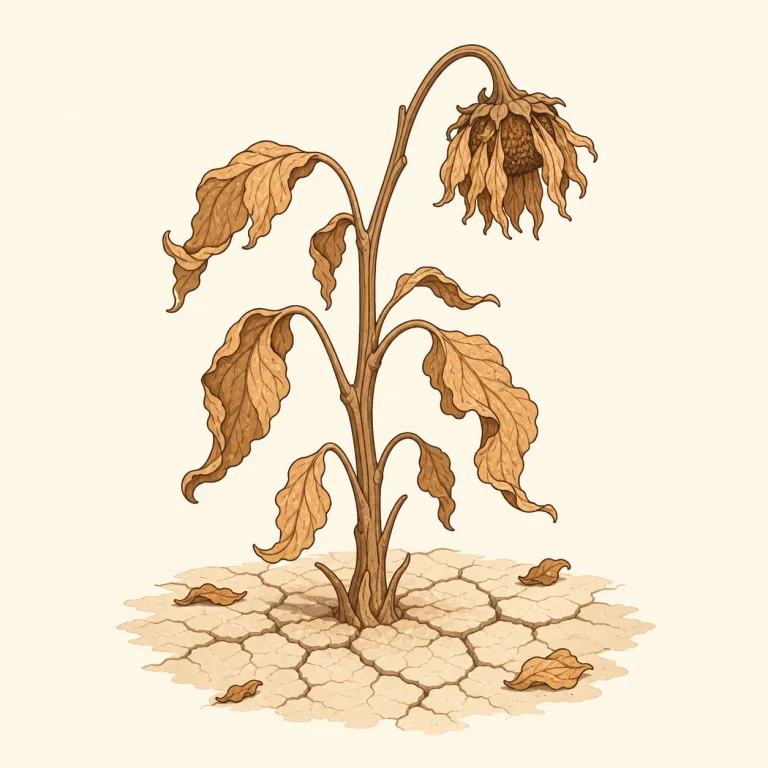
干からびた
解説 Definition
乾燥した、または枯れた。特に植物が水分を失い枯れた状態を指す。比喩的には何かが荒廃している状態も表す。
Sere means dry, withered, and no longer fresh, especially because of age, heat, or lack of water. It is often used for grass, leaves, or landscapes. This word has a literary feel and is not very common in daily speech.
覚え方のコツ Memory Tip
まず基本語 dry を土台にし、その先の『植物が水分を失って、色もつやも抜け、ぱさぱさに枯れた』段階が sere だと押さえると残りやすいです。green grass の反対にある late summer の brown leaves や dry fields を思い浮かべると定着しやすい語です。似たつづりの sear は『焼いて焦がす』、sere は『自然に乾いて枯れる』なので混同注意。会話語というより文学的で、葉・草地・風景の荒れた感じを描く場面で出やすいです。
Build it from the simple word `dry`, then imagine an older, more literary version. `Sere` is used for grass, leaves, or fields that have dried out and lost life. Be careful not to mix it with `sear`: `sear` is burn by heat, but `sere` is dry and withered by nature.
例文
The sere leaves fell to the ground in autumn, completing the natural cycle.
干からびた葉は秋に地面へ落ち、自然の循環を締めくくった。
After weeks without rain, the landscape became increasingly sere and barren.
何週間も雨が降らなかったため、辺りはますます干からび、荒涼としていった。
The sere branches of dead trees created an eerie atmosphere in the forest.
立ち枯れた木々の干からびた枝が、森に不気味な雰囲気を漂わせていた。
sere の類義語・関連語
sere の語源・成り立ち Etymology
sere は古英語 sear「乾いた、しおれた」に由来する、ゲルマン系の古い語です。近縁語に sear があり、もとは水気を失って縮れ、色つやが落ちる感覚。だから「干からびた」「枯れた」という意味にそのままつながります。
Sere comes from Old English sear, an old Germanic word meaning dry or withered. Its core idea is losing moisture and freshness, then becoming faded or shriveled. It is closely related to sear, which keeps the same sense of drying out.
同じレベルの語彙をもっと
外部辞書で調べる
この英単語をクイズで覚えよう