農奴制
解説 Definition
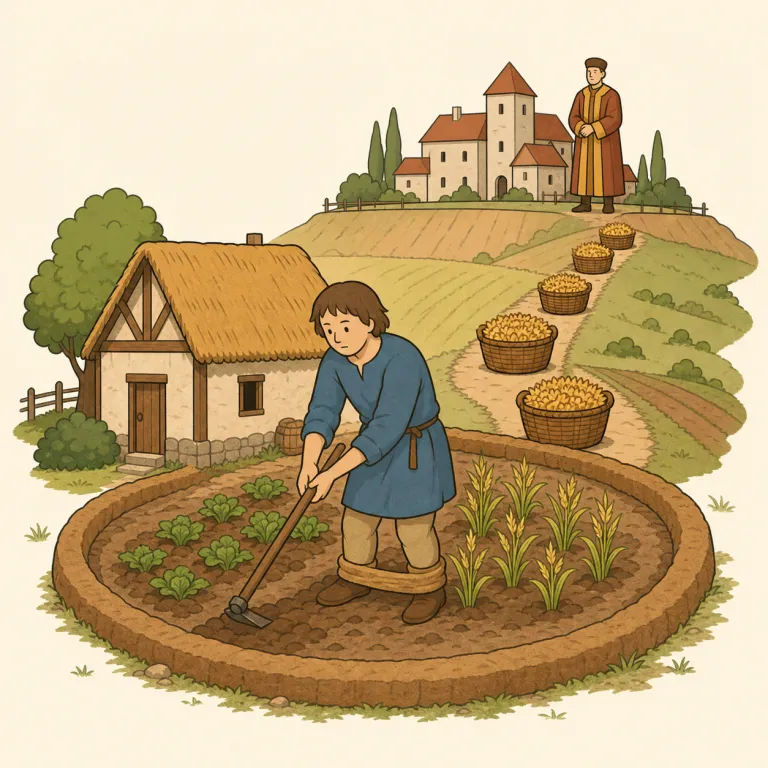
中世ヨーロッパにおいて、農民が農地に結びつけられ、領主に従属していた制度です。階級システムの一部として機能し、個人の自由が制限されていました。封建的な社会構造の基盤をなしていました。
Serfdom was a social system in which poor farmers, called serfs, were tied to the land and had to work for a landowner. It is mainly used in historical discussions about medieval Europe and similar societies. The word describes a condition of limited freedom rather than simple farm work.
覚え方のコツ Memory Tip
まず serf をひとかたまりで覚える。self ではなく r が入る点に注意。意味は「土地に縛られた農民」。そこに -dom が付くと freedom, kingdom と同じく「状態・制度・身分」になるので、serfdom で「農奴という身分が社会の仕組みとして固定された状態」と取れる。単なる一人の農奴ではなく制度全体を指す名詞。slavery と近いが、serfdom は特に封建社会で土地への拘束と結びつく点を意識すると区別しやすい。
First lock in serf as a single word, and do not confuse it with self. Then notice -dom, the same ending seen in freedom or kingdom, which often shows a state or system. So serfdom is not one serf, but the whole social condition or system. It is especially linked with feudal society and land.
例文
Serfdom was a system of feudal labor obligations in medieval Europe.
農奴制は、中世ヨーロッパにおける封建的な労働義務の制度だった。
Peasants were bound to the land under serfdom.
農民は農奴制の下で土地に拘束されていた。
The abolition of serfdom marked a significant change in society.
農奴制の廃止は、社会の大きな転換点となった。
serfdom の類義語・関連語
serfdom の語源・成り立ち Etymology
serfdom は古フランス語 serf、さらにラテン語 servus「奴隷・召使い」に、古英語由来の接尾辞 -dom「状態・身分」が付いた語です。servant や servile と同根で、農奴制が「生まれつき縛られた身分」を表す語だと見えてきます。
"Serfdom" joins "serf" with the Old English suffix "-dom," meaning a state or condition. "Serf" came through Old French from Latin "servus," meaning "slave" or "servant." The word came to mean the social condition of being a serf, and it is related to English words like "servant" and "servile."
同じレベルの語彙をもっと
外部辞書で調べる
この英単語をクイズで覚えよう