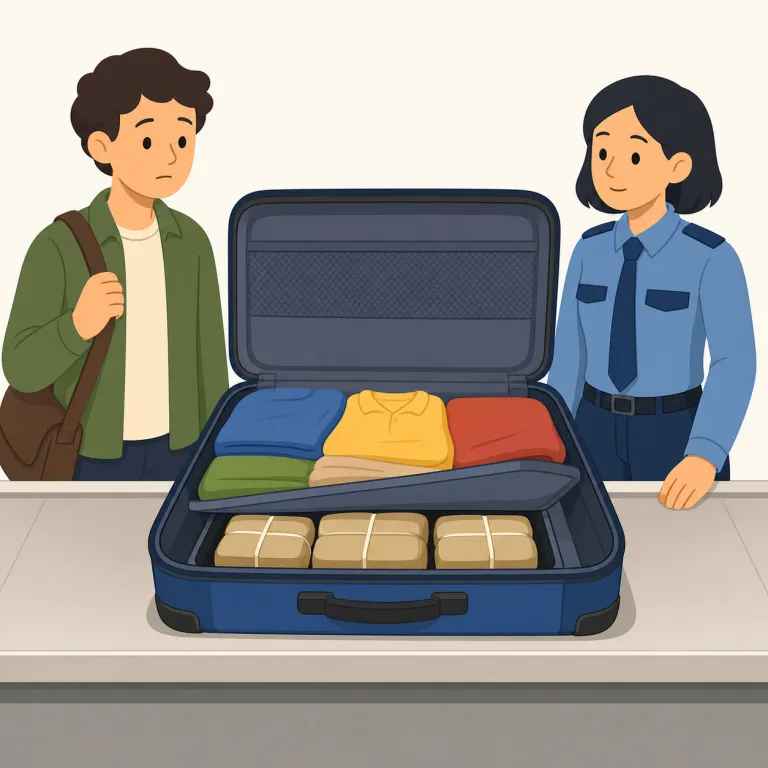
smuggling
密輸
解説 Definition
税関の検査を避けて、違法に商品を国境を越えて運ぶ行為。法律に違反して物品を秘密裏に輸出入する活動。
Smuggling is the illegal act of taking goods or people into or out of a country or place secretly. It usually happens to avoid taxes, laws, or border controls. The word is common in legal, political, and crime-related contexts.
覚え方のコツ Memory Tip
smuggling はまず動詞 smuggle「こっそり運び込む」を押さえ、-ing が付いて「その行為全体」を表す名詞になった形だと見ると覚えやすいです。普通に送る shipping ではなく、見つからないよう隠して国境を越えるのが核心。drug smuggling, arms smuggling のように違法な物と結びつきやすく、customs や border を避ける場面を一緒に思い浮かべると定着します。smuggler は密輸業者。trafficking よりも「こっそり持ち込む・持ち出す」感じが強い語です。
Start from the verb `smuggle`, then `-ing` turns it into the activity itself. The key image is not normal transport like `shipping`, but moving things secretly across a border without being seen. Learn it with strong pairs like `drug smuggling` or `arms smuggling`.
例文
Smuggling goods across the border is against the law.
国境を越えて品物を密輸することは法律違反です。
Smuggling illegal goods is a serious crime.
違法な品物の密輸は重大な犯罪です。
Police work to stop smuggling at the border.
警察は国境での密輸を防ごうとしています。
smuggling の類義語・関連語
smuggling の語源・成り立ち Etymology
smuggling は smuggle からできた名詞で、語源は中低地ドイツ語 smuggeln またはオランダ語 smokkelen 系とされます。もとは「こっそり忍び込ませる」感覚の語で、見つからないよう品物を滑り込ませるイメージから「密輸」になりました。関連語は smuggle, smuggler。
Smuggling comes from smuggle, probably from Middle Low German smuggeln or a related Dutch form. The original sense was to move something secretly or slip it in without being noticed. That idea of hidden movement developed into the modern sense of illegal secret transport. Related words include smuggle and smuggler.
同じレベルの語彙をもっと
外部辞書で調べる
この英単語をクイズで覚えよう