興ざめなもの、嫌気を誘うもの
noun 名詞口語で、人の興味・好意・魅力を急に失わせる人、物、言動を指す。find A a turnoffやa real turnoffの形が多く、単に嫌いな物というより気持ちを冷めさせる要因をいう。
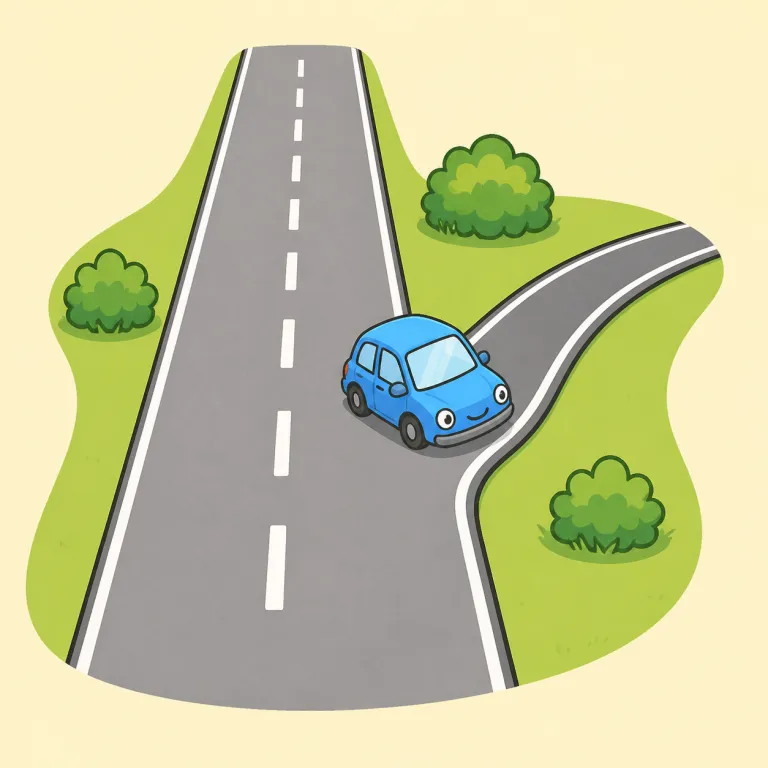
側道または脇の小さな道。主要な道から外れた別の道を表します。
A turnoff is a road or path that leaves a main road. In informal English, it can also mean something that makes a person lose interest or feel dislike. The second meaning is very common in everyday conversation.
turn「曲がる」と off「本流・本線から離れる」をそのまま重ねると覚えやすい語です。イメージは、まっすぐ続く main road から車が横へそれていく感じ。動詞句 turn off the road から、名詞 turnoff で「本道を外れる分かれ道・脇道」と捉えると定着します。道路標識や道案内の文脈で出やすく、a turnoff to the village のように使えます。なお日常会話では別義で「興ざめなもの」を指すこともあるので、道路の話かどうかで見分けるのがコツです。
Read it literally as `turn` + `off`: you turn off the main road. That makes it easy to remember a side road or exit. Phrases like `take the turnoff` or `miss the turnoff` are good memory hooks.
We took a turnoff to avoid the traffic.
渋滞を避けるために脇道に入った。
The turnoff is just past the gas station.
その脇道はガソリンスタンドのすぐ先にあります。
She missed the turnoff and had to go back.
彼女は脇道への曲がり角を通り過ぎてしまい、戻らなければならなかった。
文脈によって、次の意味でも使われます。
口語で、人の興味・好意・魅力を急に失わせる人、物、言動を指す。find A a turnoffやa real turnoffの形が多く、単に嫌いな物というより気持ちを冷めさせる要因をいう。
turnoff は turn「曲がる」+ off「外へ」から成り、turn は古フランス語経由でラテン語 tornare「回す」、off は古英語 of にさかのぼります。原義は「本道から外へ曲がること」なので脇道を指し、return や overturn にも回転の感覚が見えます。
"Turnoff" is made from "turn" and "off." "Turn" came through Old French from Latin tornare, meaning "to turn" or "rotate," while "off" goes back to Old English. The original sense was a place where you turn away from the main road, and from that it later developed broader figurative uses.
この英単語をクイズで覚えよう