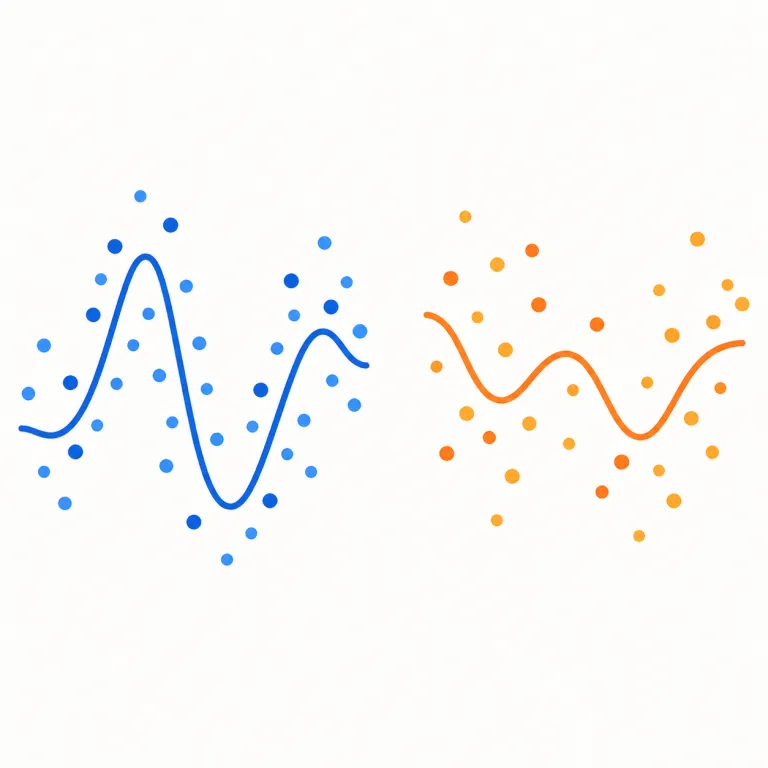
無相関
解説 Definition
統計的に互いに関連していない、または相互関係がない状態。2つの変数間に相関がない状態。
Uncorrelated means not showing a clear relationship between two things, especially in statistics or data analysis. If two variables are uncorrelated, changes in one do not consistently match changes in the other.
覚え方のコツ Memory Tip
un- は「ない」、correlated は correlate から来ていて、まず relate「関係づける」を思い出すと形がつかみやすいです。つまり uncorrelated は「関係づけられていない」→「相関がない」。統計では uncorrelated variables, the two variables are uncorrelated の形でよく出ます。なお independent と近いですが、uncorrelated はあくまで「相関がない」ことで、より強い概念の「独立」とは限らない、と対比で覚えると混同しにくいです。
Look inside the word: `correlated` is related to `relate` and `relation`. So `uncorrelated` means not connected in a statistical way. A useful memory contrast is `uncorrelated` versus `independent` because they are close, but not always the same.
例文
The uncorrelated variables had no linear relationship.
相関のない変数間には線形関係がありませんでした。
Uncorrelated assets provide better portfolio diversification.
相関のない資産は、ポートフォリオの分散効果を高めます。
The two variables changed independently, so they were uncorrelated.
2つの変数は互いに独立して変化したため、相関がありませんでした。
uncorrelated の類義語・関連語
uncorrelated の語源・成り立ち Etymology
un-「ない」+ correlated から成る語で、correlate は co-「共に」+ relate「関係づける」です。relate はラテン語 referre 系の「運ぶ・結びつける」発想につながり、uncorrelated は「互いに結びついていない」という意味になります。関連語は relation, correlate。
Uncorrelated is formed from un- and correlated. Correlate combines co-, meaning "together," with relate, which comes from Latin referre and related verbs about carrying back or connecting things. The word therefore developed the sense of things not being linked or connected to each other; related words include relation and correlate.
同じレベルの英単語をもっと
外部辞書で調べる
この単語を英単語クイズで覚えよう