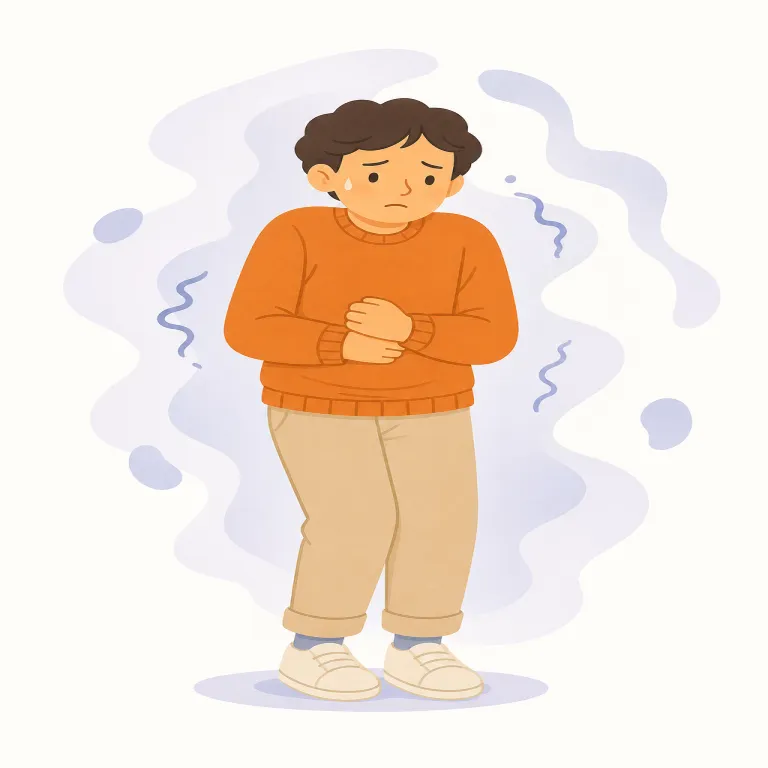
身体的不快感
noun 名詞痛み、吐き気、姿勢の悪さなどによって体が楽でない状態や不快感を指す。心理的な心配ではなく身体感覚に焦点があり、physical uneasiness などの形で用いられる。
心が落ち着かず、不安定な状態が続く心理状態を指します。落ち着きのなさや心配な気分を表現します。
Uneasiness is a feeling of slight worry, discomfort, or nervousness. It can be emotional, such as anxiety about a situation, or physical, such as a mild uncomfortable feeling. The word often suggests that something does not feel quite right.
easy が「気楽・楽な」、uneasy が「落ち着かない」。そこに -ness が付いて、uneasiness は「落ち着かなさという状態そのもの」と押さえると残りやすいです。まず feel uneasy, a sense of uneasiness, public uneasiness をまとめて覚えると、単なる恐怖ではなく「何か変だ」「居心地が悪い」「胸騒ぎがする」という不安だとつかめます。panic のような強い恐怖や、anxiety のような診断名にもなりやすい重い語より、理由を言い切れないざわつきに向く語です。unease という短い名詞も近いのでセットで見ると定着しやすいです。
Build it step by step: easy -> uneasy -> uneasiness. That makes it easier to remember as the state of not feeling easy or comfortable. Phrases like "a sense of uneasiness" or "public uneasiness" show that it is often a vague, uneasy feeling rather than strong panic.
She felt a sense of uneasiness about the upcoming exam.
彼女は迫る試験に不安を感じました。
There was a growing uneasiness among the investors.
投資家の間で不安が増してきました。
His uneasiness about the decision was evident.
その決定に対する彼の不安は明らかでした。
文脈によって、次の意味でも使われます。
痛み、吐き気、姿勢の悪さなどによって体が楽でない状態や不快感を指す。心理的な心配ではなく身体感覚に焦点があり、physical uneasiness などの形で用いられる。
uneasiness は un-「否定」+ easy + -ness。easy は古フランス語 aisé、さらに aise「快適さ」にさかのぼるので、原義は「楽でないこと」です。体の落ち着かなさがそのまま心の不安にも広がったと考えると覚えやすい語です。関連語は ease、uneasy。
Uneasiness is formed from un- + easy + -ness. Easy came into English through Old French from a word meaning comfort or ease, so the basic sense was simply "not being at ease." From physical discomfort, the meaning widened naturally to mental discomfort and anxiety. Related words include ease and uneasy.
この英単語をクイズで覚えよう