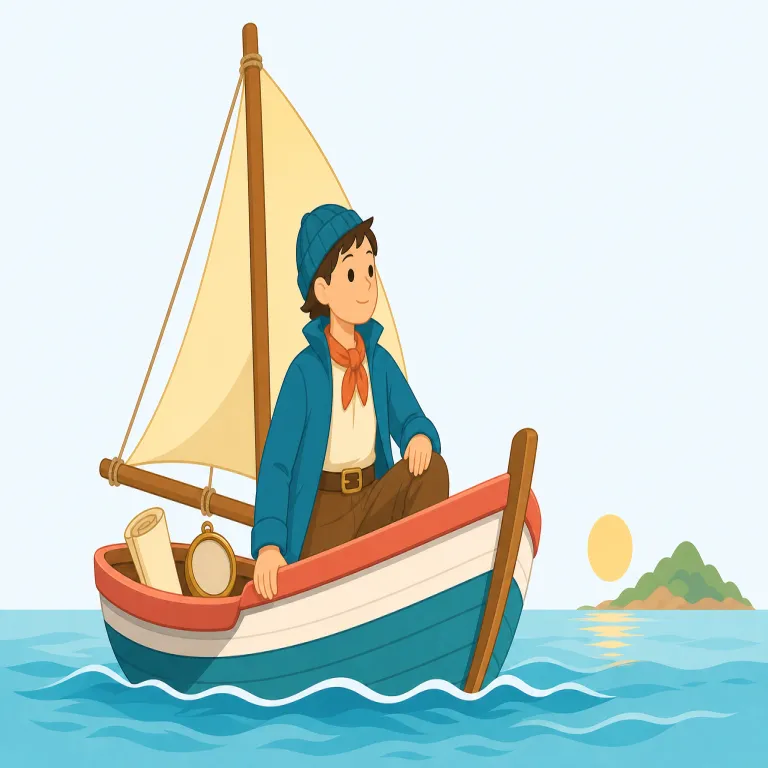
voyager
航海者
解説 Definition
長い旅や航海をする人を指す名詞。特に海を渡る長距離の旅をする人に使われることが多いが、宇宙旅行者や探検家など、困難で遠大な旅をする人を比喩的に表す際にも使われる。歴史的・冒険的な文脈でよく登場する言葉である。
A voyager is a person who travels on a long journey, especially by sea or through unknown places. The word is often used in historical, literary, or adventurous contexts rather than everyday conversation. It suggests exploration, not just simple travel.
覚え方のコツ Memory Tip
まず voyage「長い旅・航海」を知っていれば、voyager は「旅をする人」とそのまま取れます。-er は teacher, writer と同じ「〜する人」。traveler よりも、日常の移動ではなく、海を渡る・未知へ向かう・壮大な旅の響きが強い語です。宇宙探査機 Voyager の名前でも見かけるので、「普通の旅行者ではなく、遠く困難な旅に出る人」というイメージで固定すると残りやすいです。
Start from `voyage`, which means a long journey, especially by sea. Then `-er` means "a person who does it," like in `writer` or `teacher`. `Voyager` feels bigger and more adventurous than an ordinary `traveler`.
例文
The ancient voyager navigated the Pacific Ocean using only the stars as a guide.
その古代の航海者は、星だけを頼りに太平洋を渡った。
Magellan was a famous voyager who sailed across the Pacific.
マゼランは太平洋を横断した有名な航海者だった。
Voyager 1 is a human-made voyager traveling through interstellar space.
宇宙探査機ボイジャー1号は、星間空間を旅する人類の作った「航海者」だ。
えいたんごクイズでの正答率
この語をはじめて出題された 32人 のうち 31人 が正解しました(97%)。
えいたんごクイズの回答から集計した独自データです。1人につき最初に出題されたときの1回だけを数えており、復習や2回目以降の回答、「わからない」と時間切れは含みません。 集計時点は 2026年9月19日 です。
voyager の類義語・関連語
voyager の語源・成り立ち Etymology
voyager は voyage「旅」に -er「する人」が付いた語で、voyage は古フランス語を経てラテン語 via「道」に連なる語です。もともと「道を進む人」なので、海でも宇宙でも未知へ向かう旅人の響きが生まれます。voyage や convoy も同じ via 系です。
Voyager is built from voyage plus the ending -er, meaning "a person who does something." Voyage came through Old French and goes back to Latin via, meaning "road" or "way." The word first suggested someone traveling along a route, and later came to fit long journeys by sea, air, or even space. Voyage and convoy are related through the same Latin root.
同じレベルの語彙をもっと
外部辞書で調べる
この英単語をクイズで覚えよう