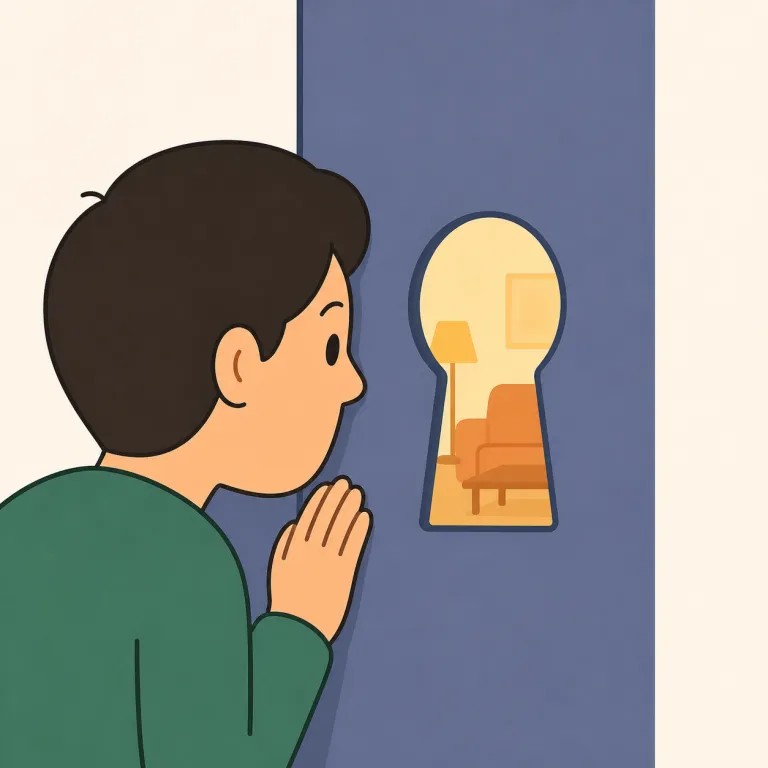
覗き見趣味の人
解説 Definition
他人の裸や私生活をこっそり見て興奮したり、そうした場面をのぞき見たがったりする人を指します。性的な文脈で使われることが多い語ですが、比喩的には他人の私生活に異常な関心を示す人という意味でも用いられます。強い非難を含む表現です。
A voyeur is a person who secretly watches other people, especially in private situations, for pleasure or interest. The word is often used in sexual or strongly negative contexts. It can also be used more broadly for someone who enjoys watching others' private lives from a distance.
覚え方のコツ Memory Tip
view, review, vision など「見る」系の英単語と同じ仲間だと置くと覚えやすいです。ただし voyeur は単なる watcher や observer ではなく、見てはいけない私的場面をこっそり見たがる人、という強いマイナス感を持ちます。映画の観客のような中立的な viewer とは別物で、privacy を侵す響きがある語です。voyeuristic interest のように「のぞき見的な関心」という形でも出るので、secretly watch private scenes という場面で結びつけると定着します。
Connect it to the `view / vision` family of words about seeing. But a `voyeur` is not a neutral viewer; it means someone who secretly watches private scenes. Remember the strong negative feeling of invading other people's privacy.
例文
The police arrested a voyeur who had been peeping through apartment windows.
警察は、アパートの窓から人をのぞき見していた覗き見趣味の人物を逮捕した。
She felt unsafe after discovering that a voyeur had been watching the changing room.
更衣室が誰かにのぞき見されていたと分かり、彼女は身の危険を感じた。
The article criticized the media for turning readers into voyeurs of celebrity lives.
その記事は、読者に有名人の私生活をのぞき見させているとして、メディアを批判した。
voyeur の類義語・関連語
voyeur の語源・成り立ち Etymology
voyeurはフランス語で、voir「見る」+ -eur「〜する人」から成る語です。voir はラテン語 videre「見る」にさかのぼり、ただ見る人ではなく「のぞき見する人」という意味が育ったので、語の形から意味が納得できます。関連語は view, vision。
Voyeur comes from French, from voir "to see" and the agent ending -eur, meaning "a person who does something." Voir goes back to Latin videre, also meaning "to see." In English, the word developed a narrower sense: not just someone who looks, but someone who secretly watches. Related words include view and vision.
同じレベルの語彙をもっと
外部辞書で調べる
この英単語をクイズで覚えよう