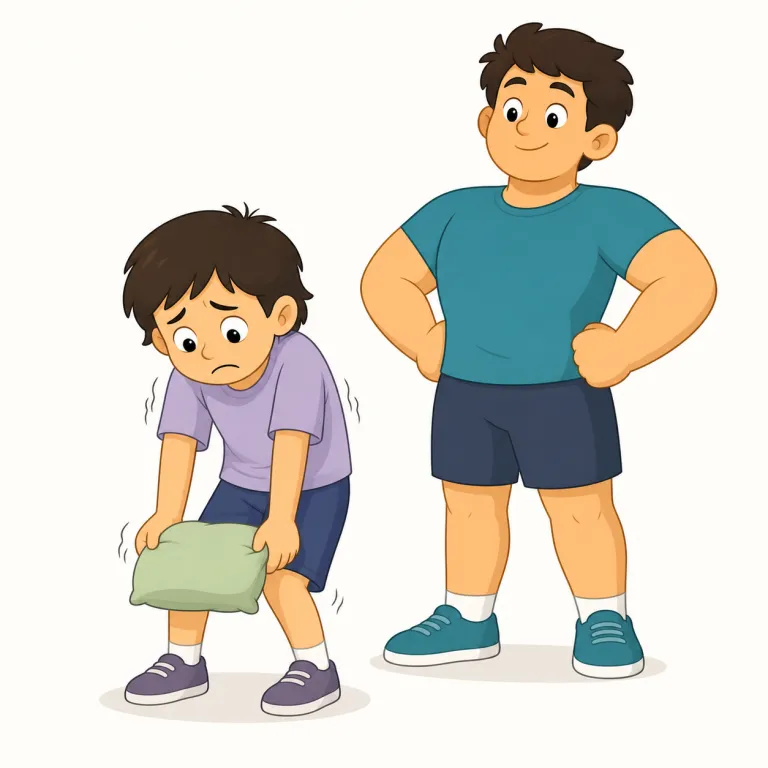
弱虫
解説 Definition
体力や精神力が弱い人を指す言葉。弱虫やひ弱な人のこと。
A weakling is a person who is physically weak or not strong in character. It is often used in an insulting or critical way rather than as a neutral description. The word can refer to weakness in body, mind, or courage.
覚え方のコツ Memory Tip
weak が分かれば核はすぐ見える語です。まず weak=弱い、weaken=弱める、weakness=弱さ をひとまとまりで覚え、その延長で「弱さを持った人」が weakling と捉えると残りやすいです。語尾 -ling は underling などにも見られ、「そういう類いの人」を作りつつ、少し見下した響きを帯びやすいのがポイント。coward が「臆病者」に寄るのに対し、weakling は体力・気力・根性までひっくるめてひ弱な人をからかう感じだと押さえると使い分けやすくなります。
Build it from weak plus the ending -ling, which often makes a word sound small or unimportant. That gives the feeling of a person others look down on as weak. Compare it with coward or wimp to remember its insulting tone.
例文
The school bully called him a weakling, but he proved his strength by standing up for himself.
学校のいじめっ子は彼を弱虫と呼んだが、彼は自分を守って立ち向かうことで強さを証明した。
Far from being the weakling everyone assumed her to be, she went on to become a champion weightlifter.
みんなが思っていたような弱虫どころか、彼女は後に重量挙げのチャンピオンになった。
In fairy tales, the weakling often turns out to be the hero who saves the kingdom.
おとぎ話では、弱虫が実は王国を救う英雄だったと分かることがよくある。
weakling の類義語・関連語
weakling の語源・成り立ち Etymology
weak は古英語 wac(弱い・力のない)にさかのぼり、ゲルマン系語の流れをくむ語です。そこに接尾辞 -ling(小さいもの・やや軽蔑的な人)が付いて「弱い者、弱虫」の意になりました。weaken、weakness も同じ語根です。
Weakling comes from weak plus the suffix -ling. Weak goes back to Old English wac, from an older Germanic root meaning "not strong," and -ling often adds the sense of a small or lesser person, sometimes with a negative tone. So the word developed from the idea of someone marked by weakness. Related words include weaken and weakness.
同じレベルの語彙をもっと
外部辞書で調べる
この英単語をクイズで覚えよう