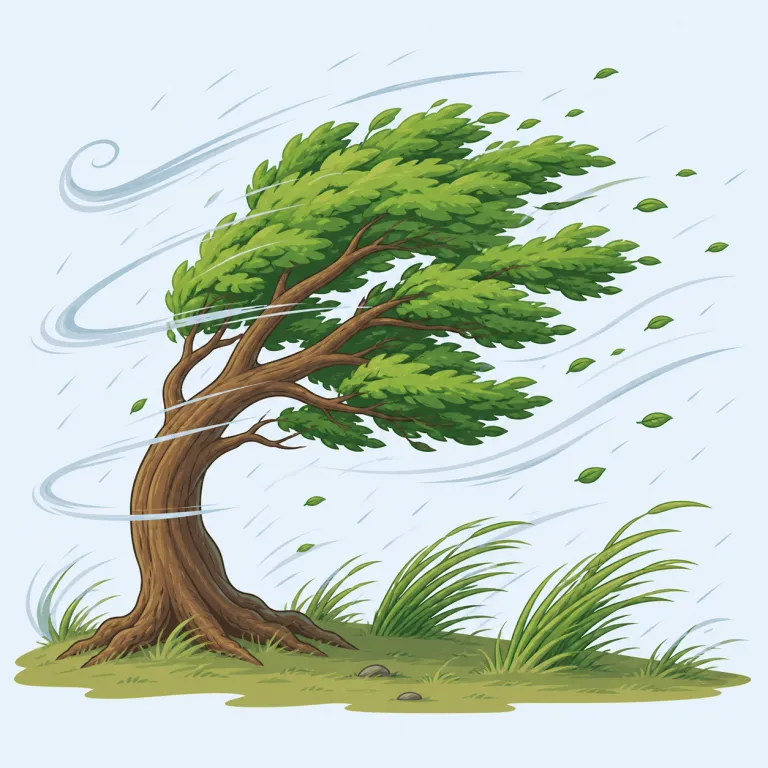
荒れ狂う
解説 Definition
激しく吹きすさぶ、荒れ狂っている風や嵐の状態を表します。強い風が激しく吹いている様子を示します。
Wuthering describes weather, especially wind, that is blowing strongly and making a loud, rough sound. It is a literary or old-fashioned word rather than one used in everyday conversation. It often creates a wild, stormy feeling.
覚え方のコツ Memory Tip
まず weather と見間違えないことが第一のフックです。weather は天気全般、stormy は嵐っぽい状態全体ですが、wuthering はその中でも『風がごうごう吹きすさぶ感じ』に焦点があります。語尾 -ing で、止まった性質というより『今まさに荒れている』動きが出ると捉えると残りやすいです。wuthering wind, Wuthering Heights のように、寒く開けた荒野で風音が鳴っている場面と結びつけると、単なる windy よりずっと激しい語だと覚えやすくなります。
Do not confuse it with `weather`. `Wuthering` is a much more special word, and it strongly suggests wild wind, not general weather. The `-ing` form gives it movement, so imagine wind blowing hard across open land, like in `Wuthering Heights`.
例文
The wuthering wind howled across the moors.
荒れ狂う風が、うなりを上げて荒野を吹き抜けました。
A wuthering storm approached the coastal village.
荒れ狂う嵐が海沿いの村に近づいてきました。
The wuthering wind made it unsafe to sail.
荒れ狂う風のため、船を出すのは危険でした。
wuthering の類義語・関連語
wuthering の語源・成り立ち Etymology
wuthering は北イングランド方言 wuther「ごうごう吹く」に由来し、さらに古ノルド語系 *hviðra に結びつけられます。語尾 -ing が進行中の荒れ方を帯びさせるので、ただの風でなく「唸りながら吹きすさぶ」感じが出ます。関連語は wuther、whithering です。
Wuthering comes from northern English dialect wuther, meaning something like "to blow with a roaring sound." It is often linked to an Old Norse family of words connected with rushing or stormy movement. The ending -ing gives a sense of ongoing action, so the word came to suggest wind that keeps blowing wildly and noisily. It keeps a strong regional and literary feeling in English.
同じレベルの語彙をもっと
外部辞書で調べる
この英単語をクイズで覚えよう