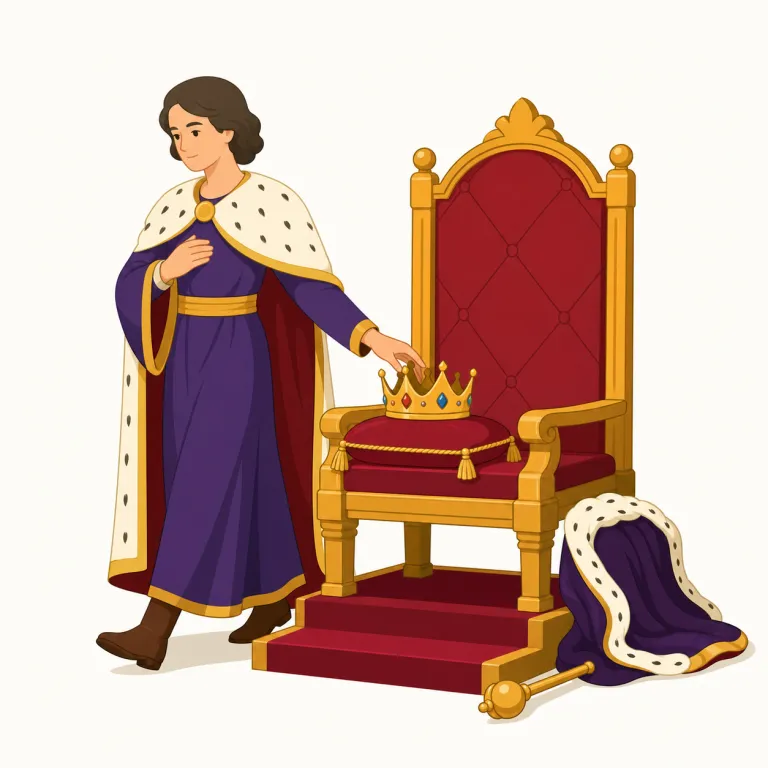
責任放棄、職務の放棄
noun 名詞果たすべき責任や権限を自ら手放し、必要な行動を取らないことを比喩的に表す。an abdication of responsibility の形が典型的で、君主が地位を退くという文字どおりの退位とは異なる。
君主、特に国王や皇帝が、王位または皇帝の地位を放棄する行為。権力を手放し、統治権を他者に譲ること。
Abdication is the act of officially giving up a position of power, especially when a king or queen gives up the throne. The word is mainly used in political, royal, or historical contexts and sounds formal.
まず動詞 abdicate を先に覚え、-ion が付くと「その行為」を表す名詞になる、と形でつなぐと定着しやすい。ab- は「離れる」系の接頭辞なので、王位や権力の座から身を引く絵を持つ。resign が会社員や大臣にも使える広い「辞任」なのに対し、abdication は王・皇帝の退位に強く寄る語。the king’s abdication, abdication of the throne の形ごと覚えるとよい。abduction など綴りの近い別語と混同しないこと。
First remember the verb `abdicate`, then `abdication` is simply the noun for that act. The idea is stepping away from a throne or royal position, not just any job. Connect it with phrases like `abdication of the throne` so you do not confuse it with similar-looking words.
King Edward VIII's abdication shocked the nation in 1936.
エドワード8世の退位は1936年、国民を震撼させた。
The emperor announced his abdication after 60 years of reign.
皇帝は60年の在位を経て退位を発表した。
Her abdication marked the end of an era in the kingdom.
彼女の退位は王国の一つの時代の終わりを告げた。
文脈によって、次の意味でも使われます。
果たすべき責任や権限を自ら手放し、必要な行動を取らないことを比喩的に表す。an abdication of responsibility の形が典型的で、君主が地位を退くという文字どおりの退位とは異なる。
abdicationはラテン語abdicatioに由来し、ab-「離れて」+ dicare「公に定める・宣言する」から成ります。もとは「地位や権利を公に手放すこと」で、そこから君主が位を退く「退位」の意味へ。関連語はabdicate, dedicate。
Abdication comes from Latin abdicatio, from ab- "away" and dicare "to declare" or "to formally assign." The original sense was publicly giving up a right, office, or claim. From that broader idea, it became especially used for a ruler formally giving up the throne; abdicate and dedicate are related.
この英単語をクイズで覚えよう