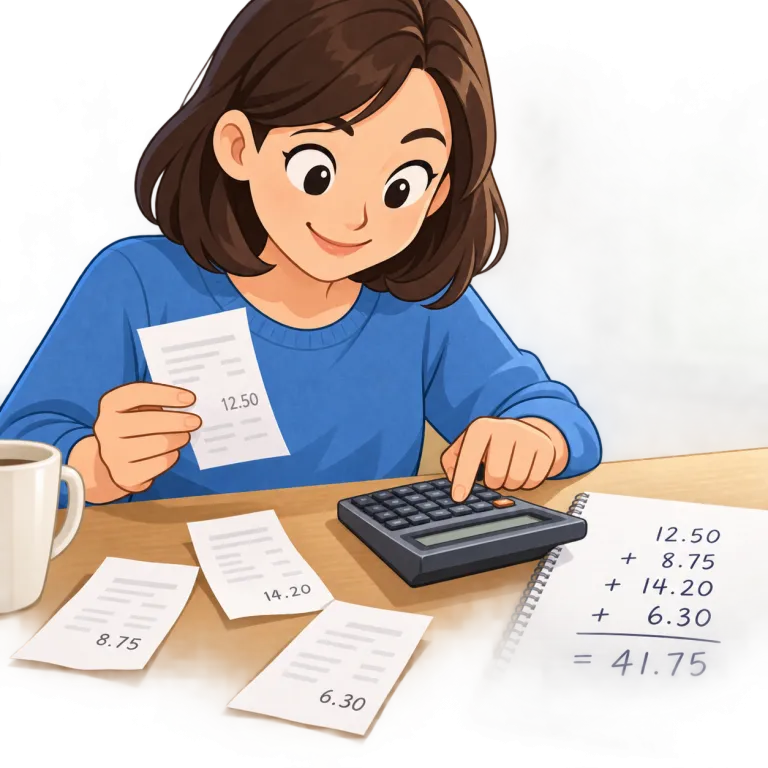
add up
add up は英検1級レベルの英熟語で、「合計する、つじつまが合う、積み重なる」という意味があります。発音記号は /ˌæd ˈʌp/ です。
合計する
解説 Definition
複数の数値や金額を足し合わせて全体の合計を求めることを表す句動詞です。この他動詞用法では、経費、売上、点数、数量など、合計する対象を目的語に取ります。この行では、説明の「つじつまが合う」用法や、小さなものが「積み重なる」用法は扱いません。
To add up means to calculate the total of several numbers or amounts by adding them together. In this transitive sense, it takes an object such as expenses, scores, prices, or figures.
覚え方のコツ Memory Tip
add「足す」に up が付き、複数の数値を最後まで足して合計を出す動作を表します。add up the figures、add up the expenses のように、数値、経費、点数などを目的語に取ります。代名詞なら add them up と、them を add と up の間に置きます。
Think of add as combining numbers and up as completing the operation. When you add up the expenses, you continue until you reach one final total. This row teaches only the transitive calculation sense.
例文
Please add up the figures in the final column.
最後の列の数値を合計してください。
She added up all the travel expenses before submitting the report.
彼女は報告書を提出する前に旅費をすべて合計した。
Add these scores up and write the total at the bottom.
これらの点数を合計して、いちばん下に総得点を書いてください。
つじつまが合う
(意味 2)
解説 Definition
話、説明、証拠、数字などを全体として照らし合わせたとき、矛盾がなく筋が通ることを表す自動詞用法です。「納得できる」「本当らしい」という含みがあり、疑わしい点を指摘する否定形 does not add up で特によく使われます。この行では、数値を実際に合計する操作は扱いません。
To add up can mean to be logically consistent, believable, or free from contradiction when all the facts are considered together. It is especially common in negative statements such as His story does not add up. This row does not teach the act of calculating a total.
覚え方のコツ Memory Tip
話の断片を並べたとき、すべてが一つの筋として「合う」かを確かめる場面で覚えます。説明に矛盾があれば It doesn't add up.、記録を見て納得できれば Everything adds up. です。この行の焦点は計算作業ではなく、情報全体の整合性です。
Imagine fitting every fact into one coherent account. If the pieces conflict, the story does not add up; if they support one another, everything adds up. Focus on logical consistency rather than performing arithmetic.
例文
Her excuse doesn't add up.
彼女の言い訳はつじつまが合わない。
Something about his story just doesn't add up.
彼の話にはどうもつじつまの合わない点がある。
Once we saw the records, everything added up.
記録を見たら、すべてのつじつまが合った。
積み重なる
(意味 3)
解説 Definition
お金、時間、仕事量、疲労、問題などの小さな要素が少しずつ増え、最終的に無視できない総量や影響になることを表す自動詞用法です。個々には小さくても、継続することで大きな結果になるという含みがあります。この行では、意図的に数値を合計する操作や、説明の整合性は扱いません。
To add up can mean to accumulate gradually until small amounts, efforts, costs, or problems produce a significant total or effect. In this intransitive sense, the things that accumulate are the subject. It does not describe deliberately calculating them.
覚え方のコツ Memory Tip
add は「加わる」、up はここでは量や影響が積み上がる感覚です。小さな出費や疲れが一つずつ加わり、やがて大きな負担になる絵で覚えます。The little expenses add up. のように、増えるもの自体が主語になる自動詞用法です。
Picture many small costs or pressures stacking up until they become significant. In Small expenses add up, the expenses themselves accumulate. This row teaches gradual buildup, not calculation or logical consistency.
例文
The little expenses add up over time.
小さな出費も時間がたつと積み重なる。
Stress can add up if you never take a break.
休みを取らないとストレスは積み重なっていく。
A few mistakes added up and caused a bigger problem.
いくつかのミスが積み重なって、より大きな問題を引き起こした。
add up の類義語・関連語
類義語
add up の語源・成り立ち Etymology
add は中英語にアングロフランス語を経て入り、ラテン語 addere「加える」にさかのぼります。addere は ad-「〜へ」と -dere「置く」に分析され、原義は「〜へ置く」です。句動詞の up はここで完了の感覚を添え、すべての数量を足して完全な合計を出す意味を作ります。
Add entered Middle English through Anglo-French from Latin addere, analyzed as ad-, “to,” plus -dere, “to put or place.” In this phrasal verb, up contributes a sense of completion, yielding the calculation sense of combining all the amounts into a complete total.
同じレベルの語彙をもっと
英検1級の一覧へ →外部辞書で調べる
この英熟語をクイズで覚えよう