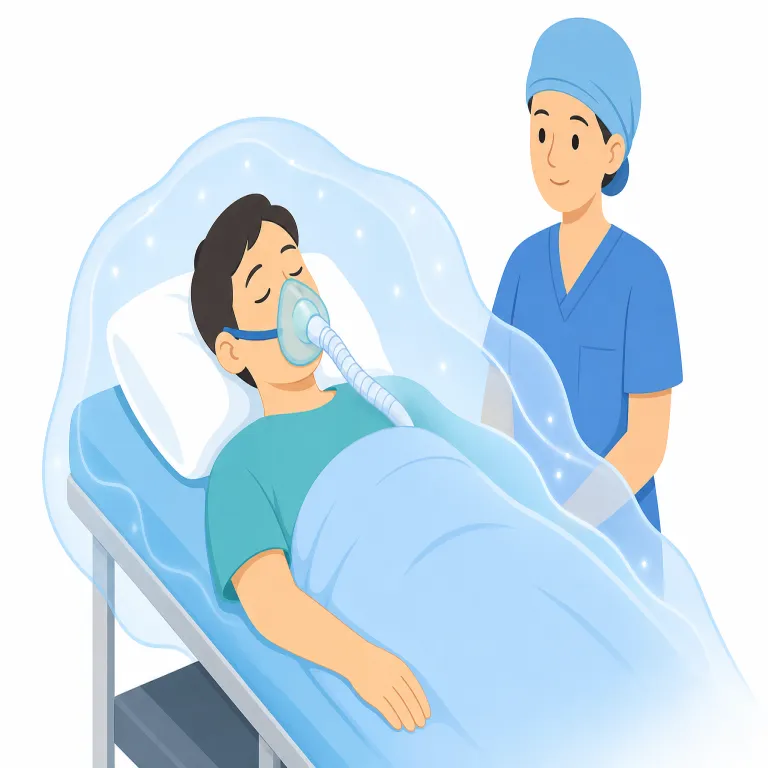
anesthesia
anesthesia は英検1級レベルの英単語で、「麻酔」という意味があります。発音記号は /ˌænɪsˈθiːʒə/ です。
麻酔
解説 Definition
麻酔とは、手術や医療処置の際に痛みを感じないようにするために使われる薬や処置のことです。全身麻酔では患者を意識不明の状態にし、局所麻酔では体の一部だけの感覚を遮断します。現代医療において安全な手術を行うために不可欠な技術です。
Anesthesia is a medical state in which pain is reduced or fully blocked, usually during an operation or other treatment. It may also make a person sleep or lose feeling in part of the body. The word is mainly used in hospitals and medical contexts.
覚え方のコツ Memory Tip
anesthetic は麻酔薬または「麻酔の」を表す語で、anesthesia は麻酔・無感覚の状態や処置を表す名詞。general anesthesia(全身麻酔)、local anesthesia(局所麻酔)、under anesthesia(麻酔下で)などの定番表現と一緒に覚えるとよい。painkiller が「痛み止め」寄りなのに対し、こちらは感覚や意識を鈍らせて処置を可能にする語。surgery、operation、dentist と一緒に覚えると場面が浮かぶ。つづりは anaesthesia の英式表記にも注意。
If you know `anesthetic`, `anesthesia` is the noun for the medical state or process behind it. Learn it with common pairs like `general anesthesia`, `local anesthesia`, and `under anesthesia`. It often appears with `surgery`, `operation`, or `dentist`, so picture a treatment scene. Also notice the British spelling `anaesthesia`.
例文
The patient was put under general anesthesia before the operation.
患者は手術前に全身麻酔をかけられました。
The dentist applied local anesthesia before extracting the tooth.
歯医者は抜歯の前に局所麻酔を施しました。
The development of anesthesia revolutionized the field of surgery.
麻酔の発展は外科手術の分野に革命をもたらしました。
えいたんごクイズでの正答率
この語をはじめて出題された 33人 のうち 18人 が正解しました(55%)。
えいたんごクイズの回答から集計した独自データです。1人につき最初に出題されたときの1回だけを数えており、復習や2回目以降の回答、「わからない」と時間切れは含みません。 集計時点は 2026年9月19日 です。
anesthesia の類義語・関連語
対義語
派生語
anesthesia の語源・成り立ち Etymology
anesthesia はギリシャ語 an-「ない」+ aisthesis「感覚」から成り、anaisthesia「無感覚」が語源です。aesthetic や synesthesia も同じ aisthesis 系で、感じる力そのものが核にあります。つまり麻酔は『痛みを消す』より『感覚を切る』語だとわかります。
Anesthesia comes from Greek, through modern Latin: an- meaning "without" and aisthesis meaning "feeling" or "sensation." The Greek form anaisthesia originally meant a state of no feeling. It is related to English words like aesthetic and synesthesia, which also come from the same root about sensing.
同じレベルの語彙をもっと
英検1級の一覧へ →外部辞書で調べる
この英単語をクイズで覚えよう