(風が)激しく吹く
verb 動詞風が大きな音を立て、突風を伴って荒々しく吹くことを表す。主語には wind や storm が来ることが多く、人が虚勢を張って大声で話す用法とは異なる自然現象の意味である。
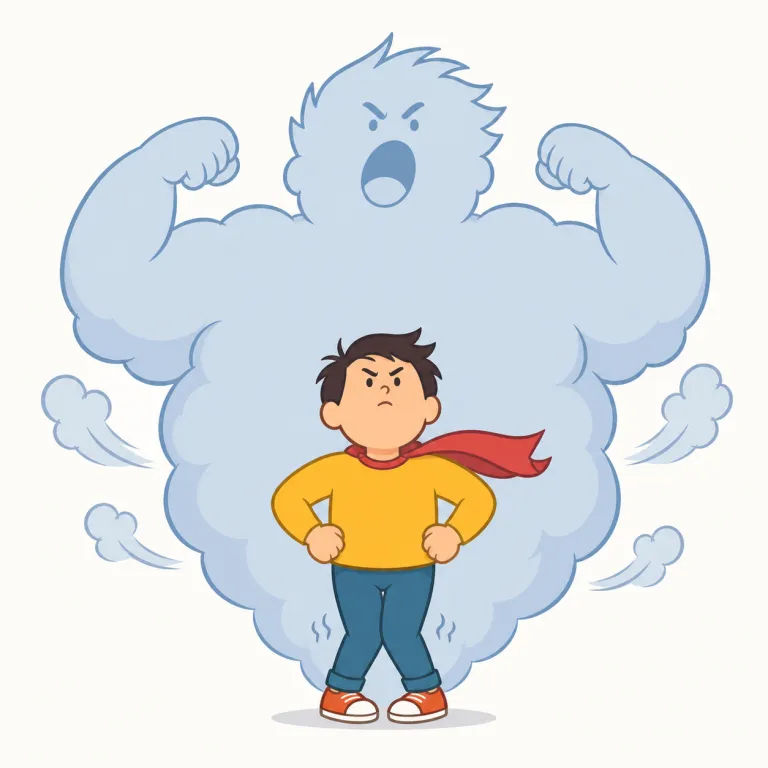
bluster は英検1級レベルの英単語で、「虚勢,強がり」という意味があります。発音記号は /ˈblʌstɚ/ です。
中身の薄い大げさな威嚇や強がり、荒々しい口調で相手を圧倒しようとする虚勢を指す名詞。実際の自信や力が伴わないことを暗示する場合が多く、話し手の不安や弱さを隠す態度として使われる。
Bluster is loud, confident, and sometimes aggressive talk that is meant to impress or frighten people. It often suggests more strength or certainty than is really there, so it can sound like empty confidence.
boast が「自慢」、bluff が「はったり」なら、bluster は「大声で相手を押そうとする強がり」と並べて覚えると定着しやすい語です。意味の核は「音量や勢いは大きいが、中身は弱い」。empty bluster, political bluster のように「中身のない威勢のよさ」で出やすく、実力よりも荒っぽい口調や態度が前面に出る点が特徴です。単なる怒りや自信ではなく、虚勢まじりの威圧だと押さえると使い分けやすくなります。
Think of `bluster` next to `boast` and `bluff`. `Boast` is proud talk, `bluff` is a false show, and `bluster` is louder and more aggressive. It often appears in phrases like `empty bluster` or `political bluster`, where the noise is bigger than the real power.
His bluster fooled no one.
彼の虚勢にだまされる者は誰もいなかった。
The manager's bluster hid his uncertainty.
その管理者の強がりは自信のなさを隠していた。
Despite all her bluster, she was nervous inside.
あれほど強がっていても、彼女は内心では緊張していた。
文脈によって、次の意味でも使われます。
風が大きな音を立て、突風を伴って荒々しく吹くことを表す。主語には wind や storm が来ることが多く、人が虚勢を張って大声で話す用法とは異なる自然現象の意味である。
bluster は、風がごうごう吹く音をまねたゲルマン系の擬音語に由来すると考えられます。もとは「嵐のように荒れ狂う音や勢い」を表し、そこから人のことばにも広がって「大声の威嚇」や「暴言」の意味になりました。関連語に blustery, blow があります。
Bluster is probably Germanic in origin and is thought to come from an imitative sound of noisy wind or violent movement. It first referred to stormy, roaring force, like rough weather. Later it was extended to human behavior, giving the sense of loud, aggressive, and empty talk; related words include blustery and blow.
この英単語をクイズで覚えよう