compost
compost は英検1級レベルの英単語で、「堆肥、堆肥にする」という意味があります。発音記号は /ˈkɑːmpoʊst/ です。
堆肥
/ verb 動詞 堆肥にする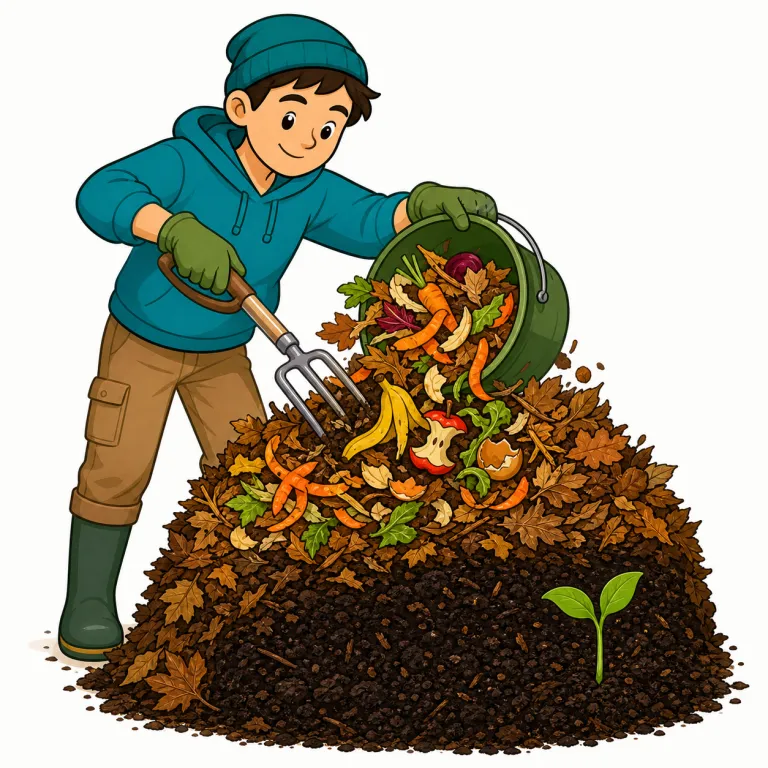
解説 Definition
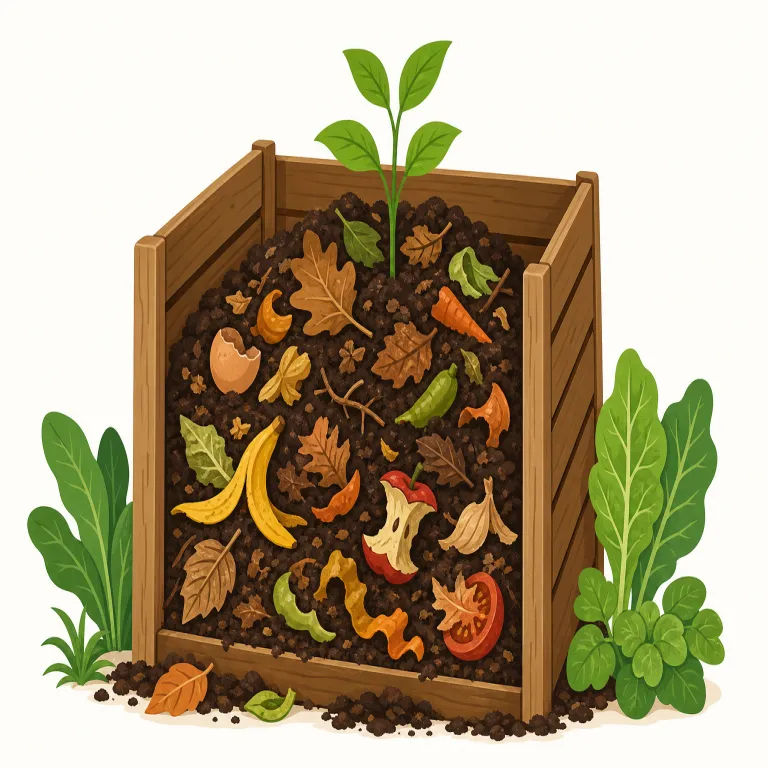
有機物を分解させることによって作られる肥料。落ち葉や食べ物の残り物などの自然物を腐敗させて、土の肥沃性を高めるために使用される物質です。
Compost is a natural material made from dead plants, food waste, and other organic matter that has broken down over time. People use it in gardens and farming to improve the soil and help plants grow. It is connected with recycling waste in an environmentally friendly way.
覚え方のコツ Memory Tip
compost は「生ごみそのもの」ではなく、落ち葉・野菜くず・土に戻るものを一か所に集め、時間をかけて分解させてできる“土を育てるもの”と場面で覚えると残りやすいです。gardening や eco の文脈で compost bin, make compost, add compost to the soil の形が頻出。com- を含む component や combine のように「いくつかを一緒にする」感覚を持つと、有機物をまとめて堆肥にするイメージにつながります。plastic や metal とは結びつきにくい語だと対比で押さえると混同しません。
Notice the start `com-`, like in `combine`: things are brought together. `Compost` is often learned with `compost bin`, `make compost`, and `add compost to the soil`, so connect it with gardening and recycling. It is easy to remember by contrasting it with things like plastic or metal, which do not belong there.
例文
Gardeners use compost to enrich the soil and improve plant growth in their gardens.
庭師は庭の土壌を豊かにし、植物の生育を促すために堆肥を使います。
Making your own compost from kitchen scraps reduces waste and creates a valuable fertilizer.
台所の生ごみから自分で堆肥を作れば、ごみを減らし、良質な肥料を作ることができます。
The farmer spread compost across the fields to prepare them for the next planting season.
農家は次の植え付けシーズンに備えて、畑全体に堆肥をまきました。
compost の類義語・関連語
compost の語源・成り立ち Etymology
compost は古フランス語 composte を経て、ラテン語 componere「一緒に置く」に由来します。com-「共に」+ ponere「置く」から成り、落ち葉や残り物を“まとめて積む”発想がそのまま堆肥の意味になりました。関連語は compose, component。
Compost came into English through Old French composte, from Latin componere, meaning "to put together." It is built from com- "together" and ponere "to place." The idea was originally of materials being piled together, which later developed into the sense of decayed organic matter used in growing.
同じレベルの語彙をもっと
英検1級の一覧へ →外部辞書で調べる
この英単語をクイズで覚えよう