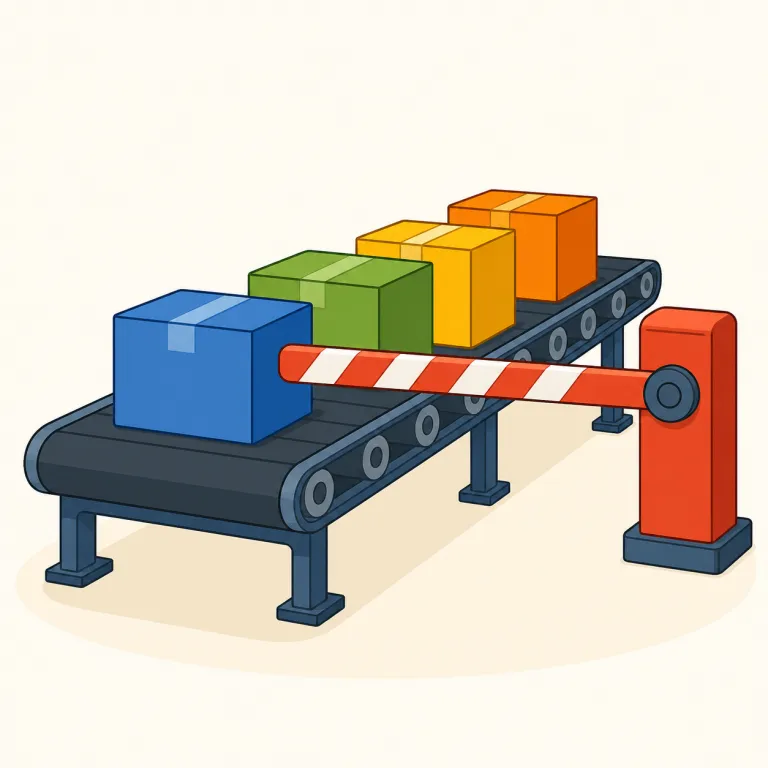
停止
解説 Definition
何かが止まって動かなくなる状態を指します。特に仕事や工程、あるいは支払い・供給の中断など、継続的な活動がやめられる場合に使います。
A stop or pause in movement, activity, or work. It is often used for production, transport, or services that have been interrupted. In news or business contexts, it can also refer to a work stoppage such as a strike.
覚え方のコツ Memory Tip
stop が分かれば核はすぐ取れます。-age は marriage や baggage のように「状態・まとまり」を名詞化しやすい語尾なので、stoppage で「止まっている状態・中断」と捉えると覚えやすいです。単なる一瞬の stop より、work stoppage, production stoppage, payment stoppage のように、業務・供給・支払いがしばらく止まる場面で出やすい語。stopper は「止める物」、stoppage は「停止そのもの」と区別すると混同しにくいです。
If you know stop, the core is easy. The ending -age often makes a noun for a state or condition, so stoppage is the state of being stopped. It often appears in phrases like work stoppage or production stoppage, where something stays stopped for a while.
例文
The stoppage of production due to equipment failure lasted for two hours.
機器の故障による生産の停止は2時間続きました。
A brief stoppage in the game allowed the referee to review the play.
試合が短く中断したため、審判はプレーを確認できました。
The strike caused a complete stoppage of all operations.
ストライキによってすべての操業が完全に停止しました。
stoppage の類義語・関連語
stoppage の語源・成り立ち Etymology
stop はラテン語 stuppa「詰め物」から派生した古フランス語 estoper「栓をする」経由で英語に入り、-age は古フランス語系の名詞語尾です。stopper や estop と同根で、「何かを詰めて流れを止める」感覚が機械や作業の「停止」に育ちました。
Stoppage comes from stop and the noun suffix -age, which came into English through French. Stop goes back to Latin stuppa, "tow, stuffing," through Old French estoper, originally meaning to plug or block up. From the idea of stopping a flow with a plug, the word developed into the broader sense of a halt or interruption.
同じレベルの英単語をもっと
外部辞書で調べる
この単語を英単語クイズで覚えよう