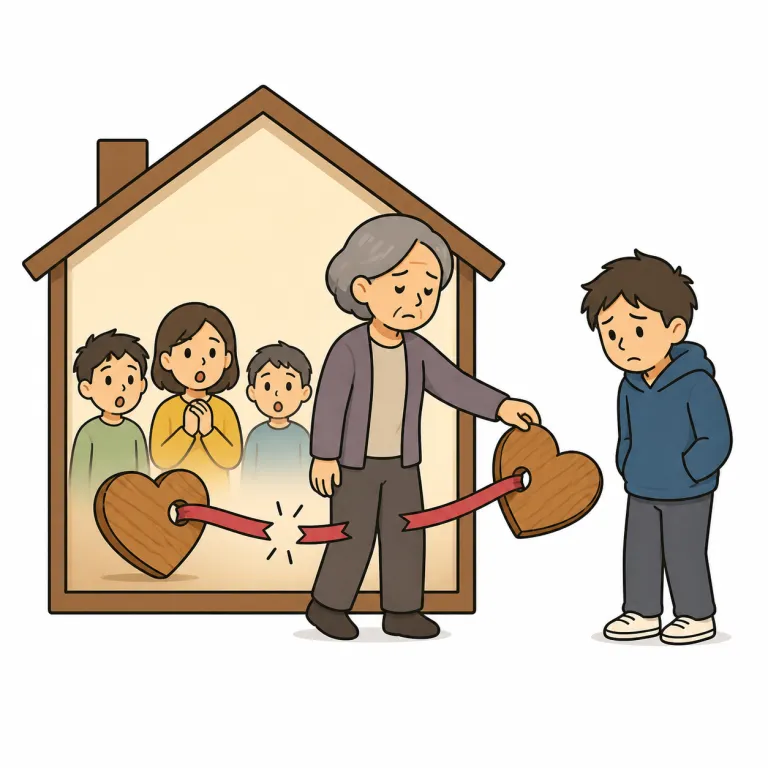
勘当
解説 Definition
子や親族を自分の家族・身内として認めず、関係を断つこと。
Disowning is the act of refusing to accept someone as part of your family or as someone you are responsible for. It is used in serious family or legal situations when a person cuts off recognition, support, or connection. The word can also be used more generally for rejecting a link to something.
覚え方のコツ Memory Tip
own や owner を知っていれば、disown は『自分の側・自分の家の者だと認めない』へ反転した語だと押さえると覚えやすいです。-ing が付いた disowning は、その行為そのもの。典型は disown a son / daughter で、単に怒るのではなく、親子関係を断って身内として認めない重い場面で使われます。dis- は disconnect などでも見える『切り離す』方向の接頭辞。なお disinherit は『相続させない』が中心で、disown は『身内として認めない』点が重要です。
Start with `own`: to own can also suggest accepting someone as your own. `Disown` means to reject that connection, and `disowning` is the act of doing it. It is much stronger than a family quarrel, so connect it with formal phrases like `disown a son` or `disown a daughter`.
例文
Disowning a child was a severe punishment in traditional societies.
子供を勘当することは伝統社会では厳しい罰でした。
The father's act of disowning his son shocked the entire family.
父親が息子を勘当した行為は家族全体を驚かせました。
In some cultures, disowning is considered an irreversible decision.
いくつかの文化では、勘当は取り返しのつかない決定と見なされています。
disowning の類義語・関連語
disowning の語源・成り立ち Etymology
disowning は dis-「否定・切り離し」+ own「自分のものと認める」+ -ing から成る。own は古英語系で、文字どおり「自分の者ではないとする」から勘当の重い意味になり、関連語は own, owner。
Disowning comes from dis-, meaning reversal or separation, plus own, with the ending -ing. Own comes from Old English and originally carried the idea of something belonging to oneself. So disown first meant refusing to admit that someone or something is one's own, and this developed into the stronger sense of rejecting a family member or connection; related words include own and owner.
同じレベルの語彙をもっと
外部辞書で調べる
この英単語をクイズで覚えよう