入場券、切符
noun 名詞主に米国のくだけた古風な用法で、劇場や競技会などの入場券を指す。興行やイベントについて使われることが多く、現代の通常の会話では ticket のほうが一般的である。
ドゥカットはヨーロッパで中世からルネッサンス期に流通した金貨である。高い価値を持つ通貨単位として広く取引されていた。
A ducat is an old gold or silver coin that was used in parts of Europe in the past. It is mainly seen in historical writing, literature, and discussions of old money systems. Today, the word is not used for modern everyday currency.
"ducat" は現代英語の日常語ではなく、歴史・文学・ファンタジーで見る「金貨の固有名」として覚えると残りやすいです。まず generic な coin や currency とは分けて、gold coin と強く結びつけます。文脈は merchants, trade, pay in ducats のような「商人・取引・支払い」が定番。特に複数形 ducats で「何枚もの貨幣」「財産」の感じで出やすいので、宝箱や市場の場面と一緒に固定するとよいです。意味を広げず、「中世ヨーロッパの高価な金貨」に絞るのがコツです。
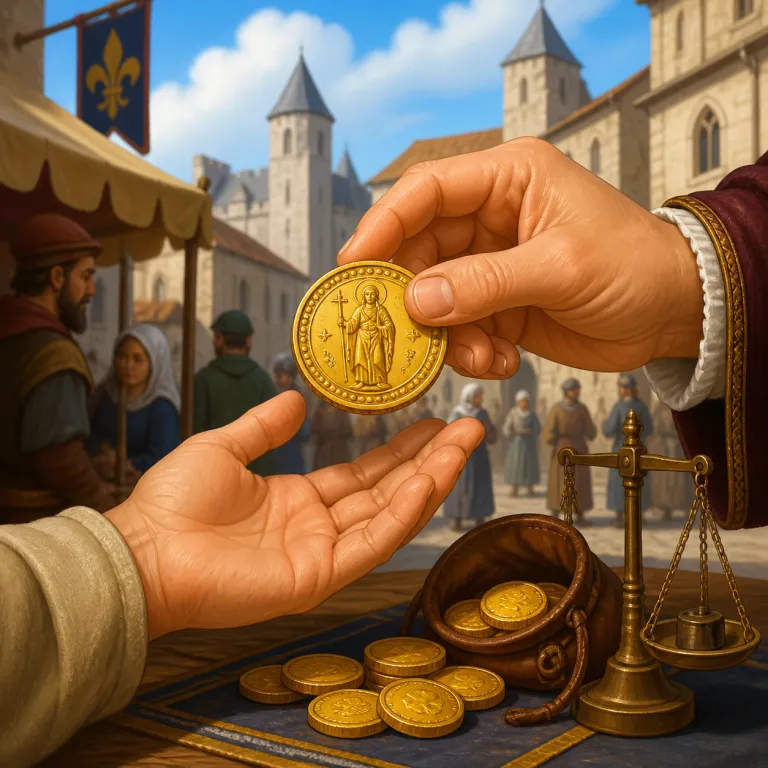
Treat `ducat` as a special historical coin name, not a general word like `money` or `coin`. It often appears in old stories, trade scenes, and fantasy worlds. Picture merchants counting gold ducats in a market or treasure chest.
The ducat was a valuable coin in medieval times.
ドゥカットは中世の貴重な金貨だった。
Ducats were traded throughout Europe.
ドゥカットはヨーロッパ全体で取引された。
The ducat's value fluctuated over time.
ドゥカットの価値は時間とともに変動した。
文脈によって、次の意味でも使われます。
主に米国のくだけた古風な用法で、劇場や競技会などの入場券を指す。興行やイベントについて使われることが多く、現代の通常の会話では ticket のほうが一般的である。
ducat は中世ラテン語 ducatus「公国・公爵領、またその貨幣」からで、さらにラテン語 dux/duc-「導く人・公」にさかのぼります。もとは公の支配権を背負った金貨という名で、だから duke や conduct と同じ「導く」系の語根につながります。
Ducat comes from Medieval Latin ducatus, which meant "duchy" and also the coin connected with a duke's rule. It goes back to Latin dux, duc-, meaning "leader." Because of that, it is related to words such as duke and conduct, which share the same root of leading.
この英単語をクイズで覚えよう