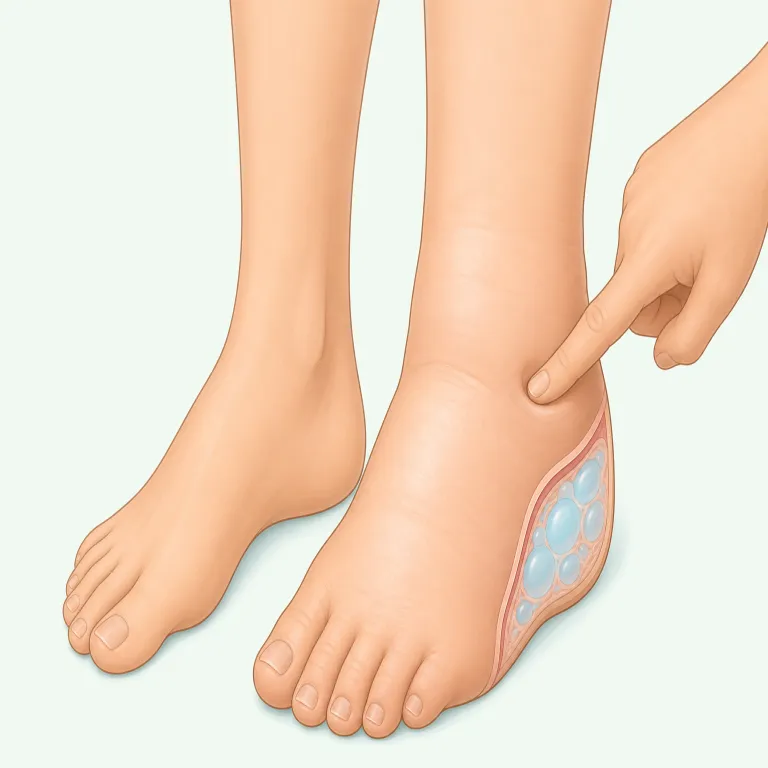
浮腫(むくみ)
解説 Definition
edema は、体内の組織に余分な水分がたまって腫れた状態を指す医学用語。足、手、顔などに起こり、心臓や腎臓の病気、炎症、薬の副作用などが原因になることがある。日常語では「むくみ」とも言い、原因の見極めが重要になる。
Edema is a medical condition in which part of the body becomes swollen because too much fluid collects in the tissues. It often affects areas like the feet, legs, or hands. This is mainly a medical term; in everyday English, people may simply say swelling.
覚え方のコツ Memory Tip
edema は医療英語で「むくみ」を指す基本語として覚えると定着しやすいです。症状名としては swelling より専門的で、体の組織に fluid がたまって腫れる場面を思い浮かべるとよいです。特に leg edema, pulmonary edema など部位名とセットでよく出ます。さらに lymphedema, angioedema のように後半の -edema が入ると「その部位・原因に関するむくみ」という見方ができ、語形ごと覚えやすくなります。
Remember `edema` as a medical word, not an everyday one like `swelling`. It often appears after a body part or cause, as in `leg edema` or `pulmonary edema`. That also helps with longer words like `lymphedema` and `angioedema`, where `-edema` keeps the idea of swelling.
例文
The patient's edema in his legs made it difficult for him to walk.
脚の浮腫のため、その患者は歩くのが難しかった。
Treatment for edema often involves compression therapy and elevation.
浮腫の治療では、圧迫療法や患部を高く保つことがよく行われる。
The doctor prescribed diuretics to reduce the edema in her hands.
医師は彼女の手の浮腫を抑えるために利尿薬を処方した。
edema の類義語・関連語
edema の語源・成り立ち Etymology
edema はギリシャ語 oidema「腫れ」に由来し、oid-「ふくれる」+ -ema「その結果できた状態」と分けられます。つまり語源どおり「ふくれ上がった状態」で、症状名として直感的です。angioedema や lymphedema も同じ語根を使います。
Edema comes from Greek oidema, meaning "swelling," from a root meaning "to swell." The ending -ema often marks the result of an action or condition. So the word has always carried the sense of a swollen state. Related medical words include angioedema and lymphedema.
同じレベルの語彙をもっと
外部辞書で調べる
この英単語をクイズで覚えよう
この意味を学べる単語帳
edema の収録語義を確認して、まとめて学べる単語帳を選べます。
-
収録語義:浮腫(むくみ)
作成者:西村/learningBOX/競プロアカ