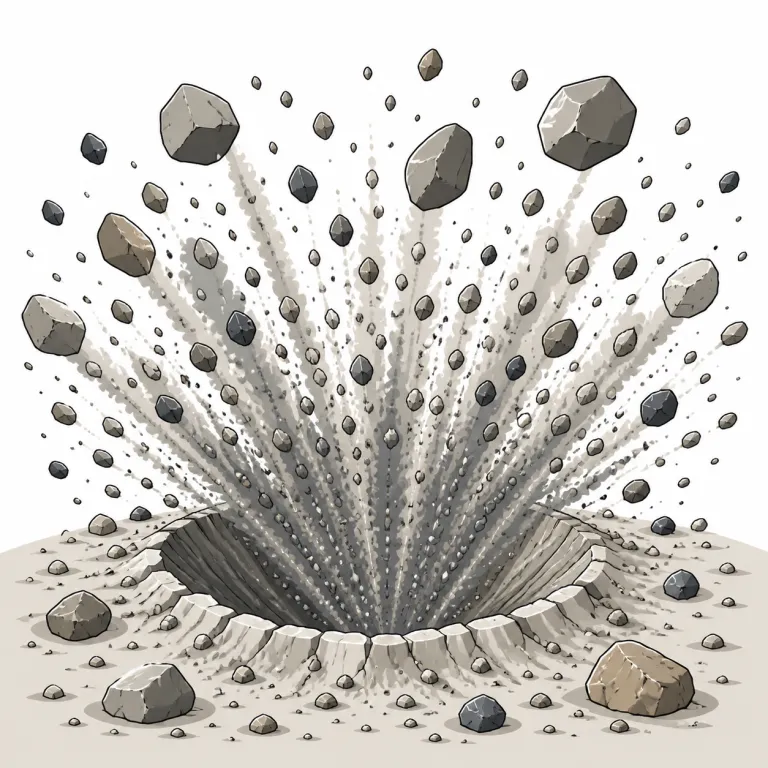
噴出物
解説 Definition
噴出物とは、爆発や衝撃などの力によって放出される物質です。火山噴火や隕石衝突など、様々な現象で生成されます。岩石、灰、塵などを指します。
Ejecta is material that is thrown out by a volcano, an impact, or another violent event. It is mainly used in geology and astronomy, and it often refers to ash, rock, dust, or other debris.
覚え方のコツ Memory Tip
eject を知っていれば覚えやすい語です。中心は「外へ放り出す」。そこに -a が付いた ejecta は、「投げ出されたもの全体」= 噴出物・放出物と取ると定着します。火山なら volcanic ejecta、隕石衝突なら impact ejecta の形で出やすく、lava そのものだけでなく灰・岩片・塵まで含む広い語。debris に近い場面もありますが、ejecta は「爆発や衝撃で外へ飛ばされた物質」という核を意識すると混同しにくいです。
Start from `eject`, which means to throw out. `Ejecta` is the stuff that has been thrown out, especially in science contexts like volcanoes or impacts. If you remember `volcanic ejecta` or `impact ejecta`, the word becomes much easier to keep.
例文
The lunar ejecta from the impact crater scattered across the moon's surface.
衝突クレーターからの噴出物が月面全体に飛び散りました。
Scientists analyzed the ejecta to understand the impact's force.
科学者たちは衝突の威力を知るために噴出物を分析しました。
Volcanic ejecta buried the nearby villages in ash.
火山の噴出物が近くの村々を灰の下に埋めました。
ejecta の類義語・関連語
ejecta の語源・成り立ち Etymology
ejecta はラテン語 ēicere「外へ投げ出す」由来で、e-/ex-「外へ」+ jacere「投げる」に分かれます。そこから「噴き出されて出たもの」という意味になりました。関連語 inject、project も同じ jacere を含み、動きの核が「投げる」だと見えてきます。
Ejecta comes from Latin eicere, meaning "to throw out," from ex- "out" and jacere "to throw." It came to mean things that have been thrown out or cast off. The same root appears in English words like inject, reject, and project, all built around the idea of throwing.
同じレベルの語彙をもっと
外部辞書で調べる
この英単語をクイズで覚えよう