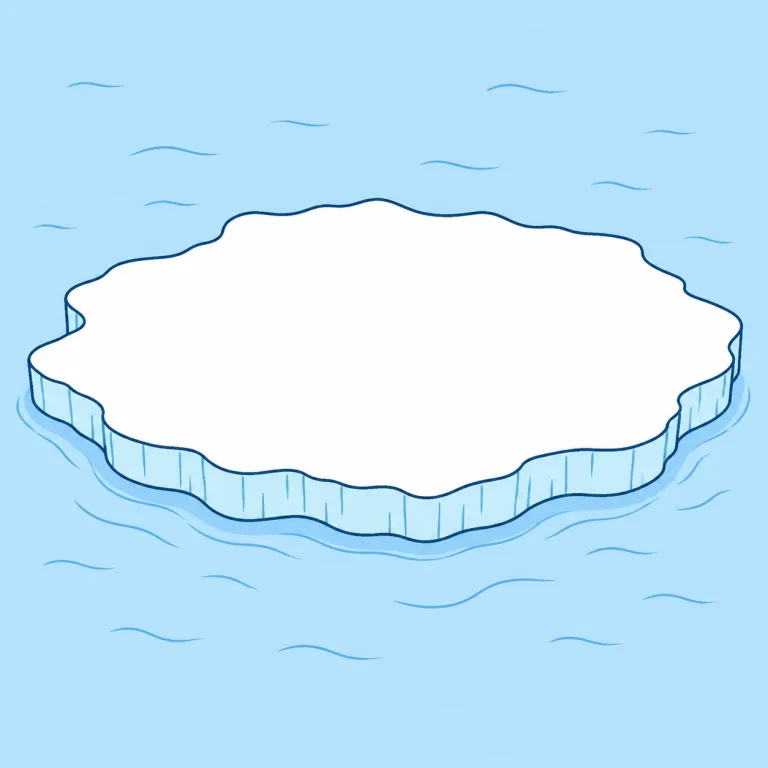
流氷
解説 Definition
流氷、または大きな浮遊氷塊。極地での氷の断片。
A floe is a flat piece of floating ice, especially in the sea near polar regions. It is commonly used in discussions of Arctic or Antarctic weather, travel, and wildlife. The word usually refers to a large, moving sheet of ice.
覚え方のコツ Memory Tip
floe は単独より ice floe の形で覚えると定着しやすい語です。頭の flo- を見たら float を連想し、「水に浮いて漂う氷」と結びつけるとよいです。ただし何でも浮く氷ではなく、海面に平たく広がる板状・塊状の流氷を指すのがポイント。iceberg が突き出た氷山寄りなのに対し、floe は水面を流れる平たい氷。polar bear stranded on a floe のような極地映像の場面と一緒に覚えると忘れにくいです。
Remember it as `ice floe`, because that is the common pair. The beginning `flo-` can remind you of `float`, so think of a flat piece of ice floating on the sea. Keep it separate from `iceberg`, which is a much larger mass rising up from the water.
例文
Massive ice floes drifted across the Arctic Ocean.
巨大な流氷が北極海を漂っていた。
Climate change is causing larger floes to break apart and disappear.
気候変動により、より大きな流氷が崩れて消失しつつある。
Ships must navigate carefully around floating ice floes.
船は浮遊する流氷を避けて注意深く航行しなければならない。
floe の類義語・関連語
紛らわしい語
floe の語源・成り立ち Etymology
floe はノルウェー語 flo「平たい層・板」が語源で、さらに古ノルド語を経て「平らな」を表す印欧語根にさかのぼります。氷が“平たい板のように浮かぶもの”だと分かると意味が腑に落ちます。関連語に flake, flagstone。
Floe comes from Norwegian flo, meaning a flat layer or slab, and it goes back through Old Norse to an older Indo-European root meaning "flat." The word was used for a sheet of ice floating on water because it looks like a flat board or layer. It is distantly related to English words such as flake and flagstone, which also suggest flatness.
同じレベルの語彙をもっと
外部辞書で調べる
この英単語をクイズで覚えよう