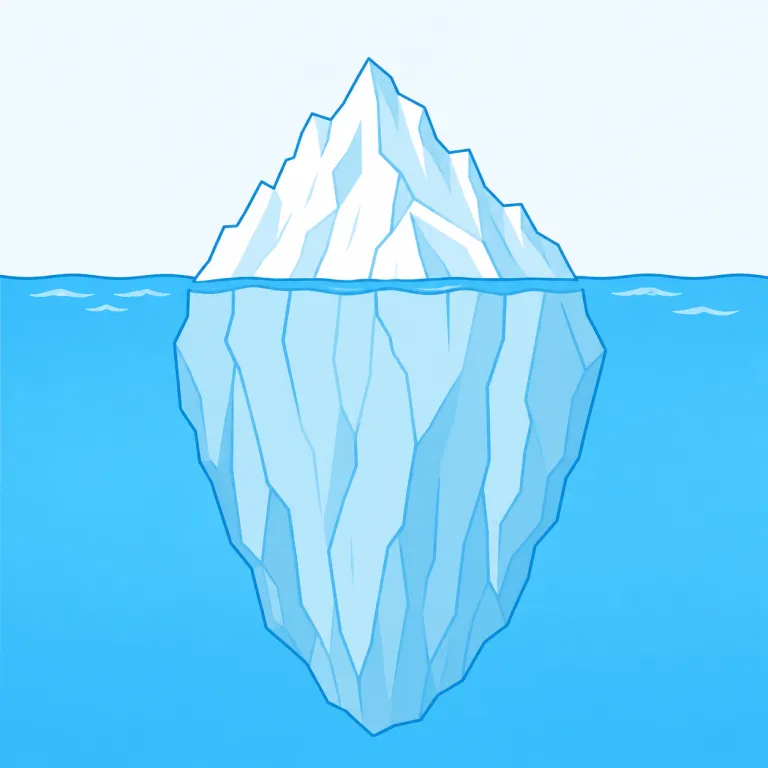
iceberg
iceberg は英検準1級レベルの英単語で、「氷山」という意味があります。発音記号は /ˈaɪsbɚɡ/ です。
氷山
解説 Definition
この名詞は海に浮かぶ巨大な氷の塊を指します。大部分が水面下に隠れているため、船が近づくまで全体が見えないことが多いです。「氷山の一角」という表現は、物事の表面だけがわかり、本質が見えていない状態を比喩的に示します。
An iceberg is a very large piece of ice floating in the sea, usually broken off from a glacier. It is commonly used in discussions about oceans, weather, and polar regions. The word can also appear in the expression 'the tip of the iceberg' to mean a small visible part of a much bigger situation.
覚え方のコツ Memory Tip
まず ice が見えるので「氷」と結びつける。そこに海に浮かぶ“山のような塊”の絵を重ねると覚えやすい。重要なのは「見えている部分より、隠れている部分の方が大きい」というイメージで、tip of the iceberg(氷山の一角)まで一緒に覚えると定着する。似た語の glacier は陸上の氷河なので別物。hit an iceberg のように船・海の文脈で出やすい。
You can see `ice` immediately, so connect it with a huge mountain-like mass in the sea. The best memory hook is the phrase `the tip of the iceberg`, which reminds you that most of it is hidden. Keep it separate from `glacier`, which is ice on land.
例文
The Titanic sank after hitting an iceberg in the North Atlantic.
タイタニック号は北大西洋で氷山に衝突して沈没した。
Only about ten percent of an iceberg is visible above the water.
氷山の約10パーセントだけが水面上に見えている。
The corruption scandal was just the tip of the iceberg.
その汚職スキャンダルは氷山の一角に過ぎなかった。
iceberg の類義語・関連語
iceberg の語源・成り立ち Etymology
iceberg はオランダ語 ijsberg に由来し、ijs「氷」+ berg「山」の直訳で「氷の山」です。海に浮かぶ巨大な氷塊を山に見立てた語で、同じ ice の語根を持つ関連語に icy, icicle があります。
Iceberg comes from Dutch ijsberg, literally meaning "ice mountain." It combines ijs, "ice," and berg, "mountain." The image is very direct: a great mass of floating ice was named as if it were a mountain in the sea. Related English words from the ice root include icy and icicle.
同じレベルの英単語をもっと
英検準1級の一覧へ →外部辞書で調べる
この単語を英単語クイズで覚えよう