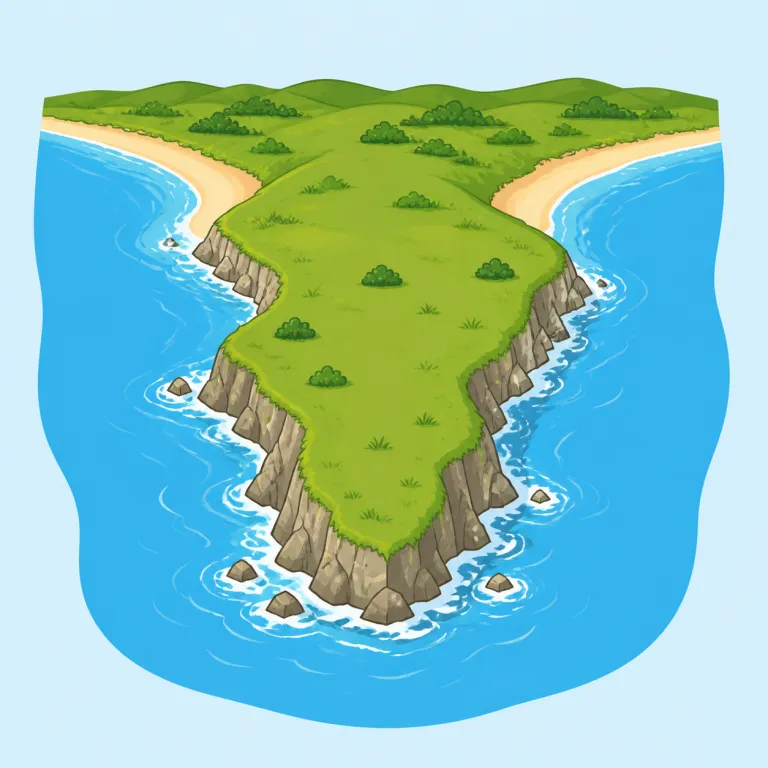
枕地、畑の端の旋回地
noun 名詞畑の端に設けられ、耕作機械や馬が方向転換するために使う帯状の土地を指します。耕作列を横切る部分に当たり、海岸の「岬」とは異なる農業用語として、主に英国英語で使われます。
海岸線が海へ向かって突き出した岬や海の岬のことを指します。陸地が海に突出する地理的な突起部分です。
A headland is a piece of land, often high land, that extends out into the sea or another large area of water. It is a common word in geography and travel writing about coastlines. It usually refers to a clear point of land that stands out from the shore.
`head + land` で覚えると残りやすい語です。`head` は「頭」だけでなく「先端・前に出た部分」という感覚でも使われるので、`headland` は「陸地の先っぽが海へ突き出た場所」と取れます。地図や風景の文脈で `rocky headland` のように出やすく、単なる陸地 `land` ではなく、海岸線から目立って張り出した地形を指すのがポイント。`island` は島、`cape` も岬ですが、`headland` は“海に向かってせり出す陸の先端”という形を強く意識すると定着します。
Split it into `head` + `land`. Here `head` can mean the front or projecting end, so `headland` suggests land that sticks out in front. Picture a rocky piece of coast reaching into the sea.
The lighthouse stands on a rocky headland overlooking the sea.
灯台は海を見下ろす岩の多い岬の上に立っています。
The ship carefully navigated around the dangerous headland.
船は危険な岬の周りを慎重に航行しました。
From the headland, visitors can enjoy a panoramic view of the coastline.
岬からは、海岸線を一望できます。
文脈によって、次の意味でも使われます。
畑の端に設けられ、耕作機械や馬が方向転換するために使う帯状の土地を指します。耕作列を横切る部分に当たり、海岸の「岬」とは異なる農業用語として、主に英国英語で使われます。
headlandは古英語heafod由来のheadとlandの複合語で、文字どおり「陸の頭」を意味する。海へ突き出した土地を頭に見立てた比喩が分かると腑に落ちやすく、headlineやheadwaterでもheadは「先端・主要部」を表す。
Headland is made from head and land. Head comes from Old English heafod, and in this kind of word it developed the figurative sense of "top," "front," or "projecting part." So headland literally meant "the head of the land," a piece of land that sticks out, much like head in headline or headwater.
この英単語をクイズで覚えよう