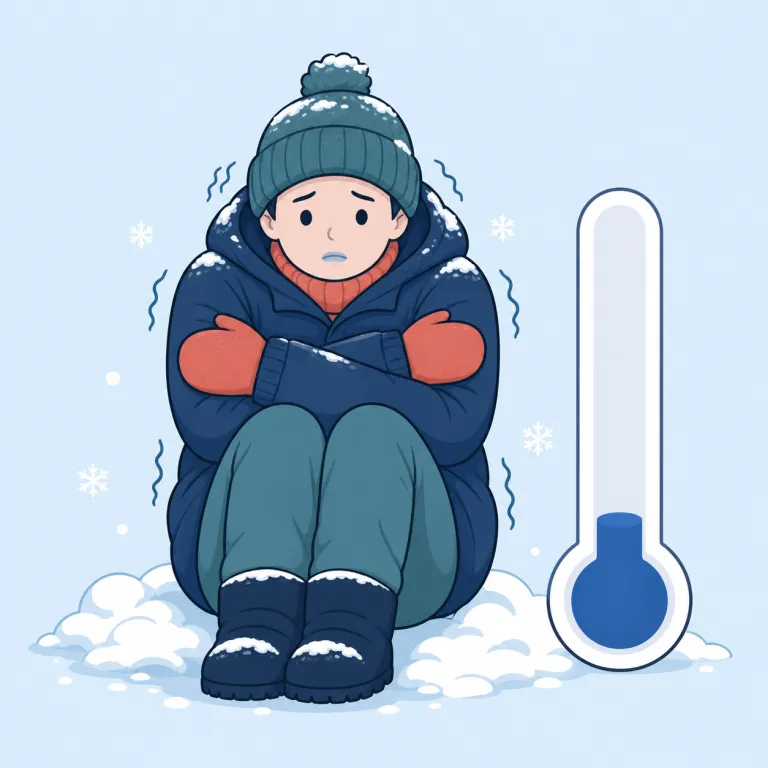
低体温症
解説 Definition
低体温症とは、体の中心部の温度が危険なほど低下する医学的な状態です。寒冷環境への露出によって引き起こされ、生命に関わる危険な症状です。
Hypothermia is a dangerous medical condition in which the body becomes too cold and cannot keep its normal temperature. It usually happens after long exposure to cold weather or cold water. The word is commonly used in medicine, safety advice, and survival situations.
覚え方のコツ Memory Tip
まず thermo を thermometer や thermal と同じ「熱・体温」の仲間として押さえると覚えやすいです。そこに hypo- が付くと「低い・不足」の方向になるので、hyper-(高い・過剰)と対で整理すると混同しにくくなります。使う場面は cold water, winter exposure, mountain rescue など、寒さで体温が危険域まで下がった medical emergency の文脈。単に chilly ではなく、命に関わる深刻な状態を指す語だと結びつけると残ります。
Use word parts: `therm` is about heat or temperature, like in `thermometer` and `thermal`. The prefix `hypo-` means low, which helps if you also remember the opposite prefix `hyper-` for high. Picture a medical emergency after cold water or winter exposure, not just someone feeling a little cold.
例文
The hiker was treated for hypothermia after falling in the icy water.
その登山者は冷たい水に落ちた後、低体温症の治療を受けた。
Hypothermia can develop rapidly in cold weather.
低体温症は寒冷な環境で急速に発症する可能性があります。
The symptoms of hypothermia include shivering and confusion.
低体温症の症状には震えと混乱が含まれます。
hypothermia の類義語・関連語
hypothermia の語源・成り立ち Etymology
近代ラテン語 hypothermia からで、ギリシャ語由来の hypo-「下に・不足」+ therm(e)「熱」+ -ia「状態」から成ります。文字どおり「熱が足りない状態」なので、体温が下がる低体温症を指します。関連語は thermal, thermometer。
Hypothermia comes from modern Latin, built from Greek elements: hypo- meaning "under" or "too little," therm meaning "heat," and -ia for a condition or state. It literally meant a state of too little heat. The same heat root appears in thermal and thermometer.
同じレベルの英単語をもっと
外部辞書で調べる
この単語を英単語クイズで覚えよう