虚血
解説 Definition
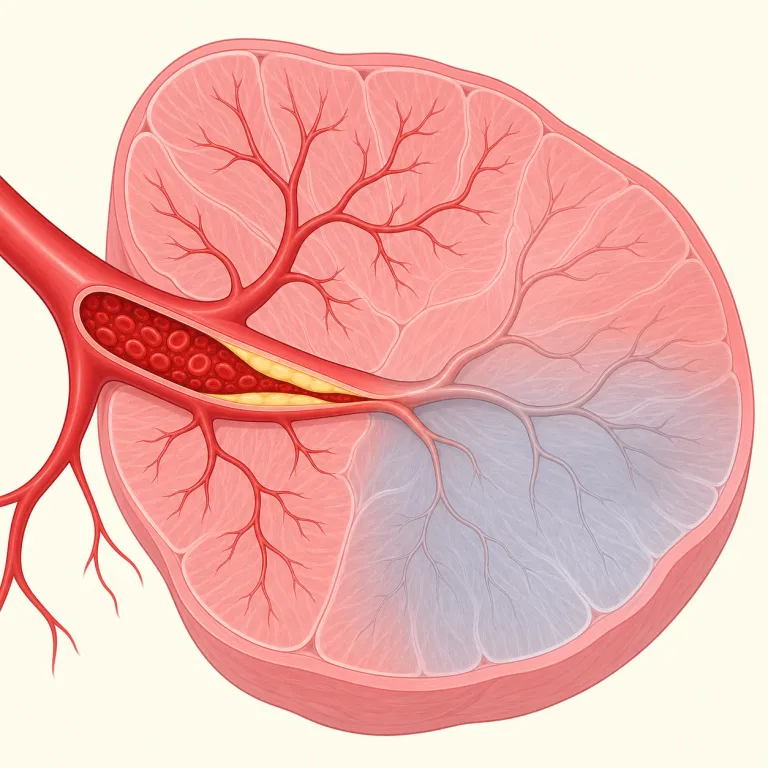
組織への血液供給が減少または遮断された医学的状態です。酸素不足により組織が損傷するリスクがある危険な症状を指します。
Ischemia is a medical condition in which part of the body does not get enough blood flow. Because of this, the tissue does not receive enough oxygen and may be damaged. This word is mainly used in medicine and health contexts.
覚え方のコツ Memory Tip
末尾の -emia は anemia, leukemia などにもある「血液・血の状態」を表す医学語尾。まずここで“血に関する病態”だとつかむと覚えやすいです。ischemia は単独で覚えるより ischemic heart disease, myocardial ischemia, cerebral ischemia のような定番表現で見ると定着しやすい語。ポイントは、出血している状態ではなく「血が十分届かない・流れが悪い」側の異常だということ。infarction(梗塞)はその先に起こりうる結果、と区別すると混同しにくくなります。
The ending `-emia` appears in medical words about blood, like `anemia`. So `ischemia` is a blood-related problem word. Learn it in fixed phrases such as `myocardial ischemia` or `cerebral ischemia`, and connect it with blood not reaching an area well, not bleeding out.
例文
Ischemia is a serious condition that can lead to tissue death if not treated quickly.
虚血は、迅速に治療しなければ組織壊死につながる可能性のある深刻な状態である。
The patient suffered from cardiac ischemia before the heart attack.
その患者は心臓発作の前に心筋虚血を起こしていた。
Acute ischemia can result in permanent organ damage.
急性虚血は永続的な臓器障害をもたらす可能性があります。
ischemia の類義語・関連語
ischemia の語源・成り立ち Etymology
ischemia はギリシャ語 iskhein「抑える」+ haima「血」からできた語で、文字どおり「血がせき止められた状態」を表します。関連語は hemorrhage, hematology で、血流が届かず組織が酸素不足になる病態が語源からすっと理解できます。
Ischemia comes from Greek iskhein, meaning "to hold back," and haima, meaning "blood." Its literal sense was "blood being held back." From that image, the word developed into the medical idea of reduced blood supply. Related English words from the same blood root include hematology and hemorrhage.
同じレベルの語彙をもっと
外部辞書で調べる
この英単語をクイズで覚えよう