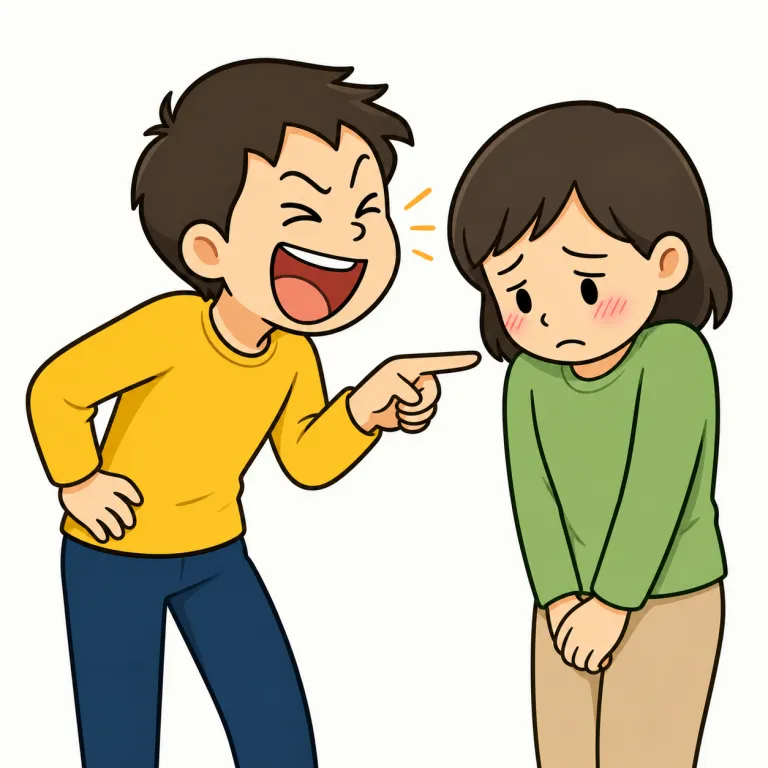
laugh at
laugh at は英検準2級レベルの英熟語で、「嘲笑う、見て笑う」という意味があります。発音記号は /ˈlæf ˈæt/ です。
意味一覧 (2件)
嘲笑う
解説 Definition
誰かや何かをばかにして笑う、からかうように笑うことを表します。相手の失敗・見た目・発言などを笑いものにする、やや否定的な響きで使われます。
To laugh at someone means to make them the target of your laughter, often because you think they are silly, weak, or have made a mistake. It is commonly used when talking about mockery or unkind behavior. This expression often has a negative feeling because it can hurt someone's feelings.
覚え方のコツ Memory Tip
まず単独の laugh は「ただ笑う」ですが、laugh at になると at が付き、「笑いの矢印が相手に向く」と考えると覚えやすいです。だから laugh at someone は「その人を見て笑う」→「ばかにして笑う」になりやすい表現です。会話では Don’t laugh at me. の形が非常によく出ます。似た場面でも laugh with は「一緒に笑う」で、at と with の違いを対にして覚えると混同しにくくなります。
Start with `laugh`, which is just a normal smile or laugh. Add `at`, and the laugh points toward someone, like an arrow. That is why `laugh at someone` often feels unkind. Remember the contrast: `laugh with` means together, but `laugh at` means the joke is aimed at the person.
例文
The boys laughed at Ken's wrong answer.
男の子たちはケンの間違った答えをばかにして笑いました。
He was upset when some students laughed at his answer.
何人かの生徒が彼の答えを見て笑ったとき、彼は傷ついた。
Please don't laugh at my clothes.
私の服をばかにして笑わないでください。
見て笑う
(意味 2)
解説 Definition
人のしぐさや出来事、冗談などに反応して笑うことを表す。必ずしも相手をばかにする意味ではなく、単に面白くて笑う場合にも使う。文脈によっては親しみのある軽い笑いにもなる。
To respond to a joke, event, or someone's behavior by laughing because it is amusing. The reaction can be friendly and simply express enjoyment.
覚え方のコツ Memory Tip
まず単独の laugh は「ただ笑う」ですが、laugh at になると at が付き、「笑いのきっかけに目が向く」と考えると覚えやすいです。だから laugh at a joke は「冗談を聞いて笑う」、laugh at the puppy は「子犬の様子を見て笑う」。文脈によっては「ばかにして笑う」にもなりますが、必ず嘲笑とは限りません。laugh with は「一緒に笑う」で、at と with の違いを対にして覚えると混同しにくくなります。
Think of at as an arrow pointing toward whatever caused the laughter, such as a joke or a playful puppy. In laugh at, the words after at identify the source of amusement; with would identify someone sharing the laughter.
例文
We laughed at the joke for several minutes.
私たちはその冗談を聞いて数分間笑った。
She laughed at the way the puppy chased its tail.
彼女は子犬がしっぽを追いかける様子を見て笑った。
Everyone laughed at the funny scene in the movie.
みんなその映画の面白い場面を見て笑った。
laugh at の類義語・関連語
対義語
laugh at の語源・成り立ち Etymology
laughは古英語hliehhan(声を出して笑う)に由来し、ゲルマン祖語*hlahjaną が起源。atは対象を指す前置詞で「~に向けて笑う」→「嘲笑う」の意。関連語:laughter(笑い)、laughable(滑稽な)。笑いを相手にぶつけるイメージが嘲りの意味を生んだ。
`laugh` comes from Old English `hliehhan`, from an earlier Germanic root meaning "to laugh aloud." In `laugh at`, the preposition `at` shows the target of the laughter, so the phrase developed the sense of directing laughter toward someone in a mocking way. Related English words include `laughter` and `laughable`.
同じレベルの語彙をもっと
英検準2級の一覧へ →外部辞書で調べる
この英熟語をクイズで覚えよう