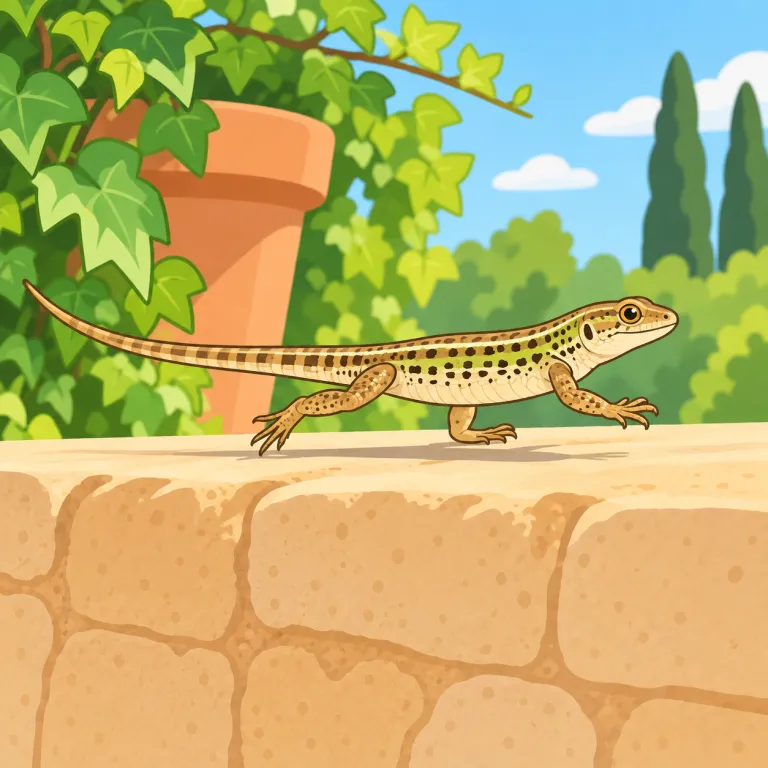
トカゲ
解説 Definition
lizard は、トカゲという意味です。日本語のカタカナ語「リザード」はゲームや作品名で見ることがありますが、英語ではふつう実際の動物を指します。
A lizard is a reptile that typically has a long body and tail, four legs, and scaly skin. Many kinds live in warm places and can be seen running across rocks, walls, or the ground.
覚え方のコツ Memory Tip
英語ではゲーム名などの「リザード」ではなく、庭や壁を走る実際の「トカゲ」が基本。small lizard、green lizard、a lizard on the wall のように、姿・色・場所と組み合わせて覚える。ヘビを表す snake とは違い、多くは四肢を持つ爬虫類を指す。
Although Japanese learners may recognize リザード from games or character names, the ordinary English word usually refers to the real animal. Picture a small green lizard running across a sunny garden wall. Useful combinations include small lizard, green lizard, and desert lizard. Keep it separate from snake: both are reptiles, but a typical lizard has four legs, while a snake has none. This concrete animal-and-habitat image makes the everyday meaning easy to recall.
例文
A small lizard ran across the wall.
小さなトカゲが壁を走って横切りました。
The child watched a green lizard in the garden.
その子どもは庭で緑色のトカゲを見ていました。
This lizard lives in warm, dry places.
このトカゲは暖かく乾いた場所にすんでいます。
lizard の類義語・関連語
lizard の語源・成り立ち Etymology
古フランス語lesarde(トカゲ)を経て、ラテン語lacerta(トカゲ)に由来する。英語に入る際にl'ezardのように冠詞と融合して語形が変化した。関連語にlacertid(トカゲ科)、alligator(ラテン語lacertaが変化したスペイン語el lagartoから)がある。
Lizard entered Middle English through Old French lesarde or a related form and ultimately comes from Latin lacerta, meaning “lizard.” Its English shape was influenced by French forms in which the noun was associated with the definite article. The Spanish phrase el lagarto, “the lizard,” also contributed historically to the English word alligator, although alligator now names a very different reptile.
同じレベルの語彙をもっと
外部辞書で調べる
この英単語をクイズで覚えよう