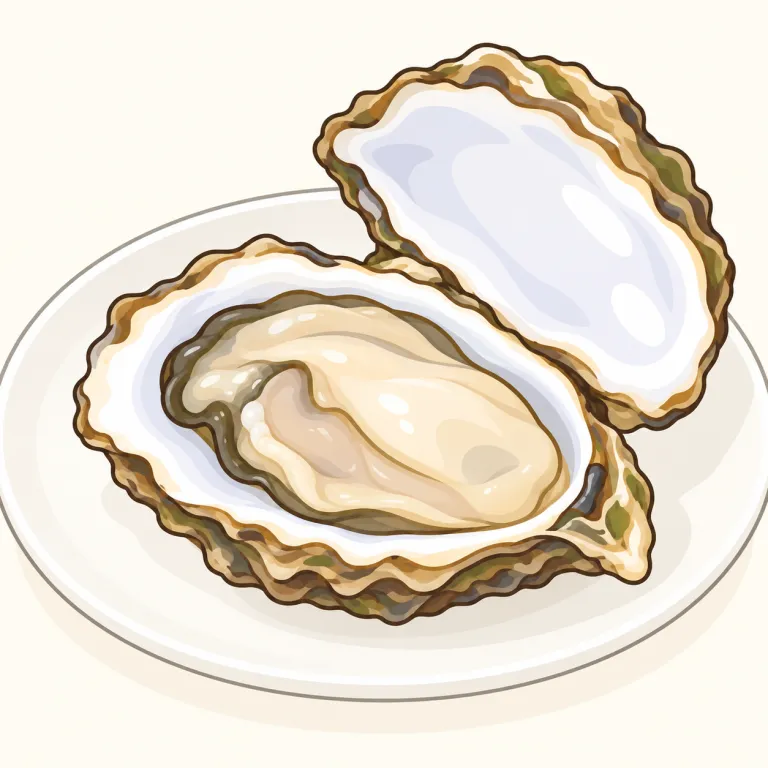
カキ
解説 Definition
oyster は、食用にもされる貝のカキを意味します。日本語の「オイスター」はソース名で使われることもありますが、英語の oyster は基本的に貝そのものを指します。
An oyster is a saltwater shellfish with a rough, hard shell, often raised or collected for food. The word normally refers to the animal itself, whether it is served raw, cooked, or still in its shell.
覚え方のコツ Memory Tip
日本語の「オイスターソース」から oyster を調味料そのものと思わず、基本は硬い二枚貝の「カキ」と覚えます。fresh oyster、raw oyster、oyster farm のように使い、料理名では oyster sauce と後ろに sauce を加えて区別します。
Connect oyster with the shellfish itself, not automatically with the sauce familiar from Japanese cooking. Picture a fresh oyster in its rough shell, served with lemon: this scene fixes the core meaning. Useful combinations include raw oyster, fresh oyster, oyster shell, and oyster farm. When English speakers mean the condiment, they normally say oyster sauce, adding sauce explicitly. This distinction helps prevent the katakana expression “oyster sauce” from narrowing your understanding of oyster to a seasoning rather than the animal used to make it.
例文
He ordered one fresh oyster.
彼は新鮮なカキを1つ注文しました。
The oyster was served with lemon.
そのカキはレモンを添えて出されました。
This restaurant buys oyster from a local farm.
このレストランは地元の養殖場からカキを仕入れています。
oyster の類義語・関連語
oyster の語源・成り立ち Etymology
古フランス語 oistre を経てラテン語 ostrea、さらにギリシャ語 ostreon(牡蠣)に遡る。語根 osteo-(骨)と関連し、硬い殻のイメージから名付けられた。英語の ostracize(追放する)も同根で、陶片投票に貝殻状の陶片を使ったことに由来する。関連語: ostracize, ostrich。
English oyster came through Old French oistre from Latin ostrea, which in turn came from Greek ostreon, meaning an oyster. Related ancient forms also referred to hard shells or shell-like objects. The word has changed considerably in spelling and pronunciation as it passed through these languages, but its central reference to the familiar hard-shelled mollusk has remained stable.
同じレベルの語彙をもっと
外部辞書で調べる
この英単語をクイズで覚えよう