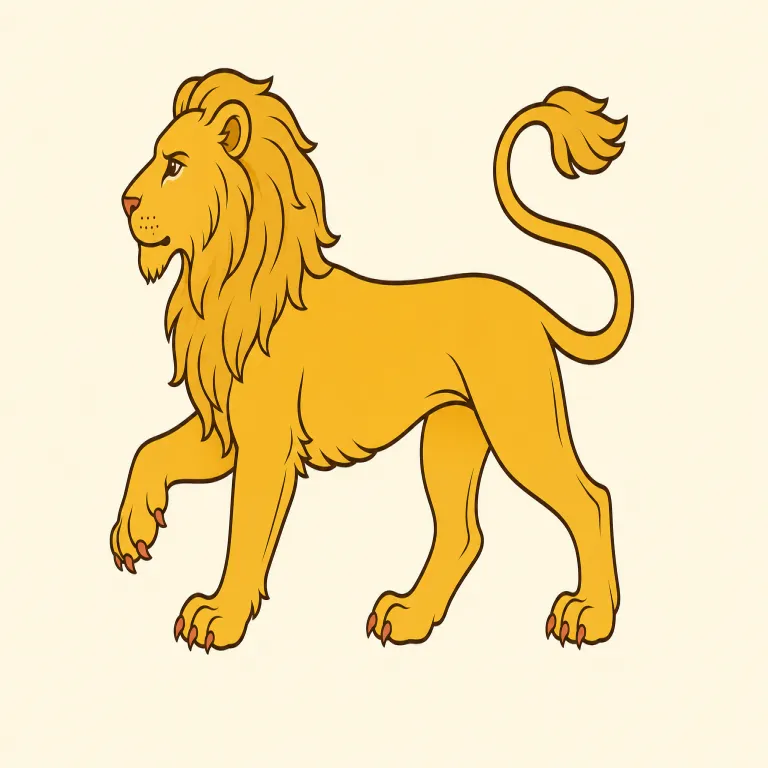
(紋章学で)歩行姿の
解説 Definition
紋章学で、動物が片方の前脚を上げて歩いている姿勢を表す語。通常は体を横向きに示し、見る側から三本の脚が見える形で描かれる。ライオンや鹿などの紋章の姿勢説明に使われる専門用語で、一般語の「歩く」とは用法が異なる。
In heraldry, passant describes an animal shown walking, usually with one front foot raised. It is used in formal descriptions of coats of arms and similar designs. This is a technical word and is rarely used outside that field.
覚え方のコツ Memory Tip
pass を知っていれば、「その場で構える」より「通り過ぎるように歩いている姿」が核だとつかみやすいです。紋章学では lion passant のように、動物が横向きで、一方の前脚を上げて静かに進む定型ポーズを指します。跳びかかる感じの rampant と混同しやすいので、「passant は歩行中、rampant は立ち上がって攻撃的」と対比で覚えると定着します。
Link `passant` to `pass`: the core image is passing by, not standing still or attacking. In heraldry, it describes an animal shown walking calmly with one front leg raised. It is useful to learn it beside `rampant`, which is much more upright and aggressive.
例文
In heraldry, a lion passant is shown walking in profile with three legs visible.
紋章学では、歩行姿のライオンは横向きに描かれ、三本の脚が見える。
The coat of arms featured a deer passant on a field of gold.
その紋章には、金地の上に歩行姿の鹿が描かれていた。
A passant lion was common in medieval heraldry.
歩行姿のライオンは、中世の紋章でよく用いられた。
passant の類義語・関連語
passant の語源・成り立ち Etymology
passant は古フランス語 passer「通る」の現在分詞 passant に由来します。語幹 pass- はラテン語 passus「一歩」につながり、-ant は「〜している」を表すので、「歩いている姿勢」という意味が紋章用語になりました。pass や passage も同根です。
Passant comes from French passant, the present participle of passer, meaning "to pass" or "to go by." The deeper root is Latin passus, meaning "step," so the word originally carried the idea of moving or walking. In English it became a heraldic term for an animal shown in a walking position. Pass and passage share the same root.
同じレベルの語彙をもっと
外部辞書で調べる
この英単語をクイズで覚えよう