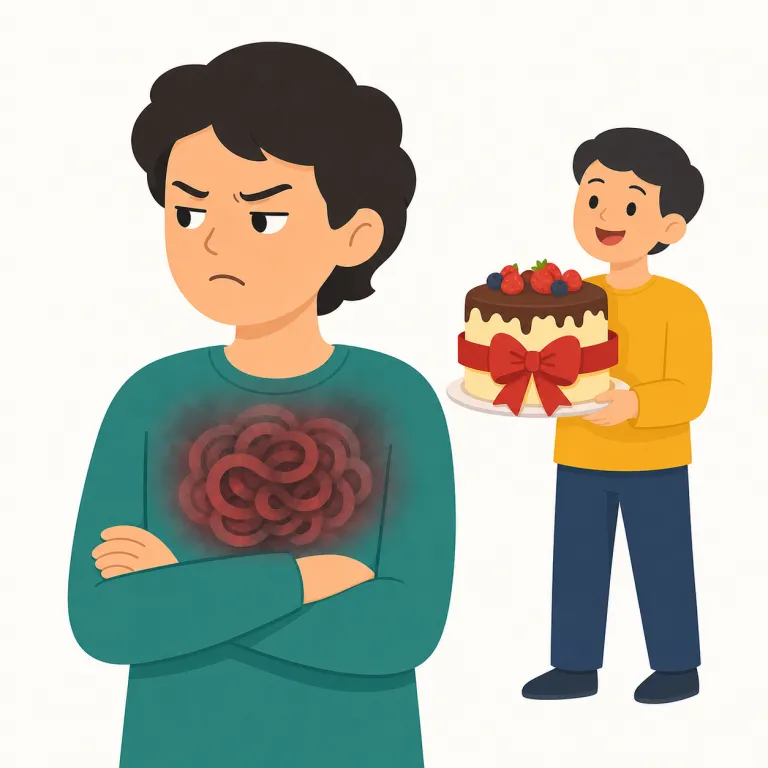
憤慨している
解説 Definition
不当な扱いや傷つけられたこと、望まない負担などに怒りや不満を感じていることです。そのことに納得できず、嫌な気持ちが残る感じを表します。
Resenting means feeling anger, bitterness, or unhappiness because of something you think is unfair, hurtful, or unwanted. It often describes a lasting feeling rather than a sudden reaction. The word is commonly used for relationships, treatment by others, or duties someone does not want.
使い方 Usage
- resenting the decision / someone's successのように、不満の対象を目的語に置く。resenting being ignoredは「無視されることに憤っている」。 Name the source of resentment after resenting, as in resenting the decision or resenting someone's success. Resenting being ignored describes anger about being ignored.
使い分け Common distinctions
- angryは怒り全般、annoyedは一時的ないら立ち、offendedは傷ついた気持ちに重点。resentingは納得できず残る不満に重点がある。 Angry describes anger generally; annoyed often suggests temporary irritation; offended emphasizes feeling hurt. Resenting emphasizes lingering dissatisfaction about something the person cannot accept.
覚え方のコツ Memory Tip
resentやresentfulとつなげ、「納得できない気持ちが心の中でくすぶる」イメージで覚えます。
Link it to resent and resentful, and picture an unhappy feeling that keeps burning inside.
例文
She began resenting her colleague after he took credit for her idea.
同僚が彼女のアイデアを自分の手柄にしてから、彼女はその同僚に憤りを感じるようになった。
He couldn't help resenting his parents for the strict rules they imposed during his childhood.
子供の頃に厳しい規則を押しつけられたことで、彼は両親への憤りを抑えられなかった。
Resenting the new policy, many employees signed the petition against it.
新しい方針に憤慨した多くの従業員が、それに反対する請願書に署名した。
resenting の類義語・関連語
紛らわしい語
resenting の語源・成り立ち Etymology
resentingは古フランス語 ressentir、さらにラテン語 re-「再び」+ sentire「感じる」に由来し、不快さを何度も感じ直す語。senseやconsentも同じsent-を持ち、受けた傷を心で反復して味わう感覚から「憤慨している」へつながる。
Resenting comes from resent, from Old French ressentir and ultimately from Latin re- "again" plus sentire "to feel." The idea was to feel something again, especially an unpleasant feeling that returns in the mind. That repeated inner feeling developed into the modern sense of lasting bitterness or anger. Related English words from the same root include sense and consent.
同じレベルの語彙をもっと
外部辞書で調べる
この英単語をクイズで覚えよう