senior
senior は英検4級・TOEIC 600レベルの英単語で、「年上の、上級の、先輩、高齢者」という意味があります。発音記号は /ˈsiːnjɚ/ です。
意味一覧 (3件)
年上の、上級の
解説 Definition
人について「年上の」、学年・地位・職位について「上級の」「上位の」を表す形容詞です。組織では、経験や責任の大きさを含んで使われることもあります。
Older than another person, or higher in rank, school year, or position within a group. In organizations, it often suggests greater experience or responsibility.
使い方 Usage
- 名詞の前に置き、senior student「上級生」、senior manager「上級管理職」のように使います。 Use it before a noun, as in senior student or senior manager.
- 比較の相手は be senior to+人で示します。年齢が上という意味でも使えますが、日常会話では older than が自然です。 Use be senior to someone for a comparison. It can refer to age, but older than is more natural in everyday conversation.
使い分け Common distinctions
- junior は年齢・学年・地位などが下であることを表し、senior と対になる語です。 Junior describes someone lower in age, school year, or rank and is often paired with senior.
覚え方のコツ Memory Tip
junior と対にして、「年齢・学年・立場・経験の段で上にいる人」を思い浮かべましょう。senior manager のような形で覚えると、形容詞の使い方も残ります。
Pair senior with junior and picture someone higher on a ladder of age, school year, rank, or experience. Senior manager helps you remember its adjective use.
例文
She is senior to me in the company.
彼女は会社で私より地位が上です。
He is a senior student.
彼は上級生です。
This is the senior class.
これは最上級生のクラスです。
先輩
(意味 2)
解説 Definition
「senior」は年齢・学年・地位・経験などが自分より上の人を指す名詞です。学校や組織では「上級生」「上位の人」「先輩」に近い意味になりますが、日本語の先輩のように入社・入学時期だけで決まるとは限りません。文脈によっては高齢者を指すこともあります。
A senior is someone older, more experienced, or in a higher position than you in a school, job, or group. It can also mean a student in a higher grade. The exact meaning depends on the situation, so context is important.
覚え方のコツ Memory Tip
senior は「自分より年齢・学年・地位・経験が上の人」で、学校なら「上級生・先輩」に近い名詞です。新入生が経験豊かな上級生に数学や学校生活を教えてもらう場面を思い浮かべ、ask a senior for help「先輩に助けを求める」と覚えると定着しやすいでしょう。junior「後輩・下級生」と対で押さえるのも有効です。ただし日本語の「先輩」のように入学・入社が早いだけで決まるとは限らず、文脈によって年長者や上位者を指す点に注意しましょう。
Learn `senior` together with `junior` as a pair. If `junior` means lower, younger, or less experienced, `senior` points to the higher side. This helps you remember phrases like `senior manager`, `senior student`, and `a senior`.
例文
A senior helps me with math.
先輩が数学を教えてくれます。
I ask a senior at school for help.
私は学校の先輩に助けを求めます。
That senior helps new students.
その先輩は新入生を助けます。
高齢者
(意味 3)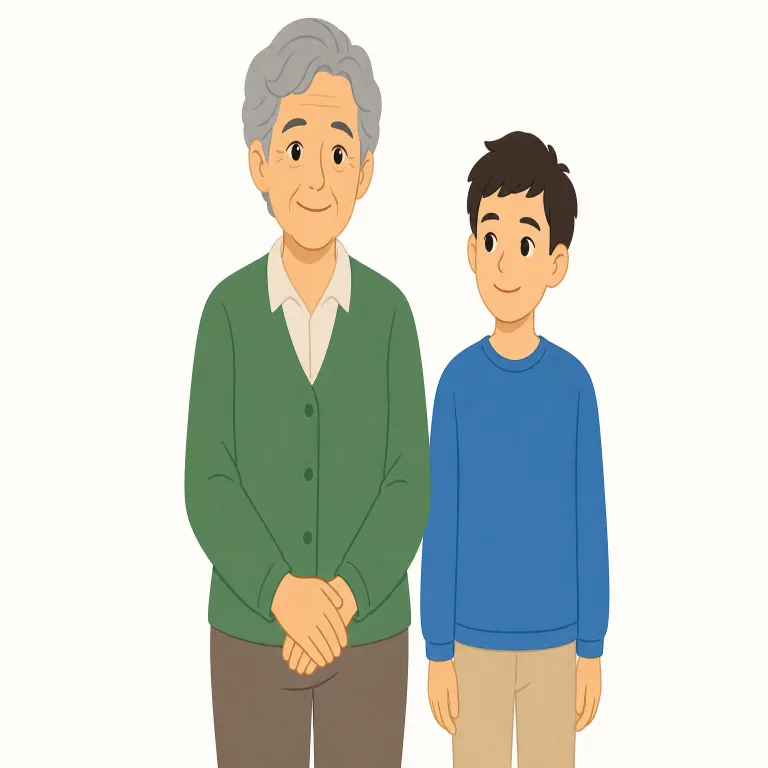
解説 Definition
高齢の人を表す名詞です。日常会話よりも、割引、福祉、医療、地域サービスなどの案内文や制度の説明でよく使われます。丁寧でやや公的な響きがあり、年配の人たちをまとめて指すときに便利です。
An older adult, especially one mentioned in information about age-based discounts, care, or community services. This noun is often used in the plural to refer politely to older people as a group.
覚え方のコツ Memory Tip
まずは対になる junior をセットで覚えると定着しやすいです。学校や会社では junior が「後輩・下位」、senior がその反対で「先輩・上位」。意味の核は「年齢・学年・立場・経験が上」。senior student, senior member, senior manager のように、人の前に置くと「上級の」。名詞では a senior で「先輩・年長者」。ただし文脈によっては senior citizen のように「高齢者」も表すので、単に“年上”だけでなく“より上の立場”まで含む語だと押さえると混同しません。
Connect a senior with the phrase senior citizen and picture an older adult using a community service. Remember discounts for seniors, where seniors names the older people receiving the discount.
例文
Seniors eat free here on Mondays.
ここでは月曜日に高齢者は無料で食事ができます。
This town has a class for seniors.
この町には高齢者向けの教室があります。
These seniors are all over seventy.
この高齢者たちは全員70歳を超えています。
senior の類義語・関連語
対義語
senior の語源・成り立ち Etymology
「senior」はラテン語senior「より年上の」が語源で、senex「老人」から来た比較級形。年長者が経験と権威を持つ感覚から、英語では「上級生・先輩・年長者」を表すようになった。senateやsenileも同じsen-系。
The word comes from Latin senior, meaning older, the comparative form of senex, meaning an old person. The association of age with experience and authority connects with its use for higher rank.
同じレベルの語彙をもっと
英検4級の一覧へ →外部辞書で調べる
この英単語をクイズで覚えよう