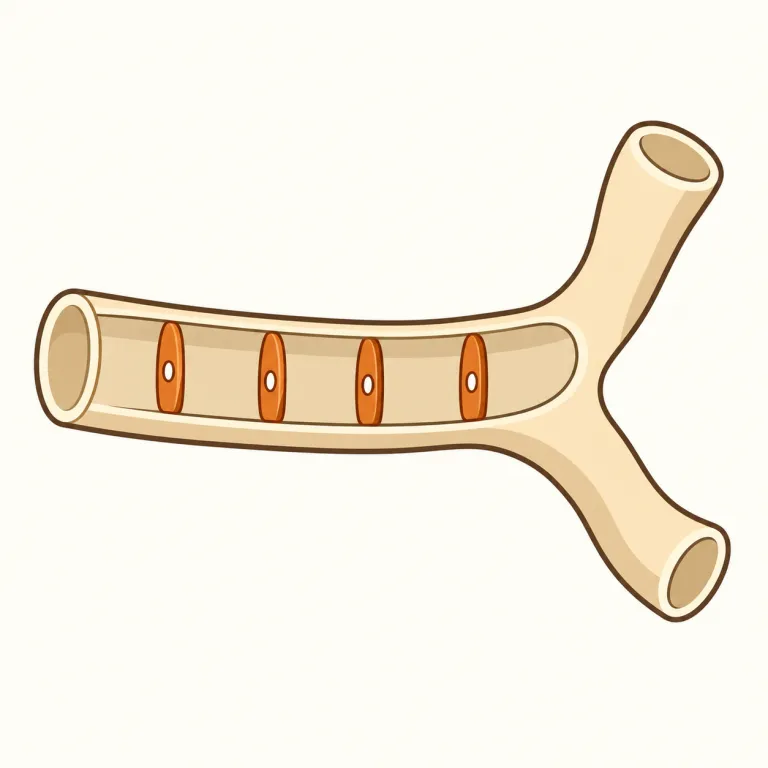
隔壁
解説 Definition
septa は septum「隔壁・中隔」の複数形です。医学や生物学などで、組織や空間を仕切る薄い壁や膜状の構造を指します。
Septa are thin walls, membranes, or partitions that divide a biological structure, organ, cell, or chamber into separate spaces. The term is the plural of septum and is used chiefly in anatomy, biology, and related sciences.
覚え方のコツ Memory Tip
一つの仕切りは septum、複数なら septa。bacterium–bacteria と同じく、語尾が -um から -a に変わる組として覚えましょう。発音は septum /ˈseptəm/、septa /ˈseptə/ です。
Picture one partition as a septum and several as septa. Remember the change from -um to -a, as in bacterium–bacteria. Septum is pronounced /ˈseptəm/ and septa /ˈseptə/.
例文
Thin septa divide the chamber into smaller spaces.
薄い隔壁がその空間をより小さな区画に分けています。
The report described damaged septa in the tissue sample.
報告書には、組織標本内の損傷した隔壁について記されていました。
septa の類義語・関連語
septa の語源・成り立ち Etymology
ラテン語 septum(囲い、仕切り)の複数形で、語根 saepire(囲む)に由来する。生物学や解剖学で臓器や組織を区切る壁状の構造を指す。関連語:septum(隔壁の単数形)、separate(分ける)。「仕切って分ける」が原義。
Septa is the Latin plural of septum, a word meaning a fence, enclosure, or partition. Septum is historically connected with Latin saepire, “to enclose or fence in.” Scientific English retained the Latin plural pattern, changing singular -um to plural -a. In anatomy and biology, the word was applied to wall-like structures that enclose areas or separate one chamber, tissue region, or cell compartment from another.
同じレベルの語彙をもっと
外部辞書で調べる
この英単語をクイズで覚えよう