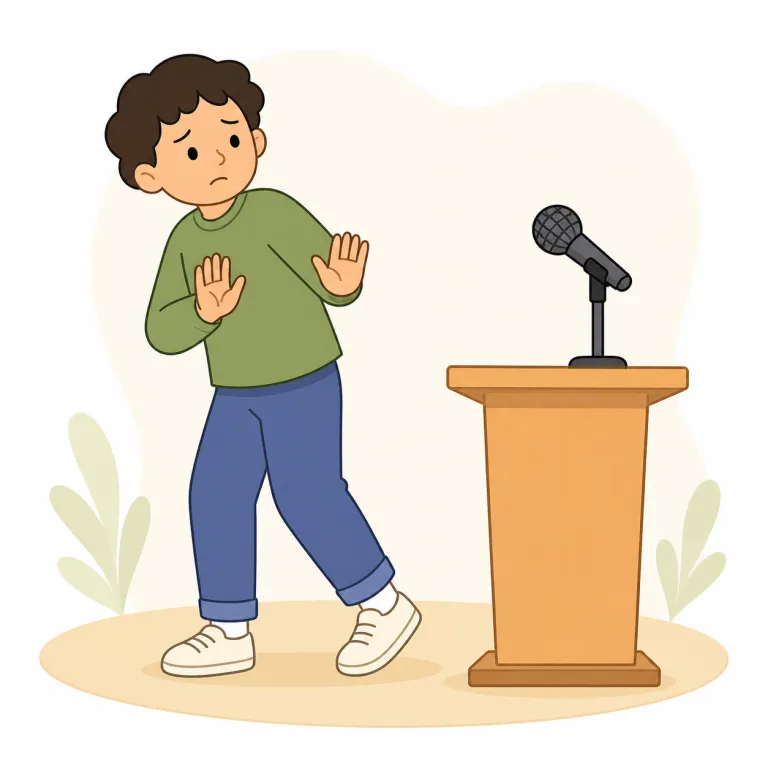
尻込みする
解説 Definition
恐怖や不安のために、何かをすることを避けたり尻込みしたりすること。
To shy away from something means to avoid doing it or dealing with it because you feel nervous, uncertain, or unwilling. It is often used for difficult topics, risks, or responsibilities. It suggests hesitation rather than a strong refusal.
覚え方のコツ Memory Tip
shy は「恥ずかしがり屋」の意味で覚えがちですが、もともと「びくっとして身を引く」感覚でも使えます。そこに away from が付くので、「何かから離れるように引く」→「尻込みする」とつなげると覚えやすいです。shy away from responsibility / conflict / challenges のように、責任・対立・難題を前に一歩引く場面でよく出ます。単なる avoid より、不安や怖さで腰が引けるニュアンスが強い表現です。
Start with `shy` as in pulling back, not only being quiet. Then add `away from`, and the picture becomes stepping back from something. Common pairs like `shy away from conflict` or `shy away from responsibility` help you remember the fearful, hesitant feeling.
例文
Many people shy away from public speaking because of stage fright.
多くの人が舞台恐怖症のため人前で話すことに尻込みする。
He shied away from confrontation and preferred to settle disputes quietly.
彼は対立に尻込みし、争いを穏便に解決することを好んだ。
Companies should not shy away from investing in new technology.
企業は新技術への投資に尻込みすべきではない。
shy away from の類義語・関連語
shy away from の語源・成り立ち Etymology
shy away from の shy は古く「おじけづく・身を引く」を表し、古英語 scēoh「臆病な」に結びつきます。そこに away from が加わって「何かから離れるように退く」となり、単なる恥ずかしさではなく、危険や不快を避けてさっと引く感じが出ます。shyness も同根です。
In this phrase, `shy` comes from an old Germanic word that meant "timid" or "easily frightened," seen in Old English forms related to fear and pulling back. Over time, `shy` was also used as a verb for suddenly moving away in alarm. With `away from`, the phrase developed the sense of shrinking back from something unpleasant, risky, or uncomfortable. Related English words include `shy` and `shyness`.
外部辞書で調べる
この単語を英単語クイズで覚えよう