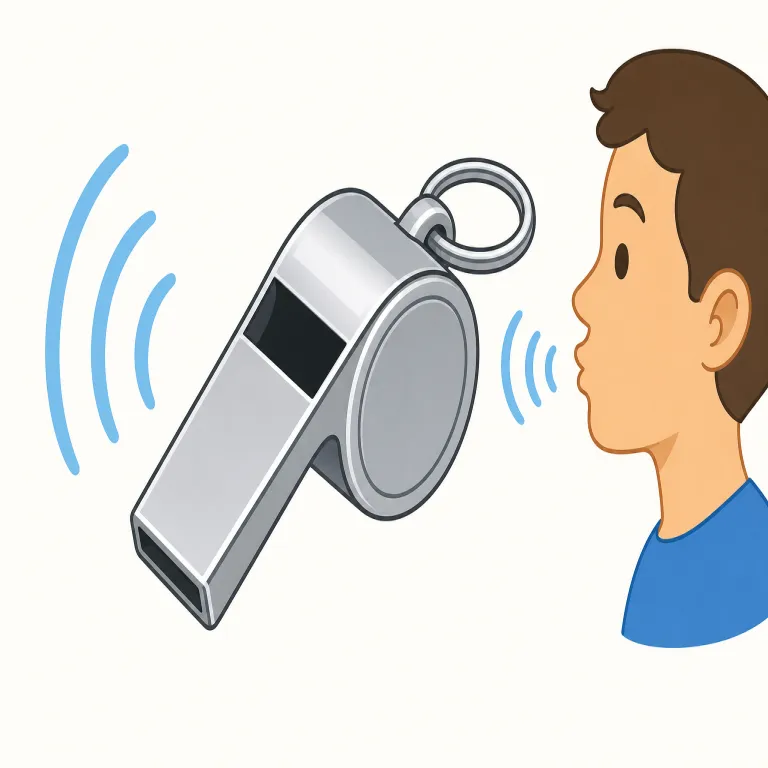
whistle
whistle は英検2級レベルの英単語で、「笛、口笛、ヒューという音、口笛を吹く」という意味があります。発音記号は /ˈwɪsəl/ です。
笛、口笛、ヒューという音
/ verb 動詞 口笛を吹く解説 Definition
吹いて鳴らす笛やホイッスルそのもの、または口笛や風、機械などが出す高く鋭い音を指す名詞。スポーツの合図や注意喚起の場面で使われるほか、自然や物体が立てるヒューという音についても用いられ、音そのものを表す場合にも使える。
A whistle is a small object that makes a high, sharp sound when you blow into it. The word can also mean the sound itself, including a sound made with the lips. It is often used in sports, for signals, or as a warning.
覚え方のコツ Memory Tip
whistle はまず「細く鋭い音」を核に置くと覚えやすい。referee's whistle なら審判の笛、hear a whistle ならヒューという音。動詞 whistle とセットで「笛を吹く/口笛を吹く→その音そのもの」へ広げると定着する。flute が楽器名なのに対し、whistle は合図・警告・開始終了のサインで使う小さな笛や鋭音のイメージ。blow a whistle, the whistle of the wind のような形も頻出。つづりに t があるが発音しない点にも注意。
Think of a thin, sharp sound: a referee's whistle, a train whistle, or the whistle of the wind. It is also the verb, so "whistle" can mean both making the sound and the sound itself. Watch the spelling: the "t" is there, but you do not hear it.
例文
The referee blew the whistle to start the game.
審判は試合開始の合図に笛を吹いた。
He heard the whistle of the wind through the trees.
彼は木々の間を吹き抜ける風のヒューという音を聞いた。
The coach used a whistle to get the team's attention.
コーチはチームの注意を引くためにホイッスルを使った。
whistle の類義語・関連語
whistle の語源・成り立ち Etymology
whistleは古英語hwistle・hwistlianにさかのぼる擬音的なゲルマン系語で、空気が細く抜ける鋭い音をそのまま写した語です。whistlerやwhistlingと同語族で、意味の中心が「物」より先に「ヒューッという音」にあるから、笛にも口笛にも使えるのです。
Whistle goes back to Old English hwistle and hwistlian, and it is probably imitative in origin. It was formed to copy the sharp sound of air moving through a small space. Because the sound came first, the word could be used both for the noise itself and for things like a whistle or whistling.
同じレベルの英単語をもっと
英検2級の一覧へ →外部辞書で調べる
この単語を英単語クイズで覚えよう