大きな隔たり、深い溝
noun 名詞二つの集団・立場・考えなどの間にある、容易には埋められない重大な違いを比喩的に表します。an abyss between A and Bの形が典型的で、単に状態が深刻であるという用法とは異なります。
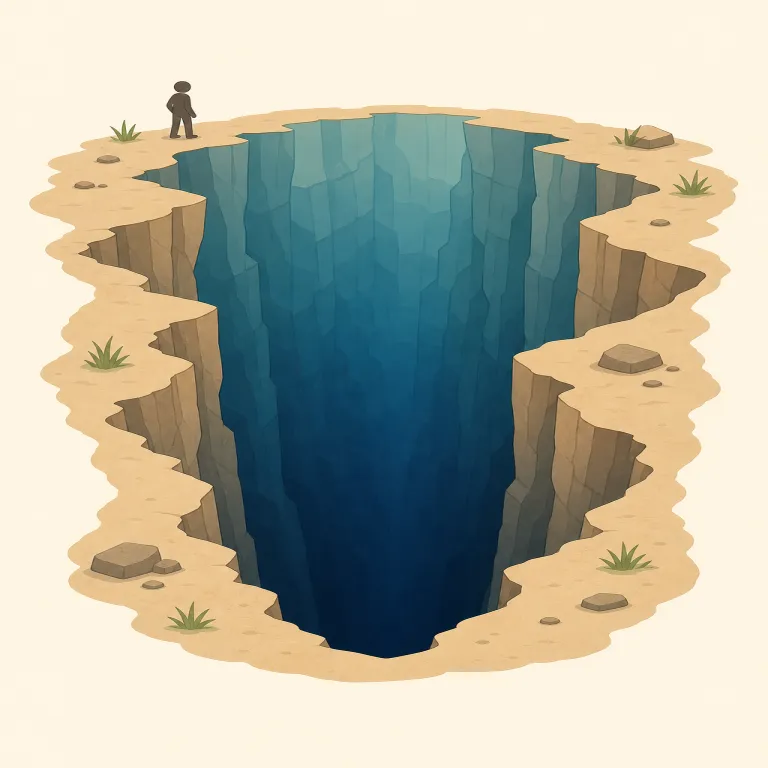
abyss は英検1級レベルの英単語で、「深淵」という意味があります。発音記号は /əˈbɪs/ です。
深淵とは、底が見えないほど深い穴や裂け目のことを指す名詞であり、主に比喩的な意味で使われる。絶望・無知・悪などの底知れない深さを表す際に用いられ、哲学的・文学的な文脈では存在の根底にある虚無や不可知の領域を象徴することもある。
An abyss is a very deep hole, space, or gap, especially one that seems endless. It can also mean a dangerous or hopeless situation in a figurative sense. This word is often used in literary, emotional, or dramatic contexts.
"deep" や "hole" よりも、見えないほど深く不気味で、物理的な穴にも比喩的な絶望にも使える語だと押さえると残りやすいです。"stare into the abyss"、"an abyss of despair" のように、単なる "pit" や "gap" では足りない、底知れなさを出す場面で出ます。似た "chasm" は割れ目・隔たりに意識が向きやすく、"abyss" は深さそのものが核心。形容詞 "abysmal" も一緒に覚えると定着します。
Remember `abyss` as more dramatic than just a deep hole. It often appears in the phrase `stare into the abyss`, which gives a strong image of endless depth. You can also connect it with `abysmal`, a related word with a very negative feeling.
The philosopher gazed into the abyss of human suffering and despair.
その哲学者は人間の苦しみと絶望の深淵を凝視した。
She looked down into the dark abyss.
彼女は暗い深淵を見下ろしました。
Without education, many children fall into the abyss of poverty and neglect.
教育がなければ、多くの子供たちが貧困と無視の深淵に落ちていく。
文脈によって、次の意味でも使われます。
二つの集団・立場・考えなどの間にある、容易には埋められない重大な違いを比喩的に表します。an abyss between A and Bの形が典型的で、単に状態が深刻であるという用法とは異なります。
abyss は後期ラテン語 abyssus を経てギリシャ語 abyssos にさかのぼり、a-「ない」+ byssos「底」から成ります。文字どおり「底なし」が「深淵」になった語で、abysmal や abysm も同じ根です。
"Abyss" came into English through Late Latin and Greek. The Greek form "abyssos" meant "bottomless," built from "a-" meaning "not" and a root meaning "depth" or "bottom." So the original image was of something without a bottom, which naturally became the sense of a deep, endless gulf; related words include "abysmal."
この英単語をクイズで覚えよう