意味一覧 (2件)
貧血の
解説 Definition
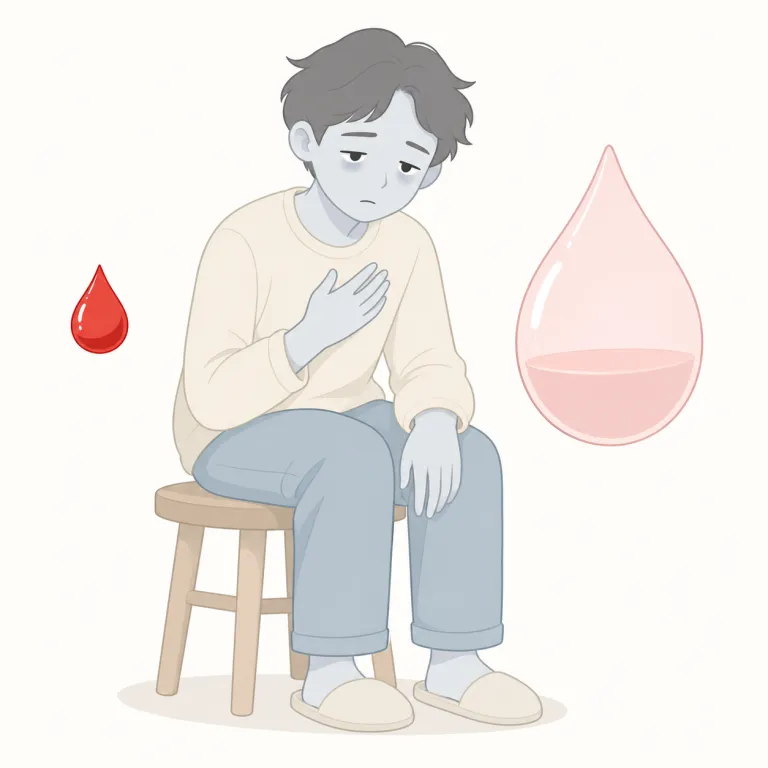
血液の中で酸素を運ぶ力が足りず、顔色が悪くなったり、疲れやすくなったりする状態を表します。人が貧血であることや、貧血に関係する体の状態を言うときに使います。
Having anemia, a condition in which the blood does not carry enough oxygen well. It describes a person or body condition related to anemia.
覚え方のコツ Memory Tip
anemic は anemia「貧血」の形容詞形として一組で覚え、be anemic「貧血である」を基本型にします。血液が酸素を十分に運べず、階段を上るだけで疲れ、顔色もさえない患者の場面を思い浮かべると定着しやすいです。anemic patients のように名詞の前にも置けます。鉄不足はよくある原因ですが、貧血の原因はそれだけではないため、「疲れている=必ず anemic」とは考えないのが正確です。医師の検査結果を受けて The doctor said she was anemic. と言う形で固定しましょう。
Think of an- as "without" and -emic as related to blood. An anemic person has a blood condition that can make them tired or pale.
例文
The doctor said she was anemic.
医者は彼女が貧血だと言いました。
He felt tired because he was anemic.
彼は貧血だったので疲れを感じました。
Anemic patients may need more iron in their diet.
貧血の患者は食事でより多くの鉄分が必要なことがあります。
弱々しい
(意味 2)解説 Definition
精力や活気に欠けた、弱々しい様子を表します。貧血という医学的な意味もありますが、比喩的には色彩や実質性を失った状態を指します。
Anemic literally means having anemia, a condition in which the body lacks enough healthy red blood cells. It can also describe something weak, pale, or lacking energy and strength. The figurative use is common in discussions of performance, growth, or effort.
覚え方のコツ Memory Tip
a- が『欠けた・十分でない』方向を示す語に触れていると、anemic は『何かが足りず弱々しい』でつかみやすい。まず anemia とセットで、anemic = 貧血の。比喩では weak よりやや硬く、pale で元気も中身も薄い感じがあり、an anemic economy / recovery / performance のように『勢いのない景気・回復・出来』でよく使う。energetic の反対側に置くと記憶しやすい。米式 anemic、英式 anaemic にも注意。
You will often meet anemic in business writing, not only in medical contexts: anemic growth, demand, or recovery. It gives the idea of something weak, thin, or lacking energy. Also remember the spelling pair: American anemic, British anaemic.
例文
The team's anemic performance in the second half disappointed the fans.
後半のチームの活気がない試合ぶりが、ファンをがっかりさせました。
The anemic response from the audience suggested they were not interested in the presentation.
観客の鈍い反応は、彼らがプレゼンテーションに興味を持っていないことを示していました。
Despite the attractive offer, the company's anemic growth continued to concern investors.
魅力的なオファーにもかかわらず、その企業の低調な成長は投資家たちを懸念させ続けていました。
anemic の類義語・関連語
派生語
anemic の語源・成り立ち Etymology
ギリシャ語の an-「ない」と haima「血」がもとになった語です。そこから「血が足りない状態」という考えを表す医学の言葉になりました。
Anemic comes from anemia, from Greek an-, meaning "without," and haima, meaning "blood." The original idea is a lack or shortage connected with blood.
同じレベルの英単語をもっと
外部辞書で調べる
この単語を英単語クイズで覚えよう