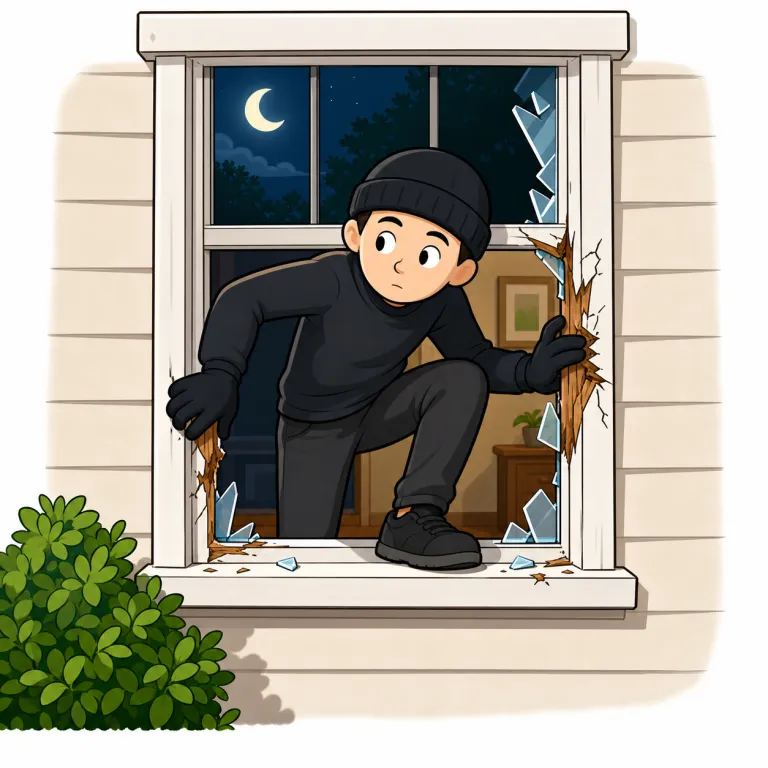
break in
break in は英検準1級レベルの英熟語で、「不法侵入する、口をはさむ、慣らす」という意味があります。発音記号は /ˈbreɪk ˈɪn/ です。
不法侵入する
解説 Definition
許可なく建物や車などに強引に侵入すること。不法侵入・押し入る行為を指し、法律や警察の文脈で使われる。
To break in means to enter a building, car, or other place illegally, usually by force. It is mainly used when talking about theft, crime, or security problems.
覚え方のコツ Memory Tip
`break` の核は「壊す」、`in` は「中へ」。合わせて「壊して中へ入る」と置くと、不法侵入の意味が自然につながります。`enter` が中立的に「入る」だけなのに対し、`break in` には鍵・窓・ドアを破るような強引さと違法性があるのが重要です。ニュースでは `break into a house/car` が頻出で、場所を目的語に取る形で覚えると定着しやすいです。なお `break in` には「慣らす」「口をはさむ」の意味もあるので、建物や車が出たら不法侵入と判断すると混同しにくくなります。
Split it into `break` and `in`: break something, then go inside. That image helps fix the strong, illegal feeling of the phrase. It is different from neutral words like `enter`, and often appears with places like a house or car.
例文
Thieves broke in while the family was away.
家族が留守の間に泥棒が押し入った。
The police caught the suspect trying to break in through a window.
警察は窓から押し入ろうとしていた容疑者を逮捕した。
Someone tried to break in while the office was closed.
事務所が閉まっている間に、誰かが不法侵入しようとしました。
口をはさむ
(意味 2)
解説 Definition
人が話している途中で急に発言して、会話に割り込むことを表します。ていねいに用いることもありますが、相手の話を中断させるため、やや失礼・唐突な響きをもつことが多いです。
To suddenly start speaking while another person is still talking. It means entering a conversation by interrupting its flow and can sound abrupt or slightly rude.
覚え方のコツ Memory Tip
`break` の核は「壊す・割り込む」、`in` は「中へ」。会話の流れという「中」に、発言で割って入ると考えると「口をはさむ」につながります。`interrupt` に近いですが、`Sorry to break in, but ...` のように、相手の話を途中で止めて入る場面でよく使います。不法侵入の `break in` は家・車・窓など物理的な場所が目印。会話や説明が出たら「話の中へ割って入る」と判断すると混同しにくくなります。
Think of break as interrupting a continuous flow and in as entering it. Your words break the flow of another person's speech as you move into the conversation. The polite pattern Sorry to break in, but ... can soften the interruption.
例文
Sorry to break in, but we need to leave now.
話の途中で悪いけど、もう出発しないといけません。
He broke in while I was explaining the plan.
私が計画を説明している途中で、彼が口をはさみました。
She always breaks in when someone mentions her name.
彼女は自分の名前が出ると、いつも話に割り込んできます。
慣らす
(意味 3)
解説 Definition
新しい靴・車・機械などをしばらく使って、性能や感触をなじませることを表します。最初は硬い・ぎこちないものを、使いながら扱いやすい状態にしていく感じです。人が環境に慣れる場合は get used to などが自然で、break in は主に物を目的語にします。
To use a new item for a while until it becomes more comfortable or works more smoothly. This is mainly said about objects such as shoes, gloves, engines, or other equipment rather than people becoming familiar with a situation.
覚え方のコツ Memory Tip
`break` の核は「壊す」ですが、ここでは完全に壊すのでなく「硬さ・ぎこちなさを少しずつ崩す」と考えると覚えやすいです。`in` は使い込んで内側までなじませる感じ。新しい boots や glove は最初は硬いので、使って自分の形にしていくのが `break in` です。不法侵入の `break in` は建物や車に入る文脈、慣らす用法は靴・道具・機械など使う物が目的語になる、と切り分けると混同しにくくなります。
Think of gradually breaking down the stiffness of a new object without damaging it. As new boots or a glove are used, they slowly fit the user better and become easier to handle. The object being softened or adjusted normally follows the expression directly.
例文
I need to break in these boots before the trip.
旅行の前に、このブーツを履いて慣らす必要があります。
It takes a few weeks to break in a new baseball glove.
新しい野球用グローブを慣らすには数週間かかります。
You should break in the new engine gently.
新しいエンジンは慎重に慣らすべきです。
break in の類義語・関連語
break in の語源・成り立ち Etymology
breakは古英語brecan(壊す)に由来し、ゲルマン祖語*brekaną(砕く)から派生。ラテン語frangere(壊す)とも印欧祖語で同根。inは「中へ」の意で、鍵や障壁を破って内部に入ることが原義。関連語:breakage(破損)、breach(違反、突破)。
"Break" comes from Old English brecan, from an old Germanic root meaning to split or smash. It is related at a deeper level to words such as "breach" and to Latin frangere, which also means break. In "break in," "in" adds the idea of entering, so the original sense was forcing entry by breaking a barrier or lock.
同じレベルの語彙をもっと
英検準1級の一覧へ →外部辞書で調べる
この英熟語をクイズで覚えよう