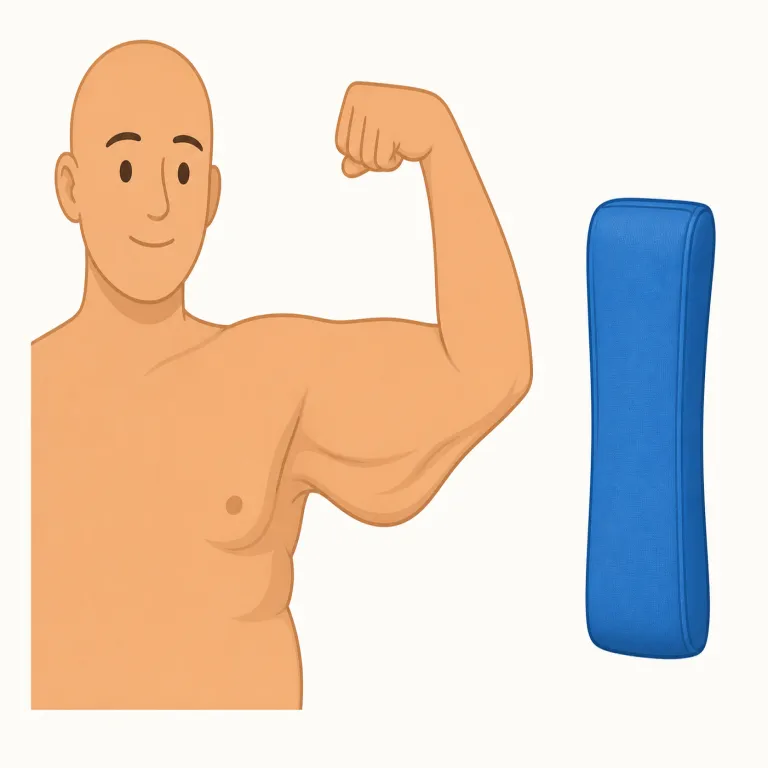
flabby
flabby は英検1級レベルの英単語で、「たるんだ」という意味があります。発音記号は /ˈflæbi/ です。
たるんだ
解説 Definition
筋肉が衰えたり、たるんだりした状態のことです。引き締まっていない、柔らかく見た目が悪い状態を指します。
Flabby describes something soft, loose, and lacking firmness, especially body flesh or muscles. It can also describe writing, speech, or ideas that feel weak and not well organized. The word often has a slightly negative meaning.
覚え方のコツ Memory Tip
flab(ぜい肉・たるみ)を知っていれば、その形容詞が flabby と捉えやすいです。fit や firm の反対側にある語で、単に fat「太い」ではなく、筋肉や皮膚がぶよっとして引き締まりがない質感まで含むのがポイント。a flabby stomach, flabby arms のように体の部位と結びつきやすく、見た目のだらしなさを描く場面でよく出ます。floppy が「ぐにゃっと曲がる物」にも使えるのに対し、flabby は特に体つきや、比喩的に締まりのない議論・文章にも使える、と分けて覚えると残りやすいです。
Start with `flab`, a simple word for loose body fat. From there, `flabby` is easy to remember as having a soft, loose, not-firm feeling. Compare it with `firm` or `fit`, and picture phrases like `flabby arms` or `a flabby stomach`.
例文
His flabby arms motivated him to start exercising regularly.
腕のたるみを見て、彼は定期的に運動を始める気になりました。
The flabby skin on her face was due to weight loss.
顔の皮膚がたるんだのは、体重が減ったためでした。
Regular exercise can help tighten flabby areas of the body.
定期的な運動は体のたるんだ部分を引き締めるのに役立ちます。
flabby の類義語・関連語
flabby の語源・成り立ち Etymology
flabby は flab(ぶよぶよしたもの)+ -y(〜のような)でできた語です。flab 自体は flap(ひらひら揺れる)系の語と考えられ、核にあるのは「締まりなく垂れる」感覚なので、「たるんだ」という意味が自然に出てきます。関連語は flap, floppy。
Flabby was formed from `flab` plus the adjective ending `-y`, meaning "having the quality of." `Flab` is probably related to words like `flap`, which suggest loose movement or hanging softly, and compare with `floppy`. From that image of something hanging without firmness, `flabby` developed the sense of being soft, loose, or lacking tightness.
同じレベルの英単語をもっと
英検1級の一覧へ →外部辞書で調べる
この単語を英単語クイズで覚えよう