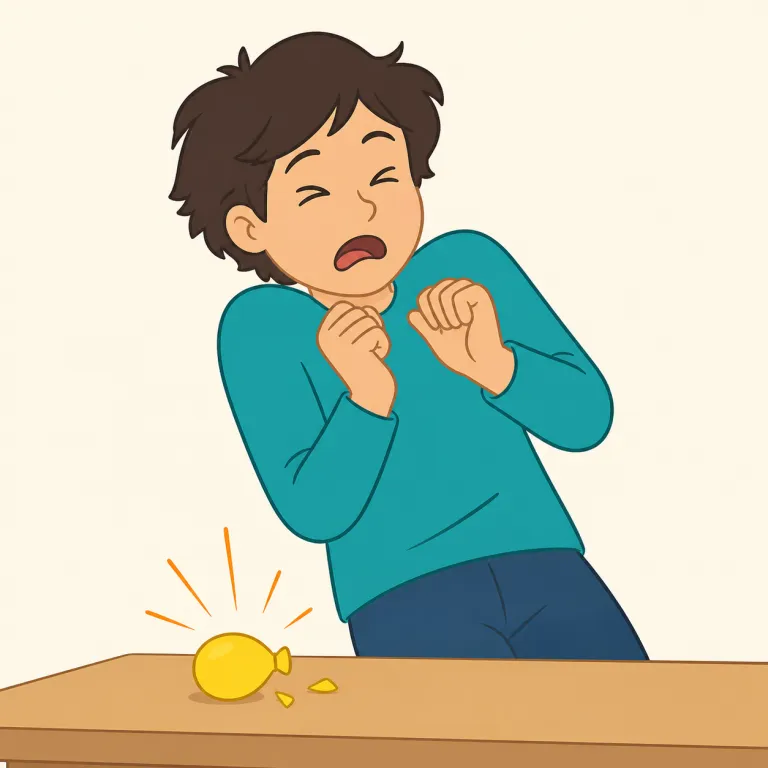
flinch
flinch は英検1級レベルの英単語で、「たじろぐ」という意味があります。発音記号は /flɪntʃ/ です。
たじろぐ
解説 Definition
痛みや不快感、恐怖などから無意識に身体を引っ込めたり、怯えたりする反応のことです。予期しない刺激に対する本能的な回避行動を指します。
To flinch means to make a small, sudden movement because of fear, pain, or surprise. It is often used when someone reacts automatically to something unpleasant, such as a loud noise or a threat. The word usually suggests a quick physical or emotional reaction that is hard to control.
覚え方のコツ Memory Tip
flinch は「痛み・恐怖・不快さで、思わず身が引く」という反射的な動きで覚える。hesitate が“迷って止まる”なら、flinch は刺激に対して無意識にびくっと引く感じ。wince は顔をしかめる寄りだが、flinch は体ごとたじろぐことが多い。flinch at a blow, flinch from pain の形で出やすく、比喩では not flinch under pressure で「圧力にもひるまない」と覚えると残りやすい。
Think of the quick little movement in your body when something suddenly hurts or scares you. `Flinch` is more physical and automatic than `hesitate`, which is about stopping because you are unsure. It often appears with `at` or `from`, so remember patterns like `flinch at a blow` or `flinch from pain`.
例文
He flinched when the needle approached his arm.
針が腕に近づくと、彼はたじろぎました。
She didn't flinch at the loud noise.
彼女は大きな音にもびくっとしませんでした。
The boxer tried not to flinch when the punch came.
ボクサーはパンチが来てもたじろがないように努めました。
flinch の類義語・関連語
flinch の語源・成り立ち Etymology
flinch は古フランス語 flenchir「身をかわす・退く」に由来するとされる。核心は「危険や痛みからさっと身を引く」動きで、そこから心理的にたじろぐ意味にも広がった。近い語の flencher や flinching にも、反射的な後ずさりが残る。
Flinch is thought to come from Old French flenchir, meaning "to turn aside" or "draw back." At its core, the word described a quick movement away from danger or pain. Later, it also came to suggest shrinking back in fear or hesitation. Related forms like flinching keep the same idea of a sudden backward reaction.
同じレベルの語彙をもっと
英検1級の一覧へ →外部辞書で調べる
この英単語をクイズで覚えよう