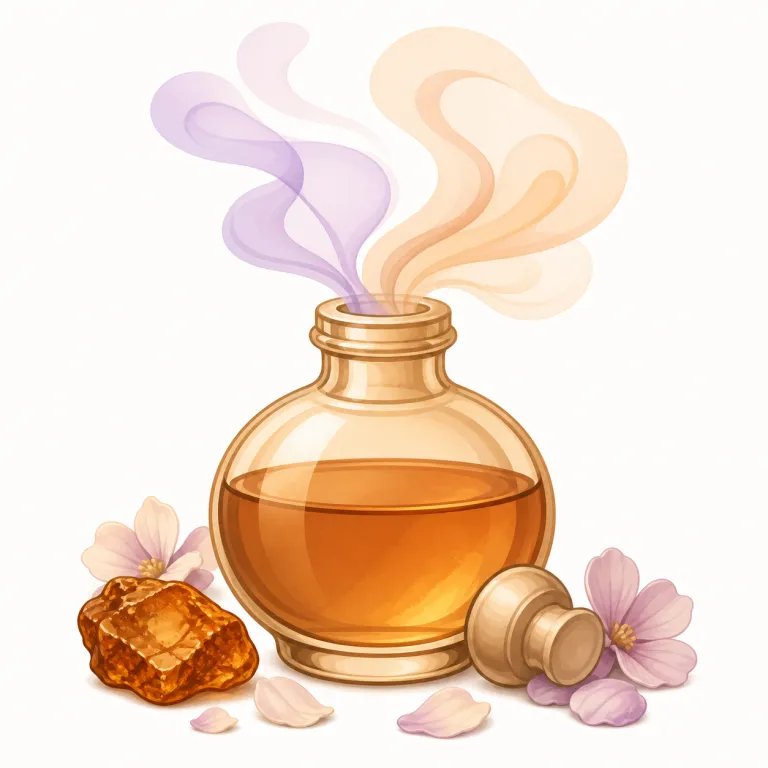
ムスクの香りがする
解説 Definition
ムスクのように、少し甘く濃厚で温かみのある香りがする様子を表す形容詞。香水や花、肌、部屋の匂いなどについて使われ、官能的で落ち着いた印象を与える文脈で用いられることが多い。
If something smells musky, it has a strong, warm, natural smell, often like perfume, animals, or a closed room. The word is often used for scents in perfumes, plants, or places, and it can sound pleasant or slightly heavy depending on the context.
覚え方のコツ Memory Tip
musk を知っていれば、musky は「ムスクっぽい香り」とそのまま取れる。-y は cloudy, salty のように「〜っぽい」を作る形容詞語尾。香りの強さで覚えるなら、floral / fruity よりも重く、warm・deep・sensual 側に寄る語。香水、肌、部屋の匂いに使われやすく、"a musky scent" をひとかたまりで覚えると定着しやすい。つづりが近い musty「かび臭い」と混同しないこと。
Start with `musk`, the strong perfume note. Add `-y`, like in `salty` or `cloudy`, and you get "having that kind of quality." Remember the common chunk `a musky scent`. Do not mix it up with `musty`, which has a stale, old smell.
例文
The perfume had a warm, musky scent that lingered throughout the evening.
その香水は温かみのあるムスク系の香りで、その晩ずっとほのかに残っていた。
The candle gave the room a soft, musky aroma.
そのキャンドルは、部屋にやわらかなムスクの香りを広げた。
She preferred musky fragrances over floral ones.
彼女は花の香りより、ムスク系の香りを好んだ。
musky の類義語・関連語
musky の語源・成り立ち Etymology
musky は musk「麝香」に形容詞語尾 -y が付いた語で、musk は古フランス語を経て後期ラテン語 muscus、さらに東方語源にさかのぼる。musk や muskiness と同根で、動物性の濃い香りを“麝香っぽい”性質として捉えると意味が腑に落ちる。
Musky comes from musk with the adjective ending -y. Musk entered English through Old French and Late Latin, but its deeper origin is from languages of the East, where it referred to the strong perfume substance itself. The adjective later developed to describe anything having that rich, heavy scent.
同じレベルの語彙をもっと
外部辞書で調べる
この英単語をクイズで覚えよう