粗末な、粗削りな
adjective 形容詞建物や道具などが簡素な方法で作られ、仕上げが粗いことを表します。rude shelterやrude toolsのように用いられ、人の礼儀や態度を評価する意味ではありません。
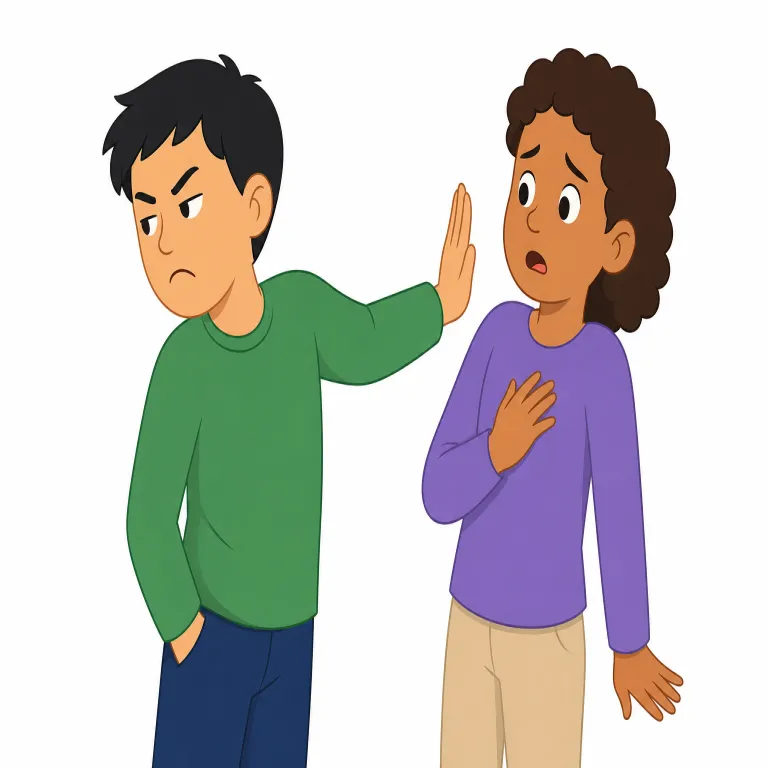
rude は英検準2級レベルの英単語で、「失礼な」という意味があります。発音記号は /ruːd/ です。
相手に対して無礼で失礼な態度を取る様子です。礼儀や敬意が感じられず、相手を不快にさせる可能性があります。
Rude means not polite and showing little respect for other people. It is used for words, actions, or behavior that seem offensive, impolite, or unfriendly. What is considered rude can vary by culture and situation.
rude は polite の反対として覚えると定着しやすい語です。単に『感じが悪い』ではなく、『礼儀を欠いて相手を不快にする』態度や言い方に使います。interrupt people, ignore greetings, make rude comments のように、会話をさえぎる・あいさつしない・失礼なことを言う場面とセットで記憶すると残ります。angry は怒っている感情、mean は意地悪、rude はマナーの悪さに焦点。That's rude. も頻出です。
Remember rude by pairing it with its opposite, polite. It is about bad manners more than strong emotion, so it fits actions like interrupting people, ignoring greetings, or making rude comments. Mean is about cruelty, angry is about feeling, but rude focuses on behavior.
It was rude of him to interrupt the conversation.
彼が会話をさえぎったのは失礼でした。
She gave a rude response to the teacher.
彼女は先生に失礼な返答をしました。
Making noise in the library is rude to others.
図書館で音を立てるのは他の人に失礼です。
文脈によって、次の意味でも使われます。
建物や道具などが簡素な方法で作られ、仕上げが粗いことを表します。rude shelterやrude toolsのように用いられ、人の礼儀や態度を評価する意味ではありません。
特に英国英語で、冗談・言葉・身ぶりなどが性的または下品な内容を含むことを表します。単なる無礼さよりも、話題や表現内容が品位を欠くことに重点があります。
rude は古フランス語 rude を経て、ラテン語 rudis「粗い、未加工の」に由来します。もともと人や物が荒削りで洗練されていない感覚から「無作法な」へ意味が伸びた語で、関連語に rudimentary があります。
Rude came through Old French from Latin rudis, meaning "rough," "raw," or "unworked." It first described something coarse or not refined. From that sense, it came to describe people or behavior that seemed rough, impolite, or lacking polish; rudimentary shares the same root.
この英単語をクイズで覚えよう