ふるい
解説 Definition
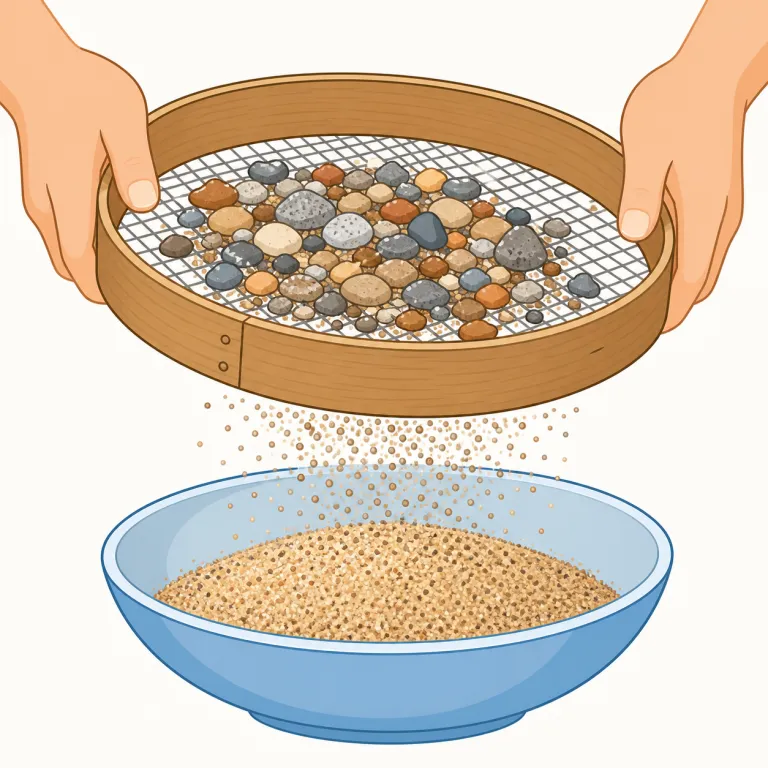
sieve は、底や側面に細かな網目を持つ「ふるい」そのものを指す名詞です。料理で小麦粉のだまを取る、園芸で土から石を除くなど、粒状の材料を網目の粗さで分ける道具として使います。
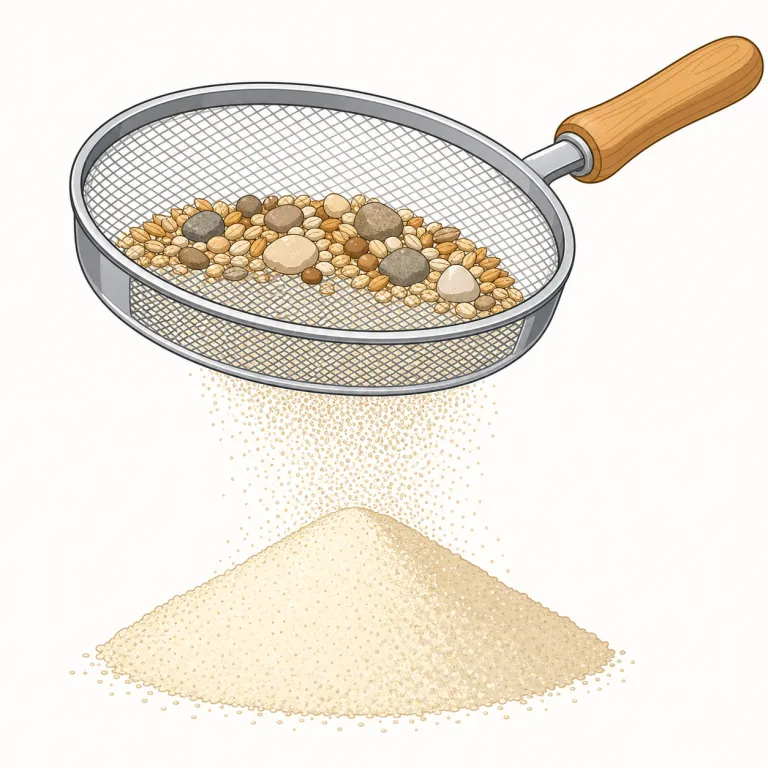
A sieve is a tool with a wire or plastic mesh used to separate small pieces from larger ones. It is commonly used in cooking to remove lumps from flour or to drain water from food. The word can also be used more generally for anything that lets some things pass through while keeping others back.
覚え方のコツ Memory Tip
sieve は「細かい穴のある道具」、つまり粉や砂などを分けるふるいそのものとして覚えます。台所で小麦粉のだまを取る粉ふるい、園芸で土から石を除く網状の道具を思い浮かべると具体的です。動作ではなく物を指す名詞なので a sieve, put flour through a sieve の形で押さえましょう。strainer は液体をこす道具、filter は装置や仕組みにも広がります。
Connect `sieve` with `sift`: a `sieve` is the tool used to sift flour, sand, or soil through small holes. It is a noun, so picture the object in your hand or in the kitchen. `Strainer` often goes with liquids, while `filter` can be a wider device or system.
例文
She used a sieve to remove lumps from the flour.
彼女はふるいを使って小麦粉のしこりを取り除きました。
The cook placed the ingredients into a sieve to filter them.
調理人は材料をふるいに入れてこしました。
Using a sieve helps to break up the soil and remove debris.
ふるいを使うことで、土を砕き、破片を取り除くのに役立ちます。
ふるい (ざる)
(意味 2)解説 Definition
液体や粉などをふるい分けるために使う、小さな穴がたくさん開いた道具です。
例文
She used a sieve to strain the pasta water.
彼女はザルを使ってパスタの水を漉した。
A kitchen sieve is useful for separating lumps from flour.
キッチン用ふるいは小麦粉からダマを分離するのに役立つ。
He carefully poured the mixture through a fine sieve.
彼は細かいふるいを通して混合物を慎重に注いだ。
ふるいにかける
(意味 3)解説 Definition
sieve は、粉・砂・土などを網目に通して、細かいものと大きな粒や異物を分ける動作を表す動詞です。料理で小麦粉をなめらかにする時や、園芸・作業で土や材料を選別する時に使われます。
As a verb, sieve means to pass flour, sand, soil, or a similar material through a screen with small holes. This separates the finer part from larger pieces or unwanted material. It is often used in cooking when you want to make flour smooth, and also in gardening or practical work when you sort soil or other materials.
覚え方のコツ Memory Tip
sieve は名詞で「ふるい」ですが、動詞では「ふるいにかける」です。語源は古英語 sife にさかのぼり、液体や粉を網目で通す道具のイメージが核です。sieve flour や sieve the data のように、物理的にこすだけでなく情報を細かく選別する時にも使います。filter より網で粗いものを残す感覚が強いです。
You can remember polygamist by breaking it into poly- meaning "many," -gam- meaning "marriage," and -ist meaning "person." So it refers to a person who has more than one spouse at the same time, or someone connected with that marriage system. It can be used without focusing on gender, and it appears in law, religion, anthropology, and discussions of family systems. It may help to compare monogamist, bigamist, and polygamist by the number idea in mono-, bi-, and poly-.
例文
First, sieve the flour into a large bowl to remove any lumps.
まず小麦粉を大きなボウルにふるいにかけて、だまを取り除きなさい。
They sieved the soil before planting the seeds.
彼らは種をまく前に土をふるいにかけた。
The workers sieved the gravel to separate the finer material from the larger stones.
作業員たちは細かい材料と大きな石を分けるために砂利をふるいにかけた。
選別する
(意味 4)解説 Definition
sieve は動詞では、書類・候補者・情報などを一つずつ確認し、条件に合うものを残して不要なものを除く「選別する」の意味です。名詞の「ふるい」から、比喩的な審査・仕分けへ広がった用法です。
To sieve means to separate, sort, or remove unwanted parts by passing something through a screen or by checking it carefully. It is used for both physical materials, like flour or sand, and for information or choices when selecting what is useful.
覚え方のコツ Memory Tip
動詞の sieve は、山ほどある応募書類や提案を「網目に通す」ように見直し、通過できるものだけを残すイメージで覚えます。単なる choose よりも、数が多い対象を基準に沿ってふるい分ける過程が強調されます。sieve through applications のように through を伴う形もよく出ます。物理的な粉ふるいの像が、情報や人材の審査に移った表現です。
First remember the noun "sieve": it is a tool with tiny holes. As a verb, keep the same picture in your head: you pass things through carefully and keep only what matters. It is close to "sift," so think of checking applicants, information, or evidence one by one like flour through a sieve.
例文
The teacher had to sieve through hundreds of applications for the scholarship.
先生は数百件の奨学金申請書を検査して選別する必要があった。
We need to sieve the candidates to find the best qualified person.
最も適格な人を見つけるために候補者を選別する必要がある。
The committee will sieve all the proposals and select the top few.
委員会はすべての提案を選別し、上位数件を選択する。
sieve の類義語・関連語
派生語
紛らわしい語
sieve の語源・成り立ち Etymology
sieve は古英語 sife/sefe「ふるい」にさかのぼるゲルマン系の語で、もともと“細かな穴を通して選り分ける道具”を指しました。同根の sift「ふるいにかける」、sifting があり、粒を通す・残すという働きから今の意味がそのまま見えます。
"Sieve" comes from Old English "sife" or "sefe," a Germanic word for a straining tool. It originally meant a device with small holes used to separate finer material from coarser material. It is related to English "sift," which keeps the same idea of passing some things through while leaving others behind.
外部辞書で調べる
この単語を英単語クイズで覚えよう