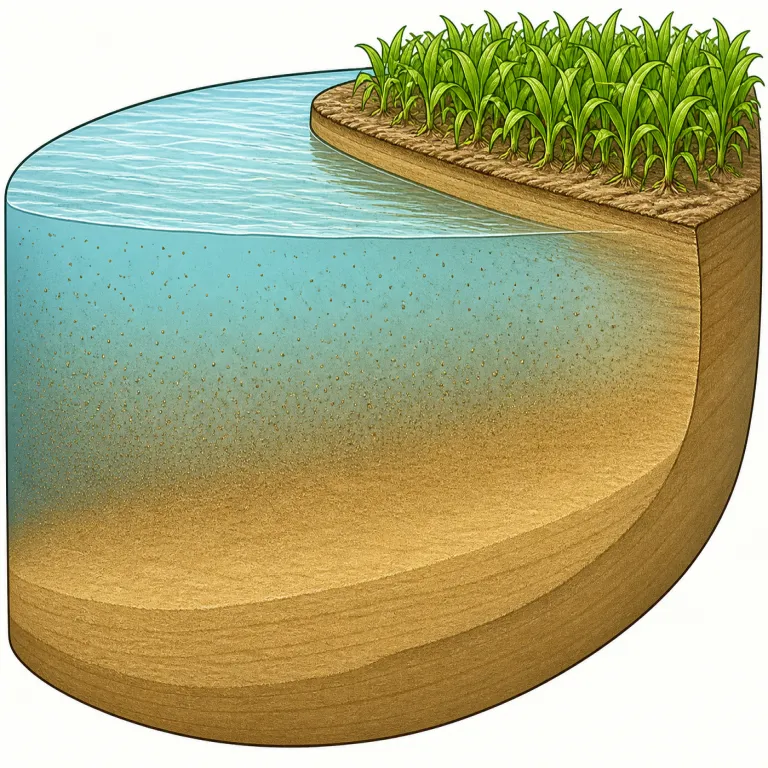
シルト質の
解説 Definition
シルト(微細土砂)を含んでいる、または地質学的にシルトで構成されている様子を指します。
Silty means containing a lot of silt, which is very fine soil or mud carried by water. It is commonly used to describe soil, river bottoms, or cloudy water. Silty ground is often soft and fertile.
覚え方のコツ Memory Tip
`silt + -y`で覚えるのが近道です。`-y`は `sandy`(砂っぽい), `muddy`(泥っぽい)のように「〜っぽい」を作るので、`silty` もそのまま「シルトっぽい土・水」。意味は `sandy` より粒が細かく、`clayey` ほど粘土質ではない中間の質感を思い浮かべると定着します。`silty soil` `silty sediment` `silty water` のように、川・湖・地層の説明で出やすい語です。つづりが `salty` に少し似ていますが、`salty` は「塩辛い」で別語なので混同しないこと。
Break it into `silt + y`. The ending `-y` often means "full of" or "like," as in `sandy` and `muddy`. So if you remember `silty soil` or `silty water`, the pattern becomes easy to keep in mind.
例文
The silty river deposits formed fertile agricultural land.
川のシルト質の堆積物は肥沃な農地を形成しました。
Silty soil retains moisture better than sandy soil.
シルト質の土壌は、砂質の土壌よりも水分をよく保持します。
Silty sediment accumulated on the bottom of the lake over centuries.
シルト質の堆積物が何世紀にもわたって湖底に蓄積しました。
silty の類義語・関連語
silty の語源・成り立ち Etymology
silty は silt+-y で、「泥砂っぽい」がそのまま形容詞化した語。silt は古ノルド系・中低地ドイツ語系を経て、印欧祖語 *sal-「塩」にさかのぼるとされ、salt や saline と同根で、水辺にたまる細かな堆積物の感じが見えてくる。
Silty is built from silt + the adjective ending -y. Silt likely came through Old Norse or Middle Low German forms, and it may go back to an Indo-European root also seen in salt and saline. The word kept the sense of fine material settling in water or near water. Its history suggests a link with wet, mineral-rich deposits.
同じレベルの語彙をもっと
外部辞書で調べる
この英単語をクイズで覚えよう