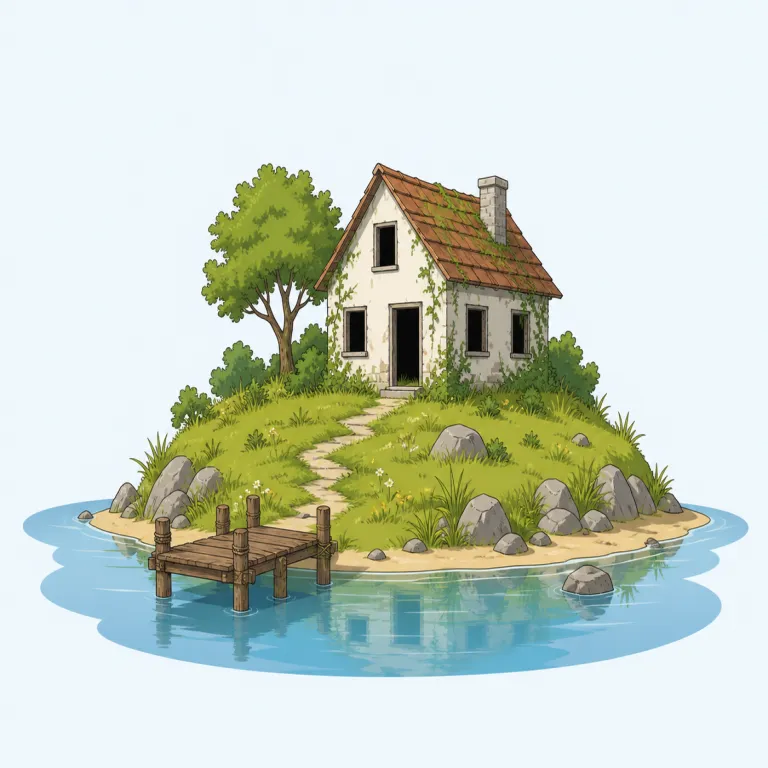
uninhabited
uninhabited はTOEIC 860・TOEFL 80・IELTS 6.5レベルの英単語で、「無人」という意味があります。発音記号は /ʌnɪnˈhæbɪtəd/ です。
無人
解説 Definition
無人とは、人が住んでいない場所を指します。島・地域・家などに居住者がいない状態を表し、一時的に誰もいないというより、そこに住む人がいないことに焦点があります。その状態が長期間続いている場合にもよく使われます。
Uninhabited means having no people living in a place. It is often used for islands, areas of land, buildings, or regions where nobody stays permanently. It does not always mean no one ever visits the place.
覚え方のコツ Memory Tip
un- が付くと「反対・欠如」になる形をまず押さえると覚えやすいです。中心は inhabited で、これは inhabit「住む」から来た「人が住んでいる」という状態。そこに un- が付いて「住まれていない」= 無人。an uninhabited island, an uninhabited area のように場所とよく結びつきます。empty は単に空、deserted は人に見捨てられた寂しい感じで、uninhabited は「居住者がいない」という事実をまっすぐ表す語です。
The key is `inhabit`, which is about living in a place. `Inhabited` means people live there, and `un-` makes it the opposite. It often appears in phrases like `an uninhabited island`, so connect it with places that have no residents.
例文
The uninhabited island was a perfect place for an adventure.
その無人島は冒険に最適な場所でした。
The explorers discovered an uninhabited valley in the mountains.
探検家は山中にある無人の谷を発見した。
The uninhabited house stood empty for many years.
その家には長年、誰も住んでいなかった。
uninhabited の類義語・関連語
uninhabited の語源・成り立ち Etymology
uninhabited は un-「〜でない」+ inhabited「人が住んでいる」から成り、inhabit はラテン語 inhabitare「中に住む」に由来します。in-「中に」+ habitare「住む」なので、“住みつく人がいない”と考えると無人の意味が自然に見えます。関連語に habitat、cohabit があります。
Uninhabited comes from un- plus inhabited. Inhabit comes from Latin inhabitare, meaning "to dwell in," built from in- "in" and habitare "to live or dwell." The word first meant simply "not lived in," then developed its usual sense of having no human residents. Related words include habitat and cohabit.
同じレベルの語彙をもっと
TOEIC 860の一覧へ →外部辞書で調べる
この英単語をクイズで覚えよう