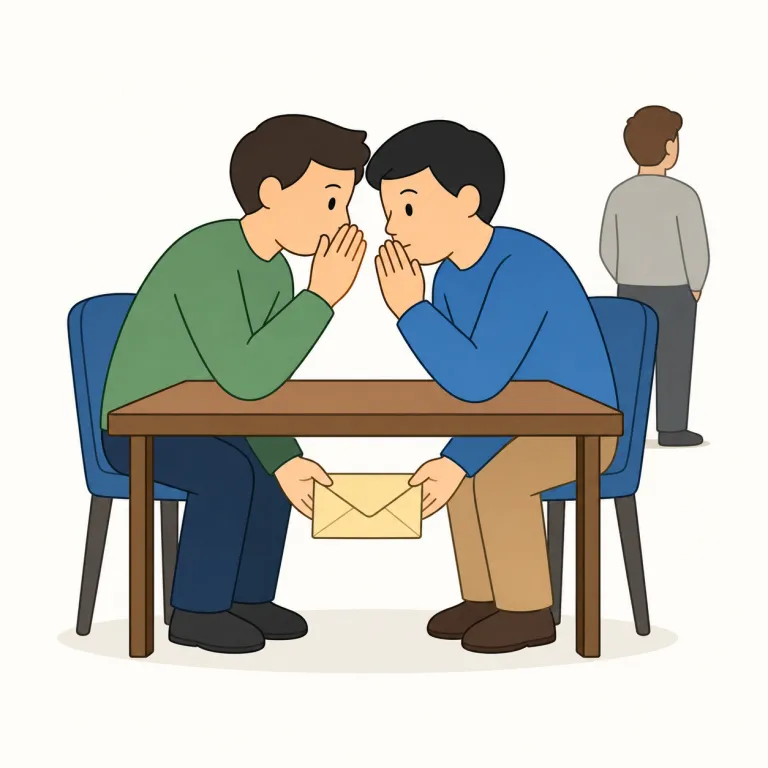
collusion
collusion は英検1級レベルの英単語で、「共謀」という意味があります。発音記号は /kəˈluːʒən/ です。
共謀
解説 Definition
共謀とは、不正な目的を達成するために複数の人が秘密裏に協力して計画を立てることを指します。詐欺や不正取引などの犯罪行為において、関係者間で密かに結託することを表します。法的な文脈では重大な問題として扱われます。
Collusion is secret cooperation between people or groups in order to do something dishonest or unfair. It is often used in business, politics, or legal contexts, for example when competitors work together in a harmful way. The word usually has a negative meaning.
覚え方のコツ Memory Tip
co-/col- は「一緒に」、-sion は名詞語尾と見て、まず「一緒に何かする行為」の箱に入れる。そのうえで、collaboration が前向きな協力なのに対し、collusion は秘密裏で不正目的の結託にほぼ限られる、と対比で覚えると強い。ニュースでは collusion between firms, price collusion の形が多く、「企業間でこっそり組んで不正をする協力」と場面ごと記憶すると定着しやすい。
Use contrast to remember this word: `collaboration` is cooperation in a neutral or positive sense, but `collusion` is secret cooperation for a dishonest purpose. The beginning `co-/col-` suggests "together," and that helps you place it in the idea of people acting together. It often appears in news phrases like `collusion between firms` or `price collusion`. Think of it as hidden teamwork with a bad purpose.
例文
The two shops acted in collusion to keep prices high.
その2店は共謀して価格を高く保った。
Police found signs of collusion between the two companies.
警察はその2社が共謀した形跡を見つけた。
Their secret collusion helped them cheat in the election.
彼らはひそかに共謀し、選挙で不正を行った。
えいたんごクイズでの正答率
この語をはじめて出題された 42人 のうち 32人 が正解しました(76%)。
えいたんごクイズの回答から集計した独自データです。1人につき最初に出題されたときの1回だけを数えており、復習や2回目以降の回答、「わからない」と時間切れは含みません。 集計時点は 2026年9月19日 です。
collusion の類義語・関連語
collusion の語源・成り立ち Etymology
collusion はラテン語 colludere にさかのぼり、col-「共に」+ ludere「遊ぶ」から成ります。もとは「一緒に芝居を打つ」感覚で、そこから口裏合わせや不正な共謀の意味へ進んだと考えると納得しやすいです。関連語は allude、ludicrous。
Collusion comes from Latin colludere, made from col- "together" and ludere "to play." The original image was of people playing together or acting together, almost like staging something. From that, the meaning shifted to secret cooperation and dishonest agreement; the same Latin root appears in words like allude and ludicrous.
同じレベルの語彙をもっと
英検1級の一覧へ →外部辞書で調べる
この英単語をクイズで覚えよう