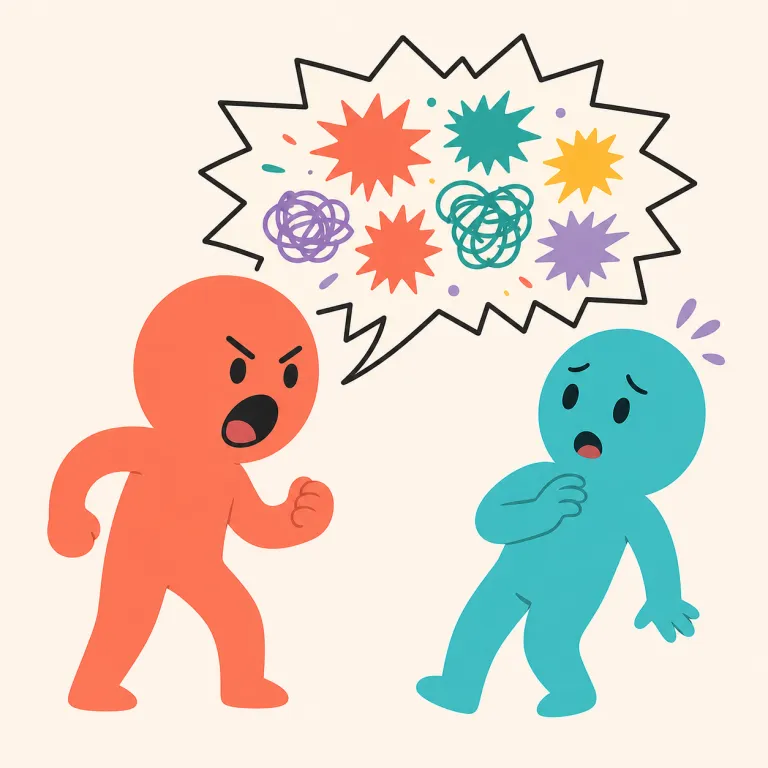
虚辞、意味を持たない語
noun 名詞文法上の位置を満たすものの、それ自体は具体的な意味をほとんど担わない語を指す言語学用語。It is raining の it や、there is 構文の there などが典型例で、罵り言葉とは異なる。
怒りや驚き、いら立ちを表すときに口にする強いののしり言葉や卑語を指す名詞。日常英語では swear word に近く、発言を引用するときに不適切表現として伏せられたり、省かれたりすることが多く、放送や記事では検閲の対象にもなりやすい。
An expletive is a swear word or a word used to express anger, shock, or strong emotion. In most everyday use, it refers to rude or offensive language rather than its older grammatical meaning.
expletive は「説明する語」ではなく、怒り・痛み・驚きで思わず口から飛び出す強い swear word と結びつけると覚えやすいです。ニュースや字幕で見る expletive deleted は、不適切語を伏せた合図。utter an expletive, shout expletives のように、内容を伝えるというより感情が噴き出す場面で使われます。explicit と綴りが少し似ますが、explicit は「明白な・露骨な」、expletive は「悪態・罵り語」で別物です。
Link expletive with a strong word that bursts out in anger, pain, or shock. It often appears in the phrase expletive deleted, which means the rude word was removed. Do not confuse it with explicit, which is a different word.
He shouted an expletive when he dropped the hammer on his foot.
足の上に金づちを落として、彼は罵り言葉を叫んだ。
The movie contains several expletives, so it may not be suitable for children.
その映画には罵り言葉がいくつも含まれているので、子どもには向かないかもしれない。
The editor removed the expletive from the interview transcript.
編集者はインタビューの書き起こしからその悪態を削除した。
文脈によって、次の意味でも使われます。
文法上の位置を満たすものの、それ自体は具体的な意味をほとんど担わない語を指す言語学用語。It is raining の it や、there is 構文の there などが典型例で、罵り言葉とは異なる。
expletive は後期ラテン語 expletivus「埋めるための」に由来し、ex-「完全に」+ plere「満たす」から成ります。もとは文や韻律の穴を埋める語で、そこから感情を埋める罵り語・間投詞へ意味がずれました。関連語は complete, replete。
Expletive comes from late Latin expletivus, meaning "serving to fill up." It is based on ex- and plere, meaning "to fill." At first it referred to a word used to fill out a line or sentence, and later it shifted to mean a forceful word used to fill out emotion, especially in anger. Related words include complete and replete.
この英単語をクイズで覚えよう